
You may be reading this between meetings, after another night of telling yourself you can still keep everything contained. You know your judgment has changed. You may also know that the first practical obstacle in getting help isn't therapy or detox. It's the drug screen.
For many professionals, that moment feels loaded. A founder worries about control. A physician worries about licensure. An attorney worries about records, disclosure, and whether one test result could start a chain reaction. The fear is understandable, but the frame is often wrong. In a well-run treatment setting, drug screening isn't a moral test and it isn't a trap. It's a medical starting point.
That distinction matters in rehab for working professionals. High-functioning people often arrive having spent months, sometimes years, managing appearances while their internal life gets narrower, riskier, and harder to sustain. The intake screen begins the shift from concealment to precision.
Your First Step Into Treatment The Intake Drug Screen
A typical intake call with a working professional doesn't start with denial. It starts with negotiation.
Can I keep my phone? Will anyone find out? What if I've been prescribed one medication but also using something else on top of it? What happens if the test shows more than I've disclosed?
Those questions aren't signs that someone is manipulative. They usually reflect how much is at stake. People in high-responsibility roles are used to managing exposure. They also know that once a process begins, they can't fully control every variable. That's why the intake drug screen can feel so threatening.
What the first screen really means
In practice, the first test is the first clean set of facts. It gives the treatment team a baseline. Without that baseline, any detox plan is guesswork. With it, clinicians can assess what substances are present, what withdrawal risks need close monitoring, and what symptoms may be substance-related rather than purely psychiatric.
The most useful way to view intake testing is this. It converts a private crisis into a treatable medical picture.
That reframing often brings relief. The screen is not there to catch a lie. It's there to reduce danger and improve decision-making from the first day of care.
For many professionals, it also helps to know they're not an outlier. Among the 113 million adults aged 18 to 64 employed full-time in the United States, approximately 10.8 million, nearly 10%, have a Substance Use Disorder, according to data on employed adults and SUD prevalence. In plain terms, one in ten full-time working adults is dealing with this.
What usually happens at intake
If the program is clinically sound, intake feels organized rather than interrogative. Most centers begin with a medical and psychiatric review, medication reconciliation, substance-use history, and a biological screen. If detox is needed, that process should connect directly to symptom management and physician oversight.
A clear explanation of the intake flow helps. Many clients settle once they understand the sequence described in this guide to understanding the intake process for drug and alcohol detox.
A few practical points matter on day one:
- Bring your medication list: Include prescriptions, over-the-counter products, and supplements.
- Expect specificity: You may be asked about timing, route of use, and combinations, not just what you used.
- Answer for safety, not optics: Detox planning depends on accuracy more than presentation.
- Don't self-edit out of shame: Partial disclosure usually creates more discomfort later, not less.
The first screen doesn't define you. It gives your clinicians the information they need to treat you like a patient instead of a problem.
Why Drug Screening Is a Critical Clinical Tool
A senior executive can explain a board crisis in exact detail and still be unsure what, precisely, is in their system on the day they enter treatment. That is not unusual. It is one reason drug screening matters so much in care for working professionals.

Drug screening serves the same clinical purpose as admission labs in any other medical setting. It gives the team verified information at a point when self-report may be incomplete. For executives and licensed professionals, that objectivity has another function. It creates a defensible clinical record. If later decisions affect fitness-for-duty reviews, workplace disclosures, monitoring agreements, or licensing questions, the treatment team needs documentation grounded in facts rather than assumptions.
Medical safety is the first reason. If alcohol, benzodiazepines, opioids, stimulants, or several substances are present, withdrawal risk changes. So do medication choices, monitoring frequency, sleep management, and the threshold for physician oversight. In my experience, the most dangerous intake mistakes happen when a symptom is interpreted too quickly. Anxiety may be withdrawal. Insomnia may be stimulant rebound. Low mood may reflect substance effects, a co-occurring disorder, or both.
A screen helps the team make decisions with more precision, including:
- Level of detox monitoring: Whether routine observation is appropriate or closer nursing and medical supervision is indicated.
- Medication planning: Which comfort medications are reasonable, and which could worsen sedation, respiratory risk, or interaction problems.
- Psychiatric assessment timing: Whether mood, panic, or cognitive symptoms should be interpreted after stabilization rather than at face value on day one.
- Risk management documentation: Whether the record clearly supports recommendations that may later matter to employers, professional health programs, or licensing boards.
Treatment planning also improves when the initial narrative and the biological data do not fully match. A client may describe alcohol as the main issue, while testing suggests unreported benzodiazepine exposure. Another may attribute deteriorating performance to stress, even though stimulant misuse is contributing to panic, insomnia, and impaired judgment. That discrepancy does not automatically mean dishonesty. Shame, fragmented memory, minimization, contamination, and routine polydrug use all distort recall.
For high-stakes careers, this point deserves plain language. An inaccurate intake story can create problems well beyond symptom management. It can affect how a physician health program reads the case, whether an attorney can show meaningful compliance, how an airline medical examiner evaluates recovery, or whether a board later sees the treatment record as careful and credible. Good screening protects the patient clinically first, but it also protects the integrity of the record.
Duration of care matters too. The National Institute on Drug Abuse notes in its overview of treatment approaches for drug addiction that people generally need to remain in treatment for an adequate period of time for care to be effective, and many individuals benefit from at least 90 days across levels of care. That matters here because the intake screen is not a one-time administrative hurdle. It is the starting point for a treatment plan that has to hold up medically, professionally, and over time.
Understanding Drug Test Methods and Detection Windows
Most professionals want two things from this conversation. They want the science explained plainly, and they want to know what a given test can and cannot show.
The first point to understand is that testing usually happens in two layers. A rapid screen is designed to detect likely substance classes quickly. A confirmation test is used when the result needs a higher level of specificity.
Screening and confirmation are not the same test
A rapid immunoassay screen is like a smoke detector. It's useful because it reacts quickly and catches potential problems early. But smoke detectors can go off when dinner burns. In the same way, an initial screen can sometimes react to substances that require clarification.
A confirmatory test, usually GC-MS or LC-MS, is more like a fire inspector examining the scene. It takes longer, but it can identify compounds with much greater precision. That distinction is why competent programs don't make serious decisions from a questionable rapid screen alone when the result conflicts with the clinical picture.
Why urine is common
Urine testing is common in treatment because it balances practicality, speed, and usefulness. It often gives a workable picture of recent substance exposure without the invasiveness of blood collection. Blood may be useful in more acute medical settings. Saliva can help with very recent use. Hair gives a longer historical view but is less useful for real-time detox decisions.
The right question isn't “Which test is best?” The better question is “What clinical question are we trying to answer?”
Approximate drug detection windows by test type
The table below is intentionally approximate. Detection can vary based on metabolism, pattern of use, hydration, body chemistry, formulation, and test sensitivity. A clinician uses these windows as context, not as a courtroom script.
| Substance | Urine | Blood | Saliva | Hair |
|---|---|---|---|---|
| Alcohol | Short detection window, often useful only for recent use | Very recent use | Very recent use | Longer historical pattern may be reflected |
| Opioids | Often useful for recent use over the past few days, depending on agent | Shorter recent-use window | Recent use | Longer historical pattern may be reflected |
| Benzodiazepines | Can vary widely by medication and duration of use | Shorter recent-use window | Recent use | Longer historical pattern may be reflected |
| Cocaine | Often useful for recent use over the past few days | Short recent-use window | Recent use | Longer historical pattern may be reflected |
| Cannabis | Can vary substantially based on occasional versus sustained use | Shorter recent-use window | Recent use | Longer historical pattern may be reflected |
| Amphetamines and stimulants | Often useful for recent use over the past few days | Short recent-use window | Recent use | Longer historical pattern may be reflected |
What these windows mean in practice
Detection windows don't tell the whole story. They don't directly measure impairment. They don't fully describe severity. They also don't settle questions about motivation, control, or readiness.
What they do provide is useful structure for treatment decisions:
- Urine answers a recent-use question: That's why it's often the standard at intake.
- Blood helps in urgent medical evaluation: It's more relevant when immediate physiological status matters.
- Saliva is useful for very recent exposure: It can be practical in selected settings.
- Hair shows pattern more than immediacy: It's generally more relevant to historical review than acute detox planning.
A professional with a high-stakes role should also know that precise testing can distinguish broad categories from specific compounds when confirmation is ordered. That matters if the difference between a prescribed medication, a non-prescribed drug, or a metabolite has licensing or employment implications.
A test result is most useful when it's interpreted by clinicians who understand both toxicology and the client's professional reality.
In other words, the test itself is only one part of the work. Interpretation is where competent treatment earns its value.
How Test Accuracy and Your Privacy Are Guaranteed
When professionals worry about drug testing, they usually worry about two failures at once. First, that the result could be wrong. Second, that the result could become known to the wrong person.
Both concerns are legitimate. Both should be addressed directly.
Accuracy depends on process, not just technology
A reliable result starts with chain of custody. That means the sample is labeled, documented, transferred, and tracked through each step so the identity and integrity of the specimen are preserved. If that process is sloppy, even a strong laboratory method becomes less trustworthy.
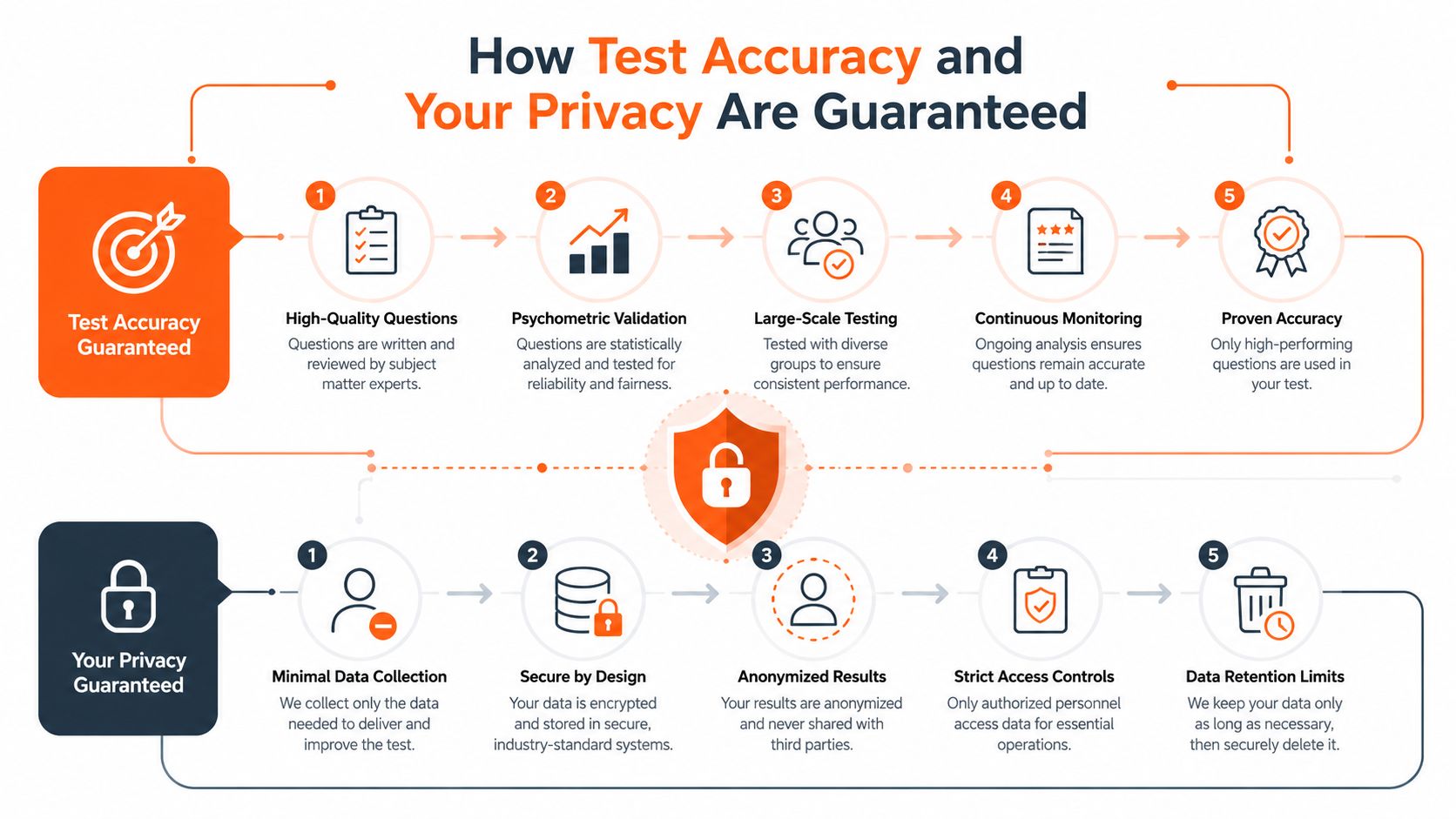
False positives are also a real issue at the screening stage. Some rapid tests can react to legal medications, supplements, or other compounds that need clarification. That's why confirmation matters. A program that treats every preliminary result as final is practicing convenience, not precision.
A trustworthy process usually includes:
- Documented collection: The sample is labeled and handled in a way that reduces mix-ups.
- Clinical review of medications: Prescriptions and over-the-counter products are considered before conclusions are drawn.
- Confirmation when needed: GC-MS or LC-MS is used to resolve disputed or clinically significant findings.
Privacy has stricter protections than most clients expect
Addiction treatment records are not handled casually. HIPAA matters, but in substance use treatment there's also 42 CFR Part 2, which provides stricter confidentiality protections around treatment records. In many situations, disclosure requires explicit patient consent, and the boundaries are tighter than many professionals assume.
That distinction is important for executives and licensed professionals who fear that entering treatment automatically creates broad institutional visibility. It doesn't. Privacy rules don't erase every reporting duty in every profession, but they do mean your information cannot circulate because someone is curious, anxious, or influential.
Important distinction: Clinical confidentiality and professional reporting obligations are separate issues. Good programs treat them separately, too.
If privacy is a central concern, it helps to understand what a program does operationally, not just what it promises legally. Small census settings, need-to-know communication, and clear consent procedures matter. So does having a treatment team that understands why a reputational breach can feel as threatening as the addiction itself. This overview of balancing recovery and privacy while protecting your reputation and peace of mind captures the kind of safeguards professionals should be looking for.
Drug Test Implications for Your Professional License
General rehab advice often becomes too shallow to be useful.
For a licensed professional, a drug test isn't only a clinical event. It can have implications for licensure, credentialing, malpractice exposure, employer reporting, hospital privileges, board obligations, shareholder confidence, or internal governance. A physician, pilot, attorney, therapist, pharmacist, or executive officer may be asking a more complicated question than “Will treatment help?” They may be asking, “How do I get help without detonating the rest of my life?”
Untreated risk is usually greater than treatment risk
Many accomplished people delay care because they believe staying functional is safer than stepping out. But delay often creates the exact pattern that causes the most damage: worsening judgment, looser boundaries, impaired documentation, avoidant communication, and secretive self-management.
That hesitation is not rare. According to guidance on talking to your employer about rehab, 22% of healthcare professionals face licensing hurdles due to addiction and 35% of executives delay treatment due to fear of losing control, while structured professional monitoring programs show a 72% pooled abstinence rate and a 77% work retention rate. Those numbers matter because they shift the conversation from fear to strategy.

A positive test in a monitored, clinically managed context is often far more workable than a crisis event in the workplace, on call, in transit, in court, or during a board-level decision.
What high-quality handling looks like
Good executive and professional treatment does not treat licensing questions as a side note. It coordinates them. That may involve legal counsel, employer communication planning, board-related documentation, or structured participation in a professional monitoring system.
The right approach depends on your role, but the principles are consistent:
- Separate clinical truth from disclosure strategy: You need candor with your treatment team. You also need a deliberate plan for who must be informed, when, and how.
- Document treatment properly: Boards and credentialing bodies often respond better to organized treatment, monitoring, and compliance than to fragmented self-directed efforts.
- Respect your scope of duty: Owners, directors, and senior officers may need advice that accounts for fiduciary obligations, delegation, and continuity planning.
- Use monitoring as support, not stigma: In many professions, structured oversight protects return to practice.
If your license, privileges, or governance role is in play, “privacy” alone isn't enough. You need a treatment path that is clinically sound and professionally coordinated.
Drug testing can support reentry, not just restriction
Professionals often hear “drug testing” and think surveillance. In effective aftercare and monitoring, it functions differently. Testing can provide objective evidence of stability during the period when trust is being rebuilt. For some clients, that documentation becomes part of how they regain standing with an employer, a board, or a professional body.
This is one of the central realities of rehab for working professionals. You are not only treating symptoms. You are rebuilding credibility. Those are different tasks, and both matter.
If employer communication is part of the picture, thoughtful preparation matters more than improvised honesty under pressure. This guide on how to talk to your employer about going to rehab is the kind of practical resource professionals should review early rather than late.
From Test Results to Your Personalized Recovery Plan
A senior executive can walk into treatment worried about one lab result for three different reasons at once. Health is the obvious one. The other two are harder to say out loud. What happens to my role, and what happens to my license?
That is why test results have to lead to a plan that is clinically precise and professionally informed.
The test result starts decision-making
Once the intake screen is complete, the team can stop guessing. We can determine whether detox is needed, whether withdrawal risk is rising, whether prescribed medications need review, and whether the client is stable enough for early therapy or needs more medical support first.
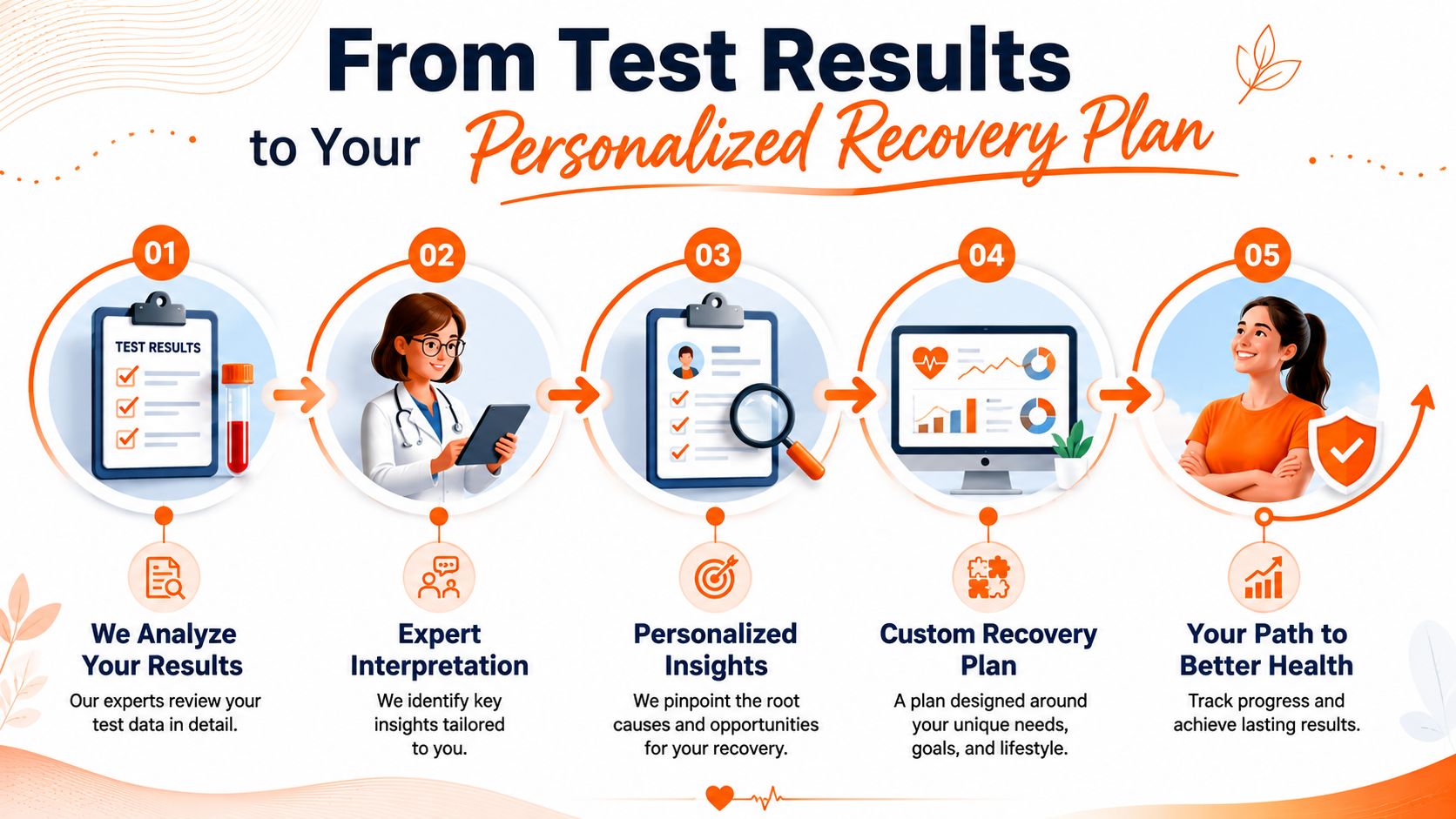
For working professionals, this stage requires restraint as much as speed. Anxiety, depression, trauma symptoms, bipolar disorder, and ADHD can all look different during active use or withdrawal. A careful program does not rush to label every symptom on day one. It stabilizes sleep, manages withdrawal, reviews substance use alongside prescribed medications, and reassesses once the picture is clearer.
That sequence protects the treatment plan from expensive mistakes.
If the substance problem is treated without addressing a co-occurring condition, relapse risk stays high. If psychiatric symptoms are treated without understanding current substance exposure, the care plan can miss the underlying driver of impairment.
Return-to-work planning needs more than discharge dates
Professionals do poorly with vague recovery advice. "Take care of yourself" is not a plan for a trial attorney returning to court, a physician under board scrutiny, or a founder stepping back into investor pressure and unrestricted travel.
A workable plan usually covers:
- level of care after discharge
- psychiatric follow-up and medication management
- relapse prevention tied to specific triggers such as travel, isolation, performance reviews, deal stress, or access to controlled substances
- monitoring or documentation requirements if an employer, board, or licensing body is involved
- legal coordination when disclosure, reporting, or practice restrictions may apply
- boundaries around schedule, sleep, and communication during reentry
Length of care matters here, as noted earlier. So does continuity. Clients tend to do better when treatment extends beyond the first phase and steps down into structured support instead of ending the moment they feel clearer. During the first year back in professional life, confidence often returns faster than judgment. That is one reason it helps to learn to prevent relapse with concrete trigger management, daily structure, and practiced contingency plans.
For licensed professionals, the plan also has to account for documentation. A toxicology result may never leave the clinical chart unless a release, reporting duty, court order, or monitoring agreement changes that. But if a board, hospital, firm, or professional health program is already involved, the treatment plan should anticipate what evidence of compliance, stability, and follow-through may be needed later. That is not fear-based planning. It is competent planning.
Return-to-work planning should answer a hard question in plain language: what will you do when professional pressure returns before your nervous system is steady enough to absorb it well?
A personalized recovery plan should leave treatment with that answer in writing. Specific. Usable. Built for the reality of the career you are going back to.
Capo Canyon Recovery provides medically supervised detox and residential addiction treatment in Orange County for executives, entrepreneurs, and licensed professionals who need privacy, dual diagnosis care, and a treatment setting that respects real-world work obligations. If you're weighing treatment and want a discreet, clinically rigorous conversation about what the process would look like, you can contact Capo Canyon Recovery.