
Opioid withdrawal can begin within 8 to 12 hours after the last dose of a short-acting opioid, peak around 36 to 72 hours, and taper over roughly 4 to 7 days. The classic pattern is flu-like body aches, diarrhea, nausea or vomiting, runny nose or tearing, sweating, yawning, anxiety, cravings, and a wired, restless feeling that can make sleep almost impossible.
If you're reading this while trying to stay functional at work, that mix can feel alarmingly specific. You may be managing meetings, travel, clients, or a team on the outside, while your body is sending a very different signal on the inside.
Why Opioid Withdrawal Feels Different From Other Drug Withdrawal
A lot of people notice something is wrong before they can explain it. They wake up sweaty, cannot stop yawning, feel cramps in the gut, and move back and forth between chills and agitation. That cluster does not feel like a single illness, it feels like the body's regulation system has lost its grip.
Opioid withdrawal is a recognizable clinical syndrome. It includes lacrimation or rhinorrhea, piloerection, myalgia, diarrhea, nausea or vomiting, pupillary dilation, photophobia, insomnia, tachycardia, sweating, hypertension, hyperthermia, and yawning. Major psychiatric and medical sources also describe whole-body pain, restlessness, anxiety, cramps, and intense cravings as part of the same pattern. The syndrome's definition is laid out in the clinical review of opioid withdrawal in the National Center for Biotechnology Information, and the brain-level mechanism is described in a clinical review of opioid withdrawal effects on the brain at Capo Canyon Recovery.
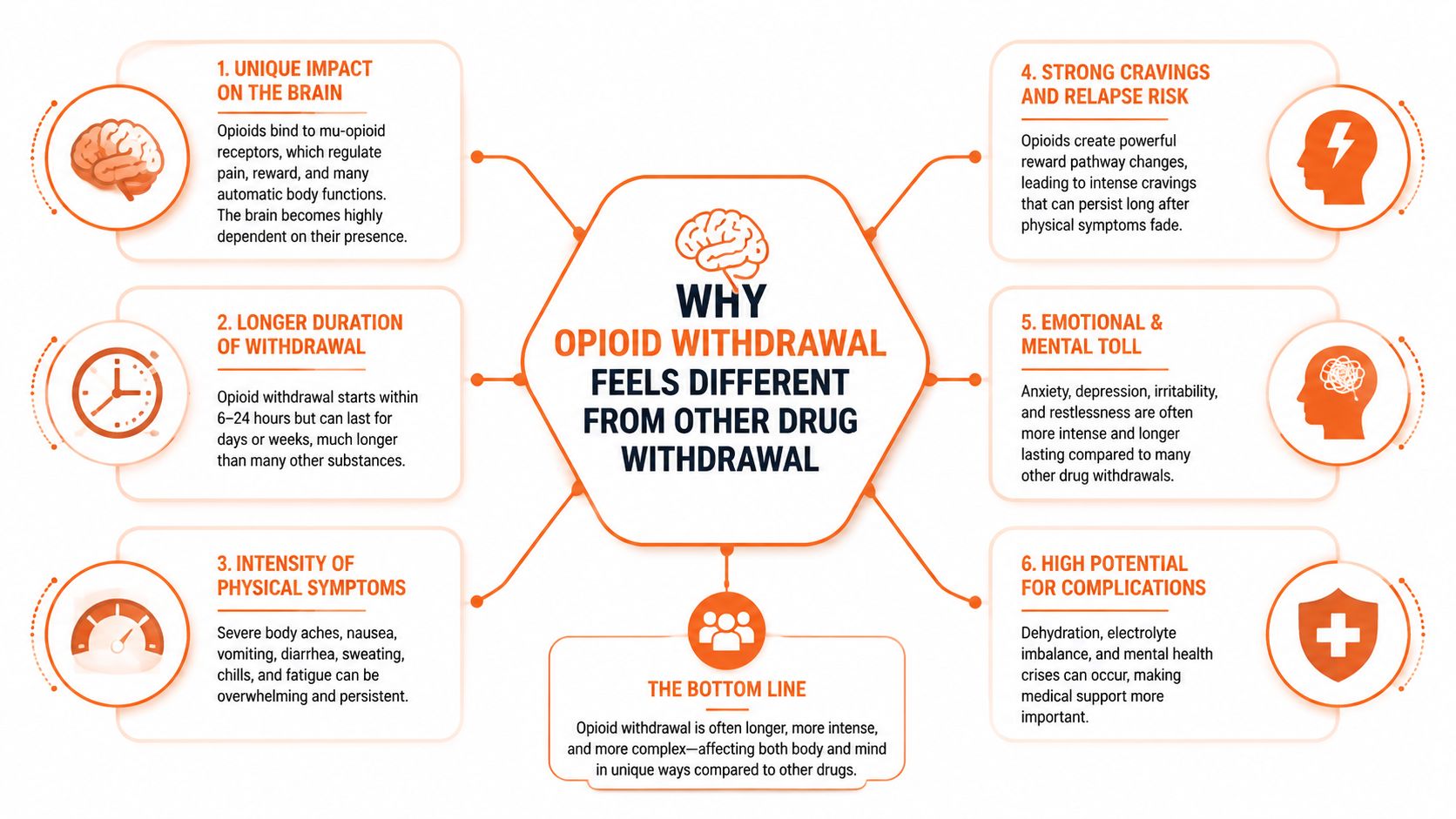
The mechanism is straightforward in clinical terms. Repeated opioid exposure trains the brain and body to expect the drug, so when it is removed, the nervous system swings in the opposite direction. That is why symptoms show up across several systems at once, with the gut, the autonomic nervous system, sleep, and pain pathways all reacting together.
What That Means In Real Life
A high-functioning person often mistakes this for a bad flu, a panic spiral, or a gastrointestinal bug. The difference is the combined pattern, GI distress, autonomic overdrive, and mental agitation all arrive together. That is why it can feel so distinctly miserable compared with caffeine withdrawal or a routine viral illness.
Practical rule: if the symptoms are hitting your eyes, skin, stomach, sleep, and heart rate all at once, it is usually not stress alone.
That pattern also explains why many professionals delay asking for help. If you can still answer email, it is easy to tell yourself you are fine. The body may be sending a different signal, and in clinical withdrawal that signal is often the more reliable one.
The Physical and Psychological Symptoms You Should Expect
A person in opioid withdrawal often notices the body before the explanation. The stomach may turn first, followed by sweating, muscle aching, and a sense that the whole system is running too hot and too fast. Seen clinically, the pattern is less like one isolated complaint and more like several body systems losing their normal coordination at the same time.
Physical Symptoms By Body System
Gastrointestinal symptoms are common because the gut is highly responsive to opioid signaling. When that signal drops, bowel activity can rebound sharply, and the result is cramping, loose stools, nausea, and vomiting that can make eating or drinking feel like work. Dehydration can follow quickly if fluid intake falls off.
Autonomic symptoms come from the body's stress circuitry. Sweating, chills, hot flashes, a racing heart, and blood pressure changes can appear together because the nervous system is trying to stabilize itself without the drug it had adapted to.
Sensory and sleep symptoms can be surprisingly disruptive. Dilated pupils, light sensitivity, and insomnia make it harder to rest, and the lack of rest amplifies everything else. The result is often a loop. The more uncomfortable you feel, the less you sleep, and the less you sleep, the more intense the symptoms feel.
Muscle and joint pain can add another layer. Many people describe the experience as a deep flu because the discomfort is spread across the body rather than limited to one area, which is part of why withdrawal can feel so hard to pin down at first.
Psychological symptoms deserve equal attention because they often drive the return to use. A survey cited in the clinical literature found that 56% of respondents reported heightened anxiety as the most common withdrawal symptom, underscoring how central psychological distress can be in real-world withdrawal experiences as summarized in the withdrawal timeline review.
Why Anxiety And Craving Matter So Much
Anxiety during withdrawal often feels physical, with restlessness, a tight chest, and a sense that you cannot get comfortable in your own skin. Craving works alongside that distress, because the brain is trying to restore a state it now reads as normal.
Sleep disruption makes the psychological piece worse. People often assume mood symptoms are secondary, but in practice they are part of the core syndrome. If you are trying to keep working, those symptoms can erode focus, judgment, and patience long before anyone else notices.
The hardest symptom is not always the one you would notice first on a checklist. It is often the one that makes you think, “I cannot keep doing this feeling.”
That is the point where many people start looking for a clinician who can manage the physiology, not just tell them withdrawal will pass.
The timing and intensity can also shape how people talk about it afterward. For a clear overview of how the course can vary, see this heroin withdrawal timeline guide.
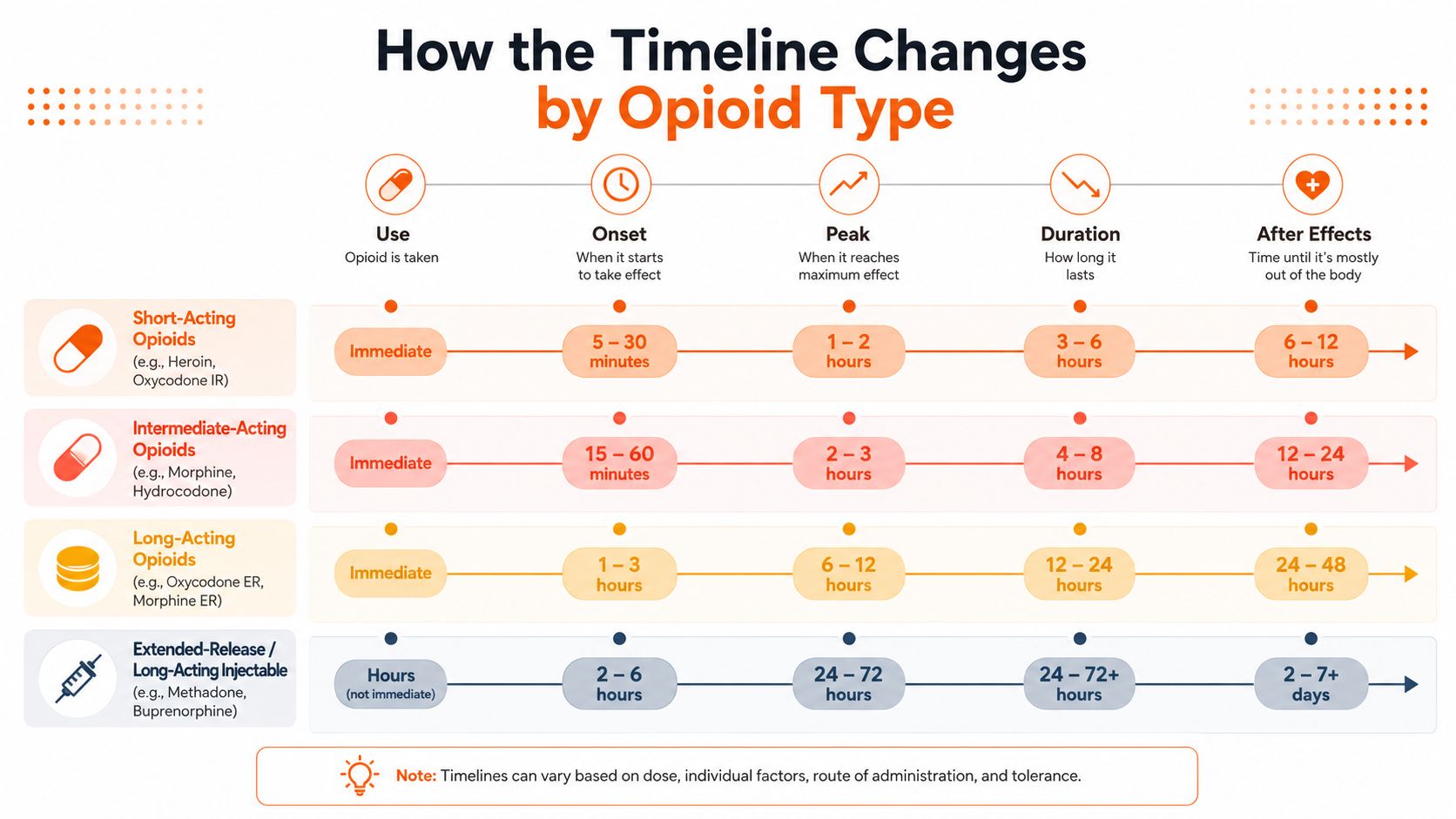
How The Timeline Changes By Opioid Type
A person may start feeling withdrawal the same night another person feels little at all. That difference is not random. It reflects how long the opioid stays active, how quickly blood levels fall, and how fast the nervous system reacts when the drug is no longer there.
Short-Acting Versus Longer-Acting Patterns
After abrupt cessation of short-acting opioids such as heroin, hydrocodone, and oxycodone, symptoms typically begin within 8 to 12 hours after the last dose, peak around 36 to 72 hours, and then taper over roughly 4 to 7 days. That is the usual clinical pattern for many common withdrawal presentations, as noted earlier in the timing review.
Longer-acting opioids shift that curve. They usually delay the start and can stretch the experience out, which is why two people can both say they are in withdrawal and still be talking about very different stages. A person stopping a short-acting opioid may feel the worst symptoms early, while someone coming off a long-acting opioid may have a slower build and a longer tail.
Why Fentanyl Feels Hard To Place
Fentanyl often confuses people because its clinical behavior does not always fit the simple short-acting versus long-acting categories found in many online summaries. That is why rigid timelines can mislead you. The safer assumption is that the pattern can vary by opioid half-life and by the person's use pattern, which is one reason monitored care is often the more reliable setting when symptoms are intense or unpredictable.
If you are trying to plan work around it, the details matter. A board meeting, litigation deadline, or investor roadshow will not adjust because withdrawal is “supposed” to peak at a certain hour. Your personal timeline matters more than the average one.
For a plain-language reference on the course of heroin withdrawal, this overview from Capo Canyon Recovery can help anchor the short-acting end of the spectrum.
The Protracted Phase Most Symptom Pages Skip
The acute phase gets most of the attention because it's the loudest. But people often underestimate the longer tail, and that's where planning mistakes happen. A person may feel physically better in less than a week, then get blindsided by sleep disruption, low mood, and craving after assuming the worst is over.
What Lingering Symptoms Look Like
An academic review of protracted opioid withdrawal notes that mood symptoms, especially depression and anxiety, along with disturbed sleep and craving, can persist for at least 4 weeks after the acute phase Oxford academic review. That matters because the absence of vomiting doesn't mean the nervous system has fully reset.
This is the part many symptom pages miss. They stop at the first several days, but the recovery question in everyday life is often, “When will I feel like myself again?” The answer is usually more gradual than people expect.
Why Professionals Need This Timeline
Work continuity changes the practical meaning of that lingering phase. You might be physically stable enough to attend a call, but still be dealing with fragmented sleep, a shorter fuse, and intermittent craving. Those symptoms can affect client-facing work, decision-making, and privacy-sensitive responsibilities even after the acute crisis settles.
Planning insight: if the first week is about getting through the body's reaction, the next several weeks are about protecting routine, judgment, and relapse resistance.
That's why return-to-work planning should be discussed with the same seriousness as the detox itself. A treatment plan that only covers the acute window can leave a gap exactly when people think they're safe to relax.
When Withdrawal Becomes A Medical Risk
It is widely understood that opioid withdrawal is unpleasant but not usually fatal on its own, and that's broadly true. The trouble starts when symptoms are severe enough to cause major fluid loss, undermine basic functioning, or occur alongside other medical or psychiatric problems.
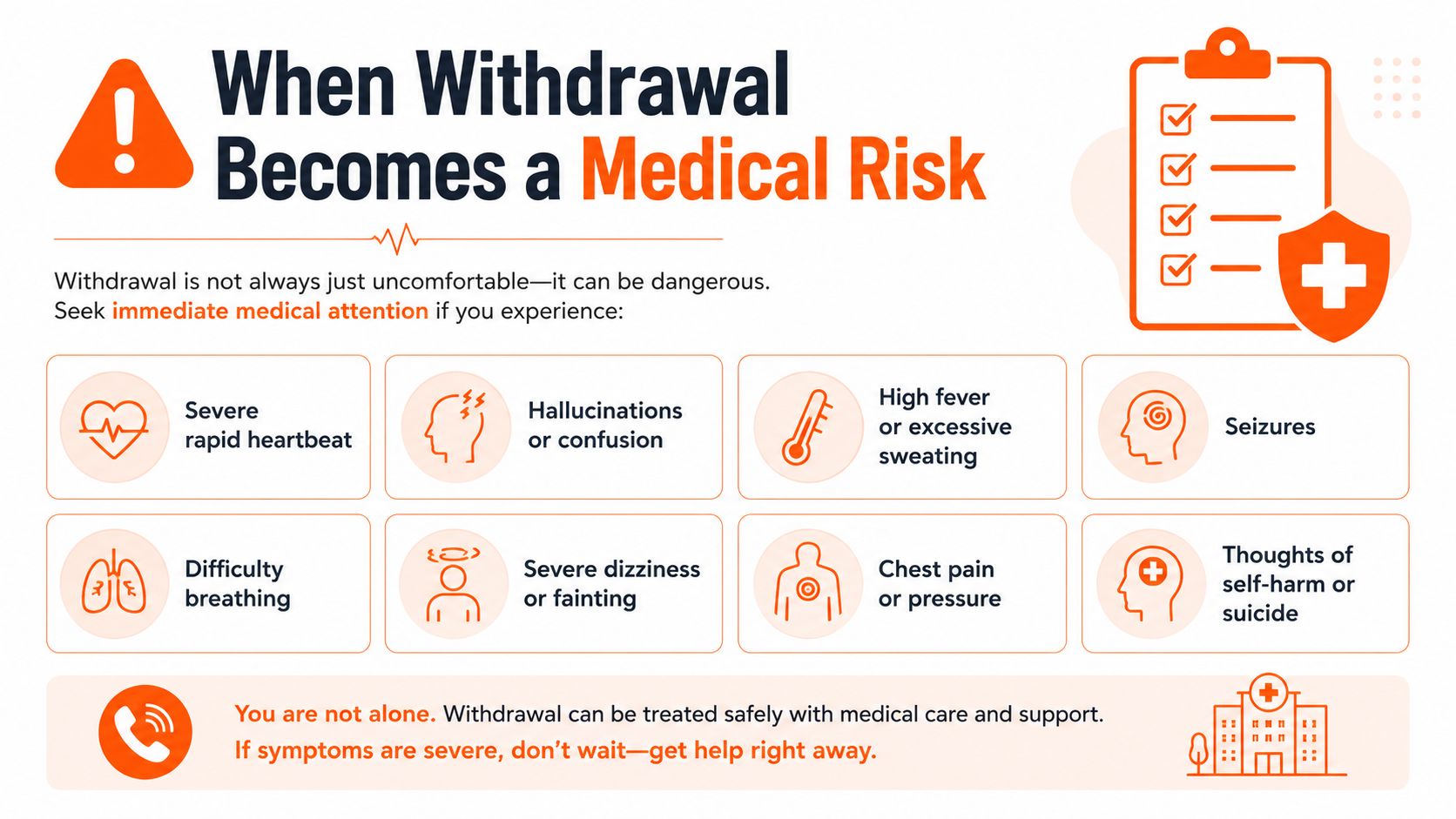
Severe cases can involve fluid loss, electrolyte abnormalities, hemodynamic instability, seizures, and even death if managed improperly, especially when co-occurring medical or psychiatric problems are present NIH review. That's the clinical reason supervised detox exists.
Red Flags That Push Care Higher
Repeated vomiting that prevents you from keeping fluids down is not a minor inconvenience. It becomes a safety problem when dehydration starts building. The same is true when diarrhea is persistent enough that you can't maintain hydration or function.
Underlying conditions raise the stakes too. Cardiac disease, pulmonary disease, active psychiatric instability, or any history that makes decompensation more likely should move the conversation away from casual home detox and toward monitored care. The more complicated the clinical picture, the less sense it makes to rely on willpower and a video call.
For people weighing whether a staffed setting is warranted, this explanation of 24-hour nursing during detox gives a useful frame for why observation changes safety.
A Simple Self-Check
If you can't reliably hydrate, sleep, or stay emotionally steady, your situation is no longer just uncomfortable. If you also have another active illness or a fragile social situation, home management becomes harder to justify. In those cases, the safest path is usually the one with continuous monitoring and rapid response.
What Evidence-Based Management Actually Looks Like
Good withdrawal care doesn't try to “tough it out.” It targets the physiology. That starts with medications that reduce the receptor-level shock and continues with monitoring so the plan can change if symptoms do.
The Core Medication Strategy
Buprenorphine or methadone can reduce withdrawal by occupying opioid receptors, which blunts the sudden drop that drives so much of the misery. Clonidine can reduce sympathetic overactivity, but it requires blood-pressure monitoring and should be withheld if systolic blood pressure is below 90 mmHg MSD Manual.
That's the core distinction between going it alone and receiving medically supervised care. In a proper setting, staff don't just hand over medications and hope for the best. They check vitals, track hydration, watch sleep and mental status, and adjust support as the withdrawal curve changes.
Supportive Care Still Matters
Hydration and anti-nausea support are not side issues. They're part of the medical plan because they reduce the risk of fluid loss and make it easier for the person to keep participating in care. Sleep management matters too, since exhausted patients are harder to stabilize and more likely to abandon treatment early.
A clinician should also match the setting to the complexity of the case. If the person has co-occurring psychiatric symptoms, the plan should account for both conditions, not pretend they're separate. That's especially relevant when anxiety or depression is already part of the reason opioids became the coping tool.
If you're comparing symptom relief approaches, a useful companion resource is Florida help for Effexor withdrawal, because it shows how a medically supervised taper and symptom management framework can be explained for another withdrawal syndrome too.
Choosing A Setting That Respects Privacy And Professional Obligations
A lot of detox options are designed for one kind of patient, the person who can disappear from work and life for a while. Executives, licensed professionals, and business owners often need something different. They need safety, but they also need confidentiality, continuity, and a setting that doesn't treat work responsibilities as an inconvenience.

What To Verify Before You Commit
Look for 24/7 nursing coverage, on-site psychiatric oversight, and a program that can handle dual diagnosis if anxiety, depression, trauma, ADHD, or bipolar symptoms are part of the picture. Those aren't luxury features. They're what make a setting clinically capable of handling a complicated withdrawal without improvisation.
Privacy matters too. A small census, discreet admissions process, and private rooms reduce exposure, which can be especially important for licensed professionals who can't afford gossip or accidental disclosure. For people who need to keep essential communication flowing, a tech-friendly policy that allows phones and laptops can make the difference between entering care now or delaying until the situation gets worse.
A boutique program like Capo Canyon Recovery is one example of a setting built around medical detox, residential care, and confidential professional access. If you compare options, ask whether the program allows essential work continuity, whether it offers psychiatric support during detox, and how often you'll meet with clinicians.
Decision point: if a facility treats privacy and communication as extras, it may not be the right fit for a high-responsibility client.
A Practical First Step Toward Safer Care
Start with the facts you already have. Write down your current symptoms, your last opioid use, any recent dose changes, and whether you've had vomiting, diarrhea, chest symptoms, or severe anxiety. That record helps a clinician sort ordinary withdrawal from a situation that needs urgent monitoring.
Then check the setting, not just the brochure. Verify licensing, medical staffing, dual diagnosis capability, and whether the program can preserve essential communication if you need to remain reachable. If you're comparing options, ask directly about privacy protections, nursing availability, and how the facility handles work-critical electronics.
| Criterion | Home Withdrawal | Standard Inpatient Detox | Executive Residential Detox |
|---|---|---|---|
| Medical monitoring | Limited or none | Continuous | Continuous |
| Privacy | High, but unsupported | Variable | Designed for discretion |
| Work continuity | Unstructured | Often restricted | More likely to be accommodated |
| Dual diagnosis support | Usually absent | May be available | Commonly integrated |
| Best fit | Mild, low-risk cases only | People needing stabilization | Professionals needing privacy and continuity |
If you have red flags, don't wait for a scheduled admission date. If you don't, use the time to identify a supervised setting that matches your safety needs and your professional obligations. The right program should make it easier to stabilize, not force you to choose between health and responsibility.
A CTA for Capo Canyon Recovery. If you're deciding whether opioid withdrawal can be managed safely and privately, contact Capo Canyon Recovery to ask about medically supervised detox, 24/7 nursing support, and a setting that can protect both your recovery and your work obligations.