
You can hold it together at work and still know something is off. The meetings are still getting done, the inbox is moving, and no one may have said a word, but alcohol has started to shape your sleep, your mood, your concentration, or the way you prepare for the next day. When that happens, rehab for alcohol stops being a dramatic last resort and becomes a practical medical decision.
For professionals, the hardest part is often not admitting the problem. It's deciding whether help can happen without wrecking privacy, reputation, or momentum. It can, and the clinical reality is that alcohol use disorder is common, serious, and treatable. Globally, the WHO estimated that about 400 million people aged 15 and older lived with alcohol use disorders in 2019, including 209 million with alcohol dependence, and alcohol caused 2.6 million deaths, or 4.7% of all deaths worldwide in that same year (WHO report).
When Alcohol Use Becomes a Problem
A senior manager starts skipping breakfast because the morning feels rough. An attorney tells himself he is just unwinding after court, then notices he needs a drink to take the edge off before dinner. A founder keeps delivering, but the family sees the short temper, the missed details, and the quiet slide from “social drinking” into a routine that is no longer optional.

That pattern is easier to miss when someone is still meeting deadlines and showing up. In professional and executive circles, the warning signs often appear in private first, in sleep changes, tighter moods, more isolation, and a growing need to plan the day around alcohol. A personal red flag checklist can help with that first honest look, and this guide on signs of alcohol addiction is a useful place to compare what you are seeing against what clinicians watch for.
Alcohol problems are medical, not moral
Alcohol use disorder is a health condition, and it shows up in people with strong résumés, stable income, and substantial responsibilities. The issue is not whether someone can still perform well for a while. The issue is whether alcohol is beginning to change behavior, judgment, sleep, mood, or relationships in ways the person cannot fully control. In professional settings, that often looks like needing alcohol to unwind, using it to manage anxiety before social or work events, hiding how much was consumed, or becoming defensive when the topic comes up.
The clinical red flags are usually practical before they are dramatic. A person may start drinking earlier in the evening to feel normal, need more alcohol than before to get the same effect, or find that one drink turns into a pattern they did not plan. They may cancel plans, avoid lunch with colleagues, forget details from meetings, or wake up unsettled and promise themselves they will cut back tomorrow. Families often notice the pattern first because they see the short fuse, the secrecy, and the repeated attempts to control drinking that do not hold.
The problem also tends to hide behind competence. High-functioning professionals often compensate well, which can delay treatment and make the situation harder to explain to themselves. That is why alcohol problems can stay invisible until they begin affecting health, trust, or work performance in ways that cannot be dismissed as stress. The right question is not whether someone still looks successful on the outside. It is whether alcohol is starting to run the schedule, the mood, or the decisions behind the scenes.
Understanding the Levels of Care in Alcohol Rehab
Alcohol treatment is organized into distinct levels of care, and each one fits a different clinical need. For an executive or professional, that distinction matters because the right plan has to account for withdrawal risk, privacy, work demands, and the practical question of what can be managed while staying employed.
Some people need medically supervised withdrawal support before anything else. Others do better in a residential setting where alcohol access is removed and the day is structured. Many can be treated in outpatient care if they are medically stable, have reliable support, and can stay engaged without constant supervision.
In the United States, treatment still reaches only a fraction of people who meet criteria for alcohol use disorder. Recent NIAAA data show that many people with the condition do not receive care, and that the treatment gap remains wide (NIAAA). The point is not merely access. It is matching the level of care to withdrawal risk, medical needs, psychiatric symptoms, home stability, and whether the person can realistically avoid alcohol exposure outside treatment.
Comparing Alcohol Rehab Levels of Care
| Level of Care | Environment | Time Commitment | Ideal Candidate |
|---|---|---|---|
| Medical detox | Medically supervised, highly structured | Short-term stabilization | People at risk for withdrawal complications or severe symptoms |
| Residential inpatient | Live-in treatment setting | Full-time care over weeks or longer | People who need separation from triggers and close support |
| PHP, partial hospitalization | Day treatment with a clinical schedule | Several hours a day, most days | People who need intensive support but not 24/7 monitoring |
| IOP, intensive outpatient | Structured sessions while living at home | Fewer hours than PHP, multiple days per week | People with stable housing and enough support to stay engaged |
| Standard outpatient | Weekly or periodic appointments | Lowest intensity | People with milder needs or those stepping down from higher care |
A practical way to choose is to ask what would happen if the person went home tonight and tried to stop drinking. If the answer includes shaking, confusion, severe anxiety, repeated relapse, or a high-pressure environment with little protection from triggers, outpatient care alone may be too light. If the answer is steadier, outpatient options can work well, especially when paired with medication and therapy.
Program quality also depends on whether it addresses both alcohol use and mental health at the same time. Recent NIAAA data show that many adults with a substance use disorder also have a mental health disorder (NIAAA). That overlap is common in professionals who have been holding things together for a long time. Anxiety, depression, trauma, poor sleep, and drinking often reinforce one another, so a treatment plan should address the full picture rather than treat alcohol in isolation.
For a clearer comparison of what each track is designed to do, this overview of rehab levels of care is a useful reference. For people worried about relapse after a setback, Obex helps overcome relapse explains why a slip does not have to become a full return to drinking.
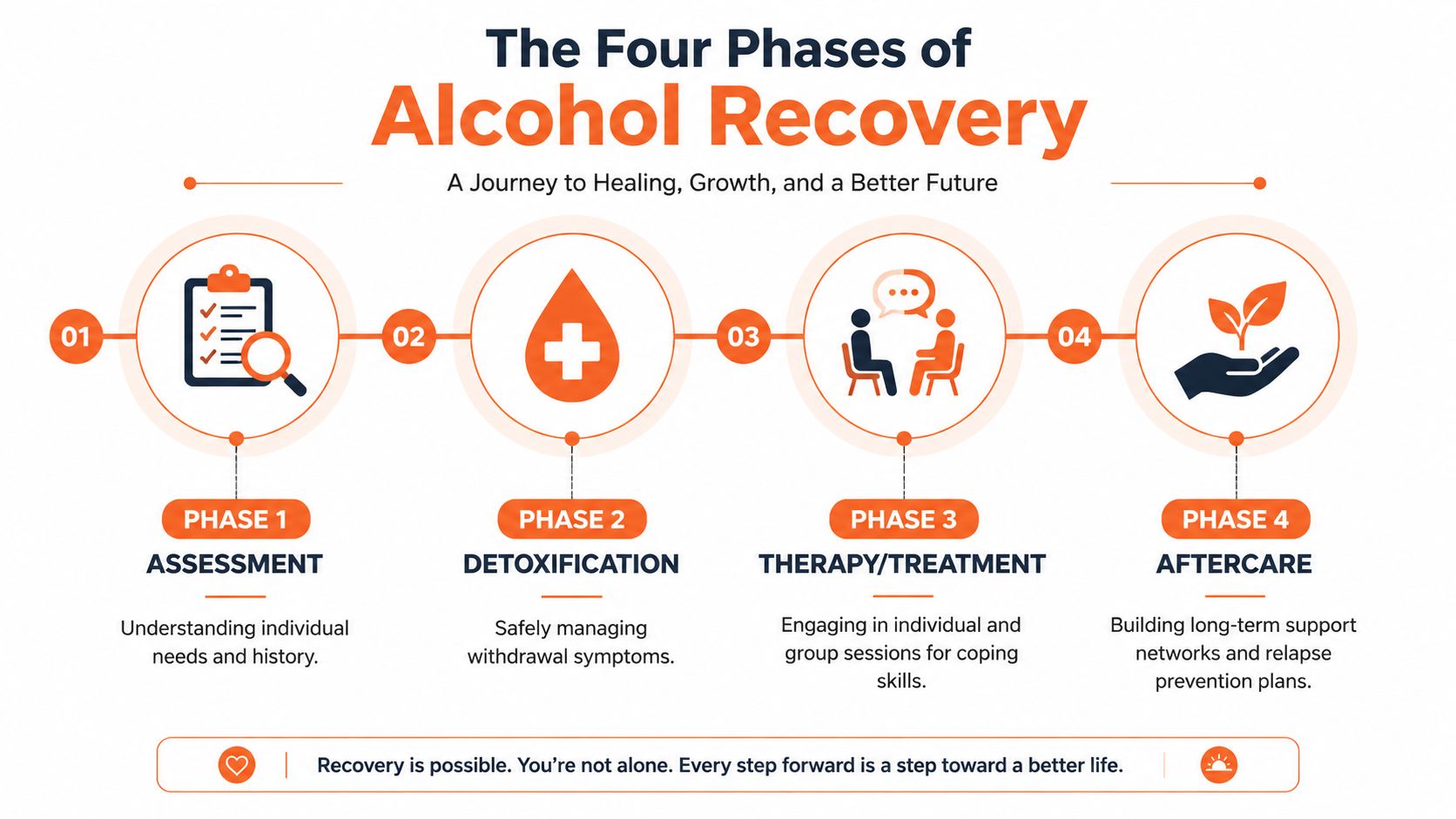
The Four Phases of Alcohol Recovery
A professional may look functional on the surface while alcohol use is already affecting judgment, sleep, and relationships. Recovery is easier to plan when it is divided into phases instead of treated like one abrupt decision. In practice, the path usually starts with assessment, moves through detoxification and treatment, and then continues into aftercare and maintenance.
Assessment and detoxification
The first step is information. A careful assessment reviews drinking history, medical risk, medications, mental health symptoms, family support, and work obligations so the plan fits the person's real life, including privacy concerns and career demands.
Withdrawal is where the stakes rise. About half of people with alcohol use disorder experience withdrawal symptoms when they stop drinking, and detox alone is not treatment (NIAAA). Some people need intensive inpatient or outpatient detoxification, especially when symptoms could become dangerous. That is why a careful assessment comes before anyone tries to quit.
Practical rule: if someone has to choose between hiding symptoms and getting monitored care, choose the monitored care.
Therapy treatment and aftercare
Once the body is stable, the therapeutic work begins. Therapy addresses triggers, routines, relationships, shame, and the habits that kept drinking in place. Treatment courses are usually measured in months rather than days or weeks, which matters because short bursts of care rarely change long-standing behavior patterns (NIAAA).
That long view matters for executives and professionals who need a plan that protects both recovery and work obligations. Privacy, schedule pressure, and the fear of being judged often shape whether someone follows through. A useful resource for understanding why a slip can snowball is Obex helps overcome relapse, which explains how one lapse can distort thinking and trigger a full return to use if it is not addressed quickly. Aftercare then keeps the person connected to support, accountability, and medication or therapy adjustments as needed.
For a more granular look at the recovery process itself, this guide to the five stages of recovery fits well with the phase-based model above.
Evidence-Based Treatments Used in Alcohol Rehab
A professional may arrive at alcohol rehab with one urgent question, which treatment helps without derailing work, privacy, or family life. Evidence-based care answers that question with methods that have been studied in real clinical settings, not with slogans or willpower alone. In practice, that means combining psychotherapy, medical support, and relapse-prevention planning instead of relying on a single approach.
The NIH clinical review states that combining medication with behavioral therapy is the standard of care for AUD, and that clinical trials of naltrexone reduce the likelihood of return to drinking and lower the overall number of drinking days (NCBI review). That matters because cravings, habits, and stress responses all operate at the same time. If treatment only addresses one layer, the others can keep the cycle going.
What the core therapies do
CBT, or cognitive behavioral therapy, helps people identify the thought patterns that justify drinking, such as “I deserve this after a hard day” or “I can't deal with this sober.” DBT is often used when emotion regulation is part of the picture, especially if the person shifts between shutdown, irritability, and impulsive behavior. EMDR can be useful when trauma sits underneath the drinking pattern, because some people use alcohol to blunt unresolved memories or distress.
Medication-assisted treatment adds another layer. Naltrexone does not remove every urge, but it can reduce the pull toward drinking and support the behavioral work happening in therapy. In strong programs, medication management is paired with individual therapy, group work, and psychiatric oversight when anxiety, depression, trauma, or ADHD are part of the clinical picture.
For executives and other professionals, the treatment plan has to work in real life. It should fit around meetings, travel, family responsibilities, and the need for confidentiality without lowering the standard of care. The right plan translates insight into routines, accountability, sleep repair, and a strategy for the hours of the day when drinking used to happen automatically. That is the difference between understanding why drinking is a problem and changing the behavior.
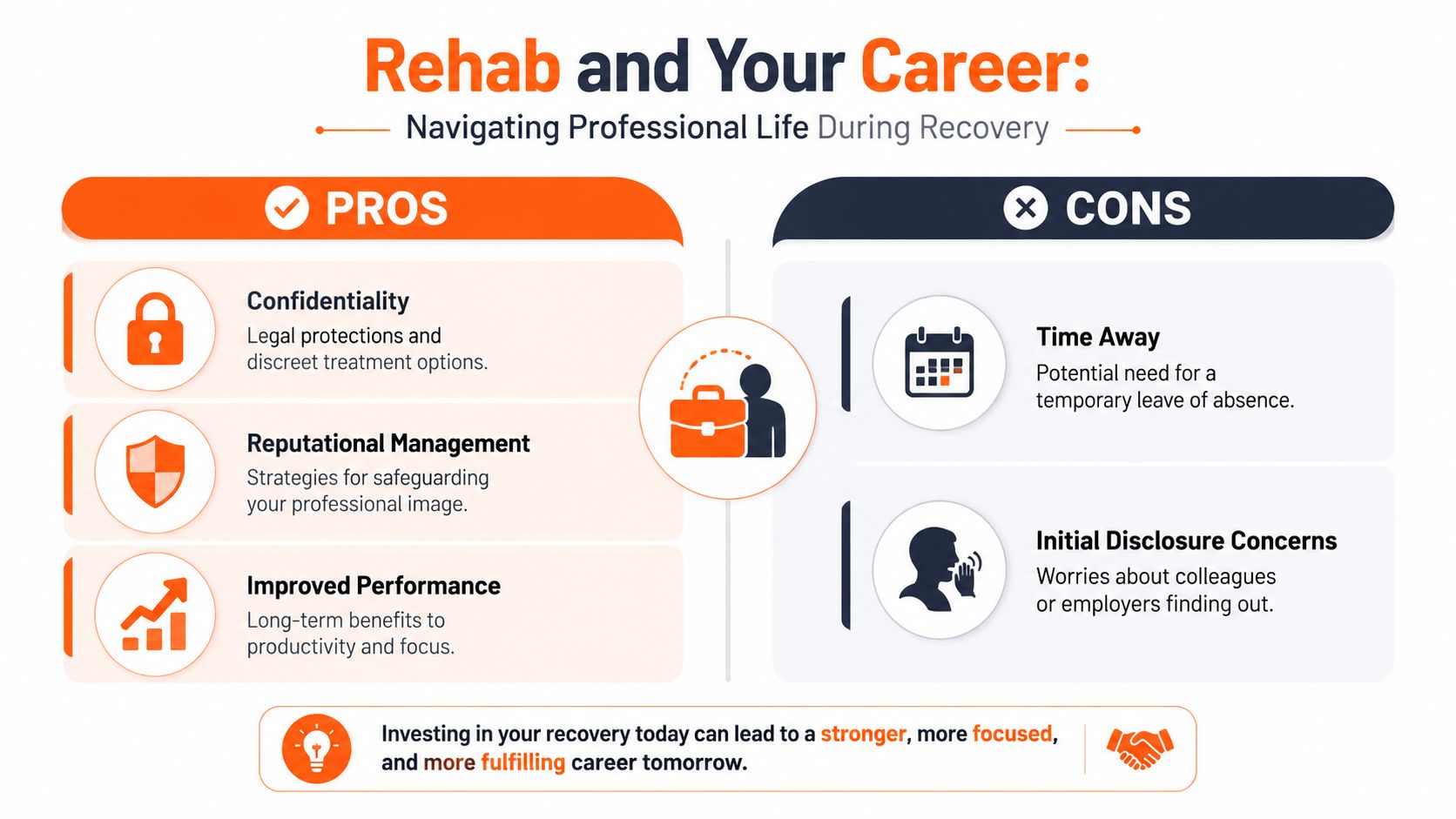
Can I Go to Rehab Without Losing My Career?
Yes, and for many professionals, that's the key question. The old image of rehab assumes total disconnection from work, but that doesn't fit everyone. Executives, physicians, attorneys, entrepreneurs, pilots, and other licensed professionals often need care that protects privacy while still letting them manage urgent responsibilities.
A major underserved angle is what rehab looks like when someone can't fully step away from work. Executive rehab is specifically designed to let people continue work responsibilities, which is a distinct need from standard alcohol rehab coverage that often assumes total disconnection (American Addiction Centers). That distinction matters because many professionals don't need less treatment, they need treatment arranged around reality.
Privacy is a clinical issue, not a luxury
People often treat confidentiality like a perk. In practice, it affects whether someone enters care at all. Smaller programs, discreet admissions processes, and limited exposure to other clients can reduce the fear that keeps professionals stuck. That fear is real, especially for licensed roles where reputational risk can feel bigger than the health risk.
A treatment plan fails early if the patient is more worried about being seen than being helped.
Work compatibility also matters more than many generic rehab pages admit. Friction points are logistics, not theory, and they include phone access for essential decisions, a laptop for urgent work, and space to handle responsibilities without constantly exiting treatment. That's why executive-focused tracks are built differently from standard residential settings.
What to ask before you commit
- Can I handle urgent work needs responsibly? Ask whether the program allows essential phone and laptop use, and under what rules.
- How private is the setting? Ask about room setup, census size, arrival procedures, and how the facility protects confidentiality.
- What happens if I need psychiatric support too? Dual diagnosis treatment matters when alcohol use overlaps with anxiety, depression, trauma, or other conditions.
- Will the schedule support real recovery? A program should still include enough therapy, medical oversight, and follow-up to be effective, not just convenient.
Capo Canyon Recovery is one option that combines detox, residential care, dual diagnosis treatment, and a tech-friendly executive track with private rooms and work access for clients who need to stay connected during care. That doesn't replace medical judgment, but it shows what a more workable professional model can look like in practice.
Taking the First Step Toward Recovery
Alcohol use disorder is common, treatable, and too often left alone until it becomes harder to manage. The safest and most effective rehab plans don't ask you to choose between health and your career. They build care around withdrawal risk, mental health needs, privacy concerns, and the practical demands of being a working adult.
If you're a family member, start with concern and specifics, not accusation. If you're the person drinking, start with one confidential conversation and ask what level of care fits your life. A good assessment should leave you with a clearer plan, not more shame.
The most important move is the first one. Reach out, ask about privacy, ask about work accommodations, and ask what happens after detox so you're not left with stabilization and no follow-through. Recovery works better when it's treated like coordinated medical care, because that's what it is.
A CTA for Capo Canyon Recovery.