
You finish a difficult board meeting, return to a quiet hotel room, and pour a drink before you've taken off your shoes. Sleep comes more easily that way. By morning, you're answering messages, leading the team, and appearing composed, even though your body is still braced for danger. The substance use may look controlled from the outside, while trauma symptoms shape your decisions, relationships, sleep, and capacity to recover.
For executives and other high-functioning professionals, treatment often gets delayed for practical reasons. You may worry about confidentiality, licensure, reputation, income, or the effect of stepping away from work. Yet postponing care can allow both conditions to become more tightly connected. Integrated treatment for PTSD and substance use addresses the trauma and the substance use disorder as related clinical problems, not as separate failures of discipline.
When Trauma and Substance Use Collide in High-Functioning Lives
A senior professional I'll call Daniel had built a career around composure. He could manage a crisis, negotiate under pressure, and keep difficult information from showing on his face. After a traumatic event earlier in life, however, certain conflicts left him restless and watchful. He began drinking at night to quiet the physical tension and fall asleep. The next morning, he used caffeine to feel alert, worked longer hours, and told himself the pattern was temporary.
Nothing collapsed at once. He kept his appointments, met deadlines, and remained available to his family. That apparent stability made it harder for him to recognize that alcohol had become part of his trauma-management system. He wasn't drinking only for pleasure. He was trying to control hyperarousal, intrusive memories, emotional discomfort, and the silence that arrived when the day finally ended.
Why capable people wait
High achievement can conceal impairment. Professionals often compensate by working harder, traveling with carefully planned routines, avoiding situations that trigger memories, or using substances only in private. They may also believe they need to reach a more serious point before treatment is justified.
Career concerns add another layer. A physician may fear professional scrutiny. An attorney may worry about clients and colleagues. An entrepreneur may believe the company can't function without constant access. A private treatment setting, clear confidentiality practices, and a plan for essential communication can reduce those barriers, but the clinical decision still requires honesty about safety and availability.
Practical rule: If a substance is required to sleep, calm down, face a meeting, tolerate intimacy, or stop unwanted memories, it deserves clinical attention even when work performance remains intact.
Trauma doesn't always appear as a dramatic flashback. It can look like irritability, emotional distance, insomnia, compulsive overwork, exaggerated startle responses, avoidance of certain people or places, or an inability to relax without alcohol or medication. Substance use then narrows the person's options further. The executive may still be functioning, but functioning has become expensive, fragile, and dependent on a coping method that creates its own risks.
Seeking help is not an admission that you're incapable. It's a strategic decision to protect judgment, health, relationships, and the career you've worked to build.
The Prevalence of Co-Occurring PTSD and Substance Use Disorders
A high-functioning professional can maintain a demanding schedule while meeting criteria for both PTSD and a substance use disorder. This is a well-established clinical pattern, not an unusual complication. Analysis of the National Comorbidity Survey found lifetime PTSD prevalence of 7.8% and lifetime substance use disorder prevalence of 26.6%. People with PTSD were 2 to 4 times more likely than people without PTSD to meet criteria for an SUD (National Comorbidity Survey findings on PTSD and substance use).
The overlap appears across substance categories. Among men with PTSD, lifetime comorbidity reached 51.9% for alcohol use disorders and 34.5% for drug use disorders. Among women with PTSD, the corresponding figures were 27.9% for alcohol use disorders and 26.9% for drug use disorders. More recent U.S. survey data found that 46.4% of people with PTSD met criteria for any SUD, while 22.3% met criteria for a drug use disorder.
What the numbers mean in practice
These figures do not predict an individual's course or establish which condition came first. They support screening in both directions. A person entering treatment for alcohol or drug problems should be assessed for trauma symptoms. Someone seeking PTSD care should also be asked about alcohol, prescription medication, cannabis, stimulants, and other substances without judgment.
The same pattern appears in treatment settings. A review reported that 20% to 50% of treatment-seeking SUD patients had a lifetime PTSD diagnosis, while 15% to 40% met PTSD criteria in the prior year. Among treatment-seeking PTSD patients, about 20% met criteria for a current SUD, and broader PTSD samples showed alcohol use disorder in about 35% of cases (review of PTSD and SUD comorbidity).
A 2014 systematic review found substantial variation among studies. Comorbid alcohol misuse in PTSD ranged from 9.8% to 61.3%, while PTSD among alcohol-misuse populations ranged from 2.0% to 63.0%. Differences in samples, definitions, and assessment methods explain part of that spread, but most estimates exceeded 10%. For executives and other professionals, the practical implication is clear: privacy-conscious assessment must address trauma and substance use together, rather than waiting for one problem to resolve before examining the other.
How Trauma Drives Substance Use and Why It Backfires
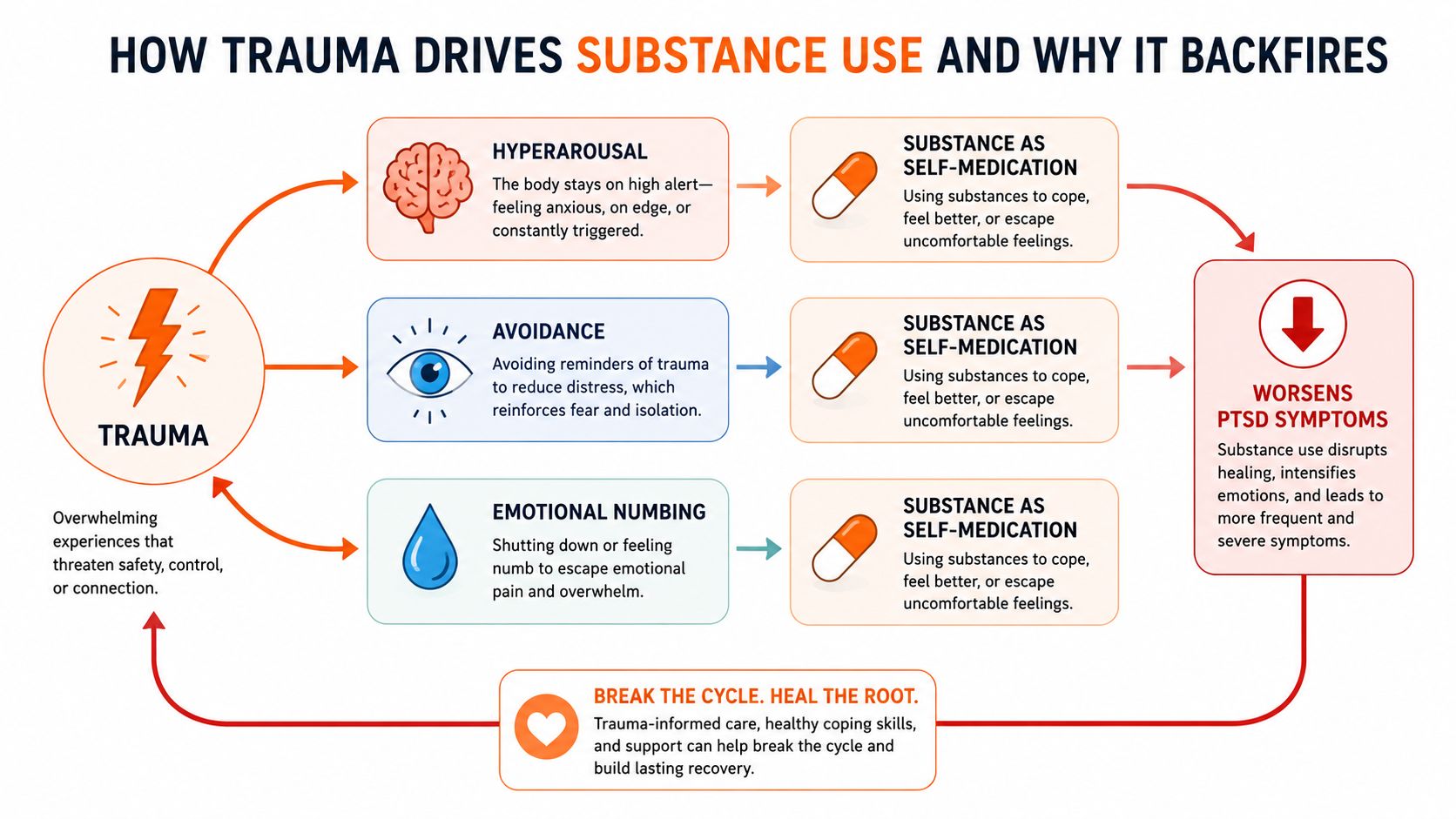
Substance use often begins as an understandable attempt to change an unbearable internal state. Alcohol may soften vigilance and make sleep feel possible. A sedating medication may reduce panic. A stimulant may temporarily counter exhaustion and emotional flatness. The relief is real, but it's usually short-lived.
This pattern is called negative reinforcement. The person repeats a behavior because it removes or reduces something unpleasant, such as fear, agitation, shame, intrusive memories, or emotional numbness. The brain learns that the substance works quickly, even when the longer-term consequences include disrupted sleep, rebound anxiety, impaired emotional regulation, and stronger avoidance.
The biology underneath the pattern
PTSD and substance use disorders involve overlapping biological systems. The comorbidity has been associated with neurotransmitter disruption, dysregulation of the hypothalamic-pituitary-adrenal axis, structural brain differences, and shared genetic risk factors (review of PTSD and substance use neurobiology).
That doesn't mean biology removes responsibility or makes change impossible. It means the problem is more complex than deciding to stop. Trauma can keep the stress system activated, while substance use can interfere with the person's ability to regulate that activation. Withdrawal may intensify anxiety, sleep disruption, irritability, or physical distress, which can then be misread as proof that the substance is necessary.
The result is a self-reinforcing loop:
- Trigger: A memory, conflict, sensory reminder, or work situation activates trauma symptoms.
- Relief-seeking: The person uses alcohol or another substance to reduce distress quickly.
- Short-term benefit: Tension, fear, or intrusive thought may temporarily recede.
- Longer-term cost: Sleep, mood, judgment, and stress regulation deteriorate.
- Renewed vulnerability: The next trigger feels harder to manage without the substance.
Willpower may help someone interrupt a behavior briefly, but it doesn't resolve the trauma cues, biological dysregulation, or learned expectation of immediate relief. Effective care has to make sobriety safer while teaching alternative ways to manage the symptoms that drove substance use in the first place.
Recognizing the Signs That Professional Help Is Needed
You don't need to wait for a public crisis to request an evaluation. A clinical assessment makes sense when substance use and trauma symptoms begin influencing one another, especially when attempts to manage either problem alone keep failing.
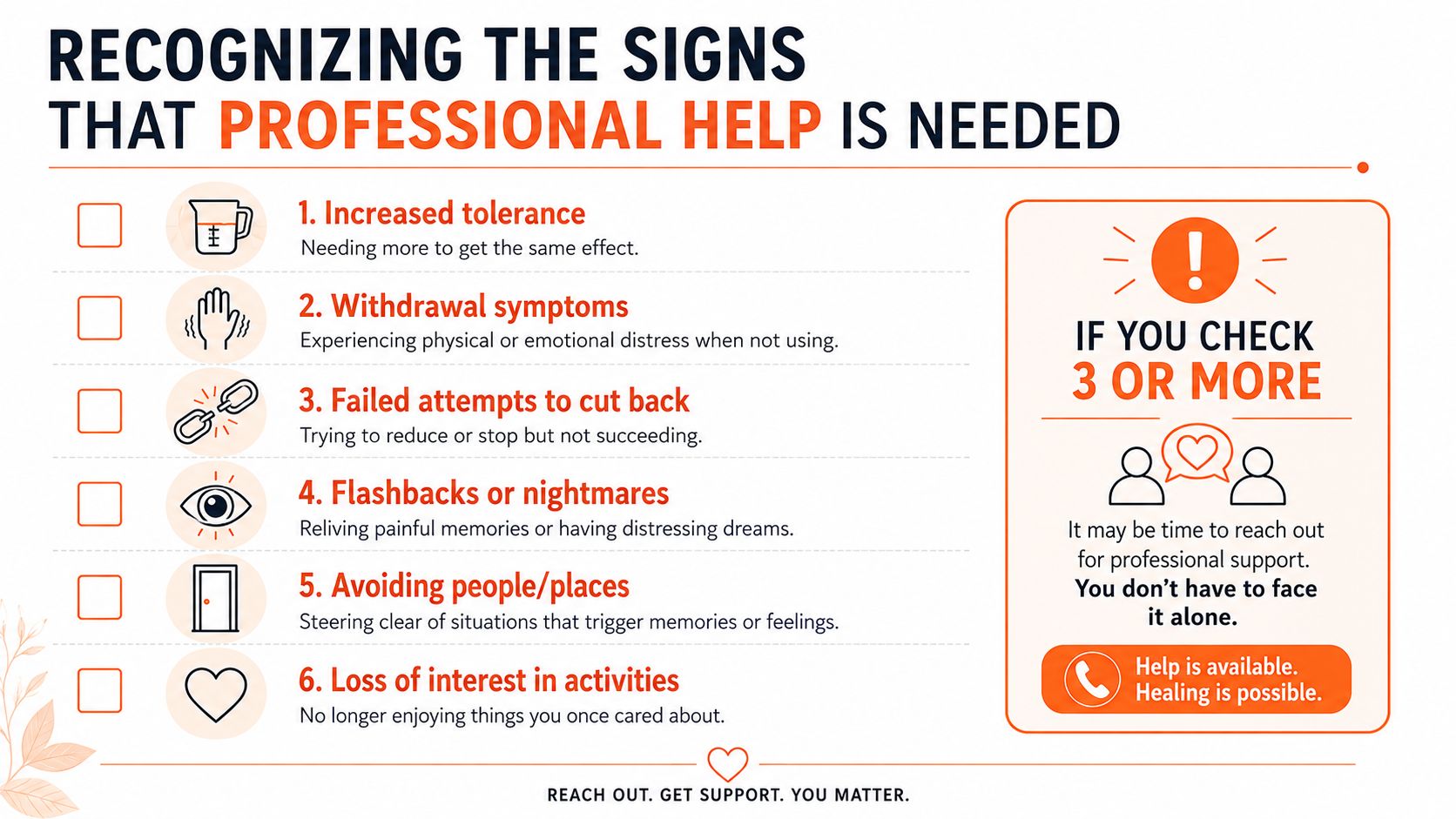
Start with direct questions. Ask yourself whether you're using more often, using more than planned, or arranging your schedule around access to a substance. Consider whether you've tried to cut back and returned to the same pattern, or whether you experience physical or emotional discomfort when you stop. Then examine the trauma side: unwanted memories, nightmares, hypervigilance, avoidance, emotional numbness, or a persistent sense that danger is nearby.
Patterns that deserve attention
Some signs are easy to rationalize in a professional environment. A calendar may hide missed obligations, while a private office hides escalating use. Look for changes that persist or interact:
- Sleep dependence: You can't settle at night without drinking or taking medication.
- Increasing tolerance: The previous amount no longer creates the same effect.
- Concealment: You minimize use, hide supplies, or give different explanations to different people.
- Avoidance: You withdraw from people, places, conversations, or activities connected with trauma.
- Emotional narrowing: Work remains possible, but pleasure, connection, and spontaneity disappear.
- Failed control: You set rules about when or how much you'll use, then repeatedly break them.
Family members and colleagues should avoid turning the conversation into an interrogation. Choose a private moment, describe observable changes, and ask what support would feel safe. “I've noticed you're sleeping poorly and withdrawing after difficult meetings” is more productive than labeling someone as irresponsible or addicted.
A useful starting point: Ask, “What does the substance help you avoid feeling, remembering, or experiencing?”
Urgent medical help is necessary when there's an immediate risk of overdose, dangerous withdrawal, severe confusion, suicidal thinking, or inability to stay safe. Otherwise, the first step can be a confidential evaluation with a provider experienced in dual diagnosis care. The assessment should cover trauma history, current symptoms, substance patterns, medications, sleep, medical risks, work demands, and available support.
Why Integrated Treatment Works Better Than Sequential Approaches
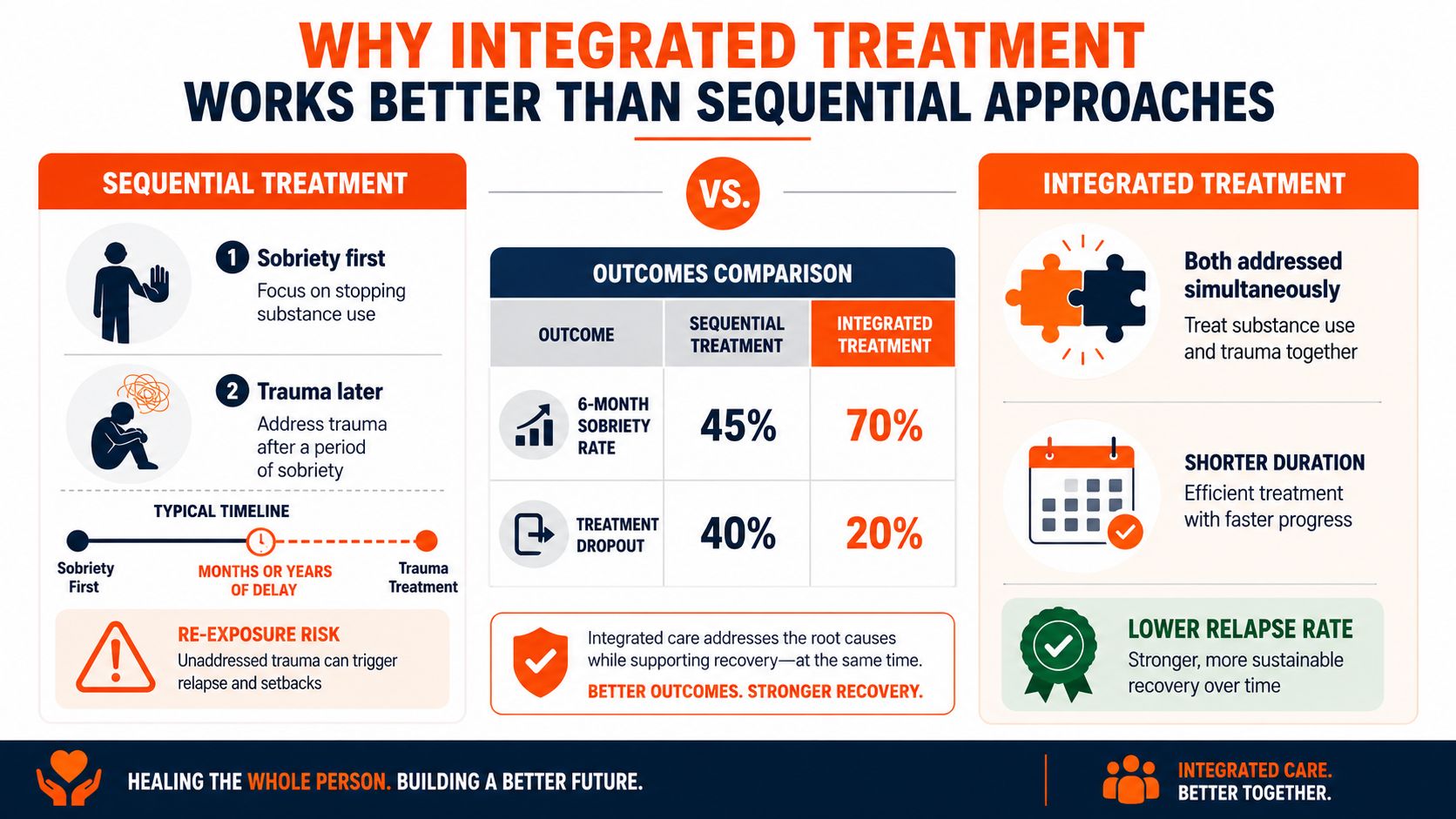
The traditional sequence sounds logical: stop using first, stabilize later, and address trauma after sobriety is established. That approach can be appropriate in certain medical situations, particularly when intoxication or withdrawal creates immediate danger. But as a general rule, forcing people to complete one treatment before receiving help for the other condition often leaves the main driver of use untouched.
Integrated care treats PTSD and SUD within one coordinated plan. The team can stabilize withdrawal, reduce cravings, build emotion-regulation skills, and introduce trauma-focused work at a pace matched to the person's safety and readiness. The patient doesn't have to prove perfect sobriety before clinicians take the trauma seriously.
Sequential care has a predictable weakness
If a person uses substances to suppress nightmares or hyperarousal, sobriety can initially expose the symptoms that the substance was masking. If treatment then postpones trauma care indefinitely, the person may leave with fewer short-term coping tools and the same underlying triggers. Re-exposure to demanding work, family conflict, travel, or trauma reminders can make return to use more likely.
Integrated programs don't push someone into intense trauma processing on the first day. They establish stabilization, medical oversight, coping skills, and a collaborative treatment relationship. Trauma-focused therapy can then proceed without treating substance use as an unrelated issue.
A 2024 review linked PTSD and SUD comorbidity with higher acuity, poorer treatment completion, and worse prognosis, while identifying integrated treatment and trauma-focused psychotherapy combined with pharmacotherapy as promising approaches (2024 review of PTSD and SUD treatment). A 2025 Project Harmony analysis found that reductions in alcohol and drug severity were mediated by reductions in PTSD severity during treatment. In practical terms, substance outcomes may improve when clinicians directly reduce the trauma symptoms that sustain use.
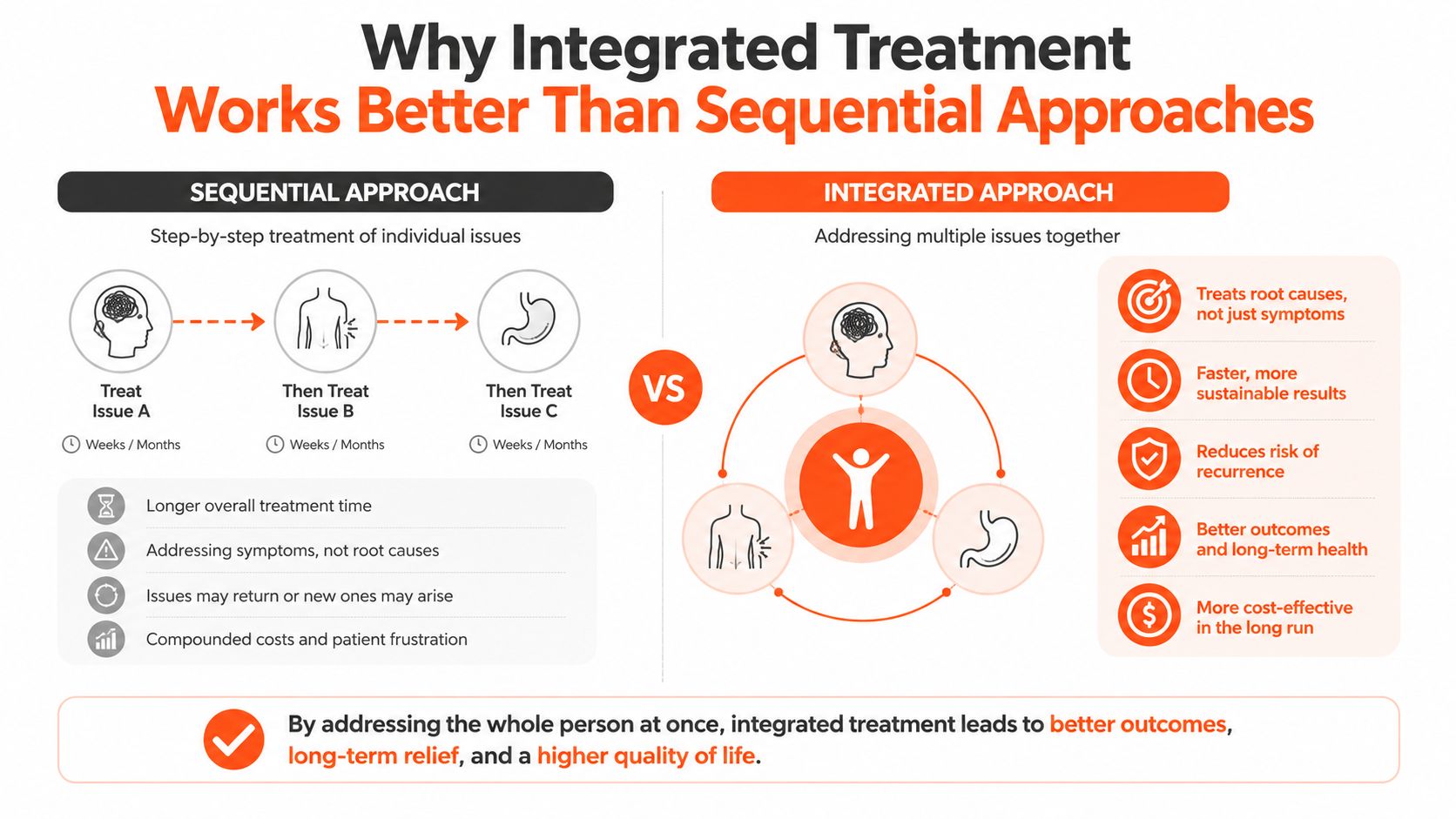
The trade-off is that integrated care requires more coordination and clinical judgment. The team must monitor destabilization, medication interactions, cravings, sleep, and safety while trauma work develops. For many patients, that complexity is precisely why dual diagnosis treatment for executives is more clinically coherent than moving between disconnected programs.
What Evidence-Based Treatment Actually Involves
Treatment begins with assessment, not assumptions. Clinicians need to determine whether withdrawal requires medical supervision, which substances are involved, how severe trauma symptoms are, whether there are medical or psychiatric complications, and what the person must maintain professionally during care.
Stabilization comes before deeper trauma work
Medically supervised detox can provide continuous monitoring while the body adjusts to the absence of alcohol or drugs. Withdrawal can produce significant physical and psychological symptoms, and trauma-related distress may feel sharper when a substance no longer dampens it. Nursing and psychiatric oversight allow the team to respond to changing symptoms, review medications, and create a safer transition into residential treatment.
Residential care then provides structure without reducing treatment to confinement. A typical plan may combine individual therapy, group work, psychoeducation, psychiatric appointments, family involvement when appropriate, sleep support, nutrition, and carefully selected complementary services. The clinical schedule should be intensive enough to create momentum but flexible enough to account for fatigue, medical needs, and trauma-related avoidance.
Modalities should serve a coherent plan
Trauma-focused cognitive behavioral therapy helps patients identify trauma-linked beliefs, avoidance patterns, and behavioral responses. It can connect thoughts, body sensations, emotions, and actions so the patient can respond to reminders without automatically reaching for a substance.
EMDR uses structured bilateral stimulation while the patient processes traumatic memories. The therapist monitors arousal and pacing rather than asking the patient to endure distress without support.
DBT teaches concrete skills for distress tolerance, emotional regulation, mindfulness, and interpersonal effectiveness. Those skills are especially useful when cravings rise after conflict or when trauma symptoms produce impulsive decisions.
ACT helps patients notice painful internal experiences without organizing their entire life around avoiding them. The work emphasizes values and committed action, which can be particularly relevant to professionals whose identities have narrowed around achievement and control.
Medication management may address trauma-related symptoms, sleep, anxiety, mood instability, or cravings. Medication isn't a substitute for psychotherapy, and it should be reviewed alongside substance history, withdrawal risk, medical conditions, and the person's response over time. A program such as evidence-based addiction treatment at Capo Canyon Recovery may combine detox, residential care, psychiatric monitoring, individual therapy, group therapy, and modalities including CBT, DBT, ACT, EMDR, and Brainspotting.
The strongest plan is individualized. It answers practical questions, including how often the person meets with clinicians, how family participates, how work communication is handled, and what happens after discharge.
Treatment Considerations for Executives and Professionals
Executives don't need a treatment program built around status. They need one that understands privacy, decision fatigue, professional obligations, and the consequences of poorly coordinated care. A person responsible for a company or licensed practice may need to remain reachable for a narrow set of essential matters without allowing work to become an escape from treatment.
Confidentiality begins with the setting and the operating policies. A small census can reduce exposure and make it easier for clinicians to know the patient's history in detail. Private rooms provide space for rest, reflection, and limited work when clinically appropriate. Technology access can allow a patient to handle urgent communication through a cell phone or laptop, while boundaries keep the device from consuming the treatment day.
What executive-focused care should include
Look for specific features rather than relying on labels:
- Clinical access: Frequent individual sessions with a therapist, case manager, and psychiatric professionals create more opportunities to identify problems before they become crises.
- Medical coverage: Continuous nursing and psychiatric oversight support safer detoxification, medication changes, and stabilization.
- Privacy practices: Ask who can access records, how visitors are managed, and how staff handle professional or public-facing clients.
- Work boundaries: A credible plan distinguishes essential communication from habitual checking, delegation, and avoidance.
- Continuity: The program should coordinate aftercare, outpatient therapy, medication follow-up, and professional monitoring when relevant.
A private setting can make treatment more feasible, but privacy shouldn't mean isolation from accountability. The patient still needs honest assessment, observable goals, and a team willing to challenge rationalizations. A flexible schedule should support recovery, not recreate the conditions that allowed substance use to remain hidden.
Specialized rehab for executives may include private accommodations, technology-friendly policies, individualized treatment, and a lower client-to-staff ratio. Capo Canyon Recovery describes a small residential environment, private rooms, cell phone and laptop access, 24/7 nursing and psychiatric support, insurance verification, and private-pay arrangements. Those are logistical features, not guarantees of outcome, so prospective patients should ask how the clinical team measures progress and handles setbacks.
The financial and career calculation deserves a broader frame. A short-term interruption can be uncomfortable, but untreated trauma-driven substance use can impair judgment, relationships, health, and professional reliability for much longer. Getting an evaluation is a way to make that decision with facts instead of waiting for circumstances to make it for you.
Treatment Outcomes and Building a Sustainable Recovery
Recovery rarely looks like the disappearance of every difficult memory. A more credible goal is improved regulation, fewer trauma-driven reactions, safer decisions, sustained reduction or abstinence from harmful substances, and the ability to respond to triggers without losing control.
After residential care, the plan should remain specific. It may include ongoing trauma therapy, medication follow-up, recovery meetings or other peer support, family work, sleep protection, and a written response for cravings or nightmares. Professionals also need a return-to-work strategy that identifies travel risks, high-conflict meetings, late-night routines, and the people authorized to help when symptoms rise.
Progress needs monitoring
A patient and treatment team can track practical indicators:
- Are sleep and concentration improving without relying on substances?
- Can the person tolerate trauma reminders with coping skills?
- Are cravings becoming less urgent or less frequent?
- Has communication with family or colleagues become more direct?
- Is the professional schedule supporting recovery rather than hiding deterioration?
Complex PTSD deserves careful attention in this process. A 2025 study found that complex PTSD symptom severity, particularly affect dysregulation, negative self-concept, and relationship disturbance, was positively associated with psychological dependence, while PTSD symptoms alone were not. The finding supports individualized formulation rather than assuming every patient uses substances for the same reason (study of complex PTSD symptoms and psychological dependence).
A setback is information, not proof that treatment failed. It may show that trauma work moved too quickly, support was reduced too soon, work demands were underestimated, or a medication needs review. The right response is prompt clinical contact and adjustment, not secrecy.
You can protect your career more effectively by building a recovery system before returning to full pressure. If trauma and substance use are already affecting sleep, judgment, relationships, or safety, contact a qualified dual diagnosis provider and ask for a confidential assessment. Capo Canyon Recovery offers medically supervised detox, residential care, psychiatric oversight, trauma-focused therapies, and executive-oriented support for professionals who need privacy while addressing both conditions.
If PTSD symptoms and substance use are affecting your sleep, judgment, or ability to lead, contact Capo Canyon Recovery for a confidential discussion about integrated detox and residential treatment. Visit Capo Canyon Recovery to review executive-focused care options and take the next step with a team equipped to address trauma and substance use together.