
You're leading a company, managing a practice, flying routes, defending clients, or carrying responsibility for people who depend on your judgment. The drinking may still look controlled from the outside, but mornings are harder, decisions take longer, and the private effort required to keep alcohol use invisible keeps growing. The question isn't whether you can continue working. It's whether continuing this way is safer than entering treatment now.
For executives and licensed professionals, alcohol addiction rehab in California has to solve more than alcohol withdrawal. It must address confidentiality, clinical risk, technology access, psychiatric needs, professional obligations, and the transition back to real life. A polished setting can help, but amenities don't replace medical oversight, individualized therapy, or a plan that remains usable after discharge.
Why Executives Hesitate to Enter Alcohol Rehab in California
A chief executive may recognize the problem after a missed meeting, a troubling health result, or a conversation with a spouse. A physician may worry about licensing consequences. An attorney may fear that colleagues will interpret treatment as weakness. A business owner may believe the company can't function without daily involvement. These concerns are practical, not excuses, and a viable program has to take them seriously.
The mistake is treating rehab as an all-or-nothing disappearance. Some people need complete separation from devices and work while they stabilize. Others need limited, structured access to a phone or laptop for essential obligations. The clinical question is whether technology supports recovery or becomes a way to avoid it. A private workspace, scheduled communication windows, and clear boundaries can be more useful than an unrestricted device policy.
Clinical rule: Privacy should reduce unnecessary exposure, not shield a person from honest assessment, accountability, or treatment participation.
The cost of waiting
Professionals often delay because the immediate consequences of admission feel more visible than the consequences of continued drinking. That calculation can ignore impaired judgment, deteriorating relationships, medical complications, and the risk of a withdrawal episode outside clinical supervision. The long-term cost of delaying professional addiction treatment deserves a direct discussion with a qualified clinician, not a decision made during a late-night crisis.
A strong intake process should identify what must be protected, what can be delegated, and what cannot continue during treatment. The team may coordinate with a trusted family member, executive assistant, attorney, physician health program, or employer representative, but only with appropriate consent. Confidentiality isn't a marketing adjective. It's an operational practice involving admissions, transportation, records, communication, visitors, and staff training.
Treatment as a structured intervention
The right program doesn't promise that a client can keep working normally. It determines which responsibilities are clinically compatible with care. Detox may require near-total attention to medical stabilization. Residential treatment may allow limited contact while requiring consistent therapy, sleep, meals, medication management, and recovery work.
That distinction matters. A program designed around comfort alone may leave the central disorder undertreated. A program designed around rigid disconnection may be impossible for someone responsible for a company or regulated practice. High-quality care makes the trade-off explicit and builds a plan around safety first.
The Scale of Alcohol Use Disorder and Treatment Access in California
California has a large treatment system, yet demand exceeds access. 2023 state estimates counted 1,153,000 Californians receiving substance use treatment and 6,135,000 classified as needing it. The same figures indicate that about 81.4% of people classified as needing care were not receiving it, according to SAMHSA's California state estimates.
Alcohol creates a distinct access problem because socially accepted drinking can conceal clinically serious use. California's adult alcohol-use-disorder factsheet reported that 12% of adults age 18 and older met criteria for alcohol use disorder in 2021. It also reported that 11% of those adults said they needed but did not receive treatment at a specialty facility during the past year. For executives and licensed professionals, privacy concerns, work obligations, and limited technology access can make that gap harder to address.
The DHCS Statewide Needs Assessment recorded alcohol use disorder among 6.28% of Californians age 12 and older in 2018–2019, compared with 7.87% in 2008–2009. The decline does not remove the need for treatment. It highlights why referral decisions still require attention to medical supervision, psychiatric complexity, confidentiality procedures, and the client's ability to participate in care without exposing sensitive professional information.
Why residential care remains important
The California NSSATS profile listed 1,734 substance-abuse treatment facilities and 70,034 clients in treatment on March 31, 2020. Its broader context reported an annual average past-year alcohol use disorder prevalence of 6.0%, representing about 2.0 million people, during 2017–2019.
Those figures do not place every client in residential treatment. Outpatient care can fit people with low withdrawal risk, stable housing, reliable attendance, and sufficient support. Residential care warrants stronger consideration when alcohol use remains persistent, the home setting is unstable, psychiatric symptoms are active, or earlier outpatient attempts have not produced durable change.
California's system also recorded 96,960 people enrolled in substance-use treatment on a single day in March 2019, according to the same profile. A large system offers choices, but it also increases referral responsibility. Before admission, the referring professional should verify the facility's license, medical capability, level of care, privacy practices, technology arrangements, and discharge coordination.
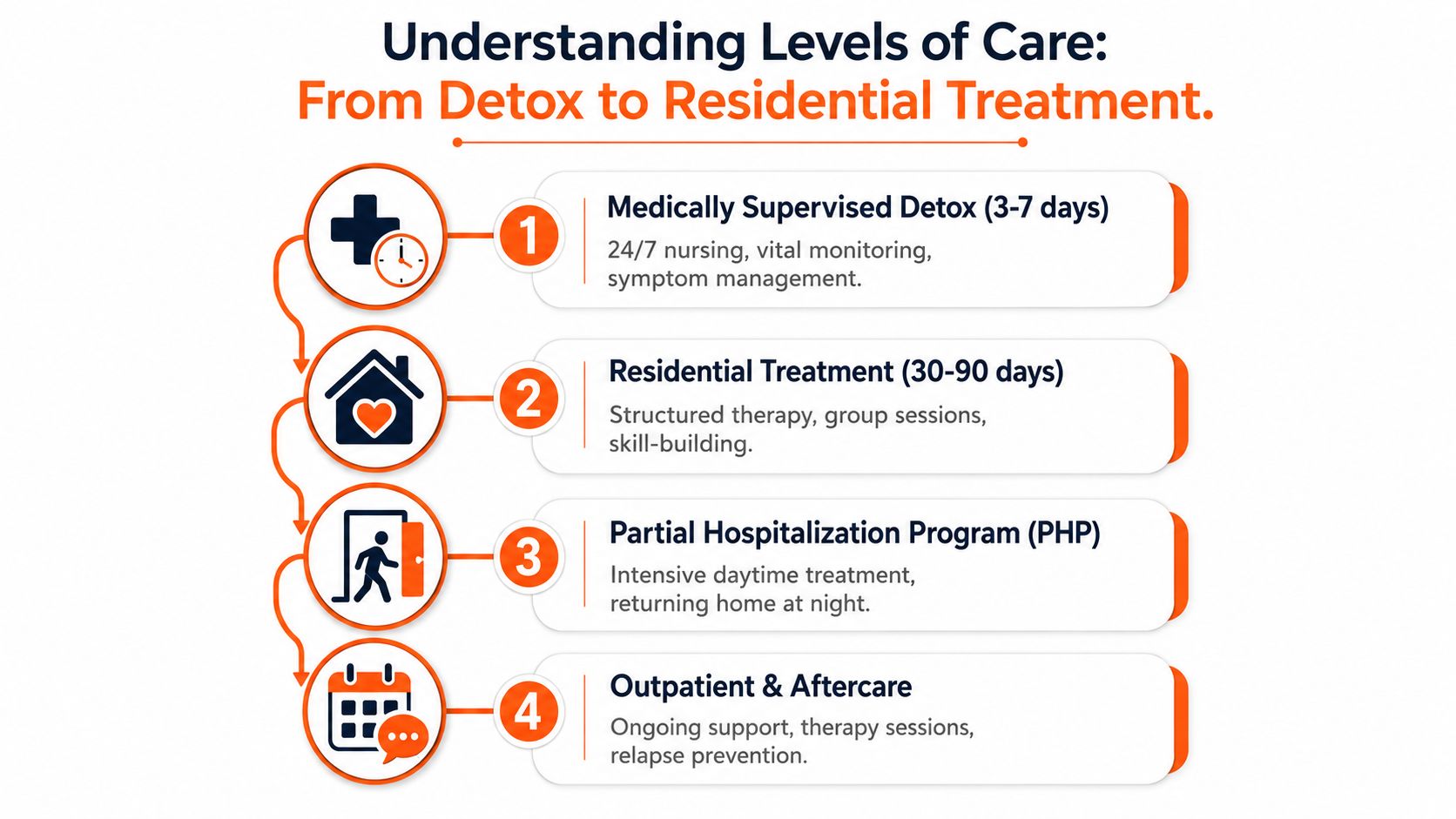
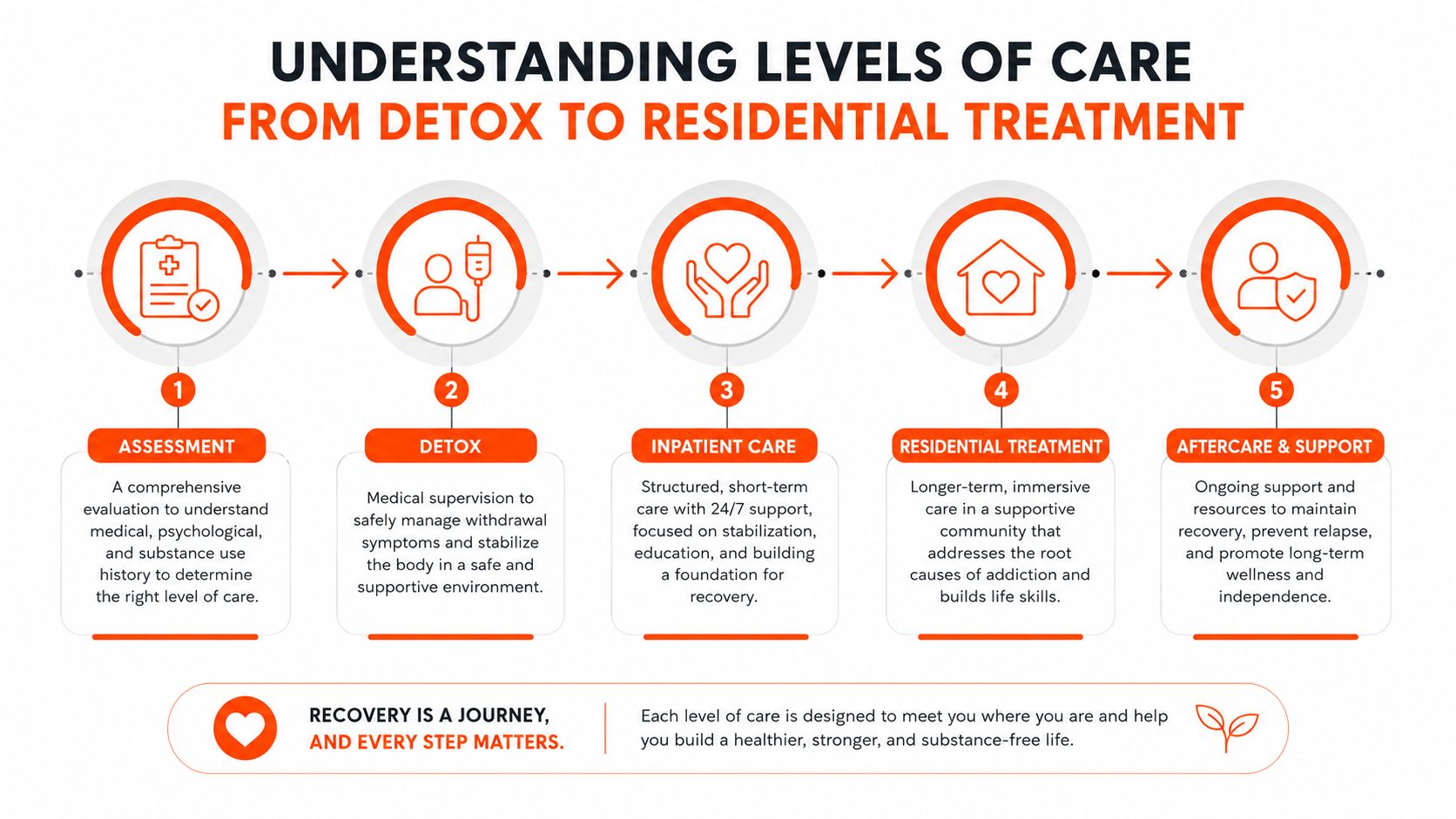
Understanding Levels of Care From Detox to Residential Treatment
Treatment levels aren't interchangeable. The appropriate starting point depends on withdrawal history, current alcohol use, medical conditions, psychiatric symptoms, home support, and the person's ability to remain safe outside a structured setting. A clinician should assess those factors before placement rather than allowing a client to choose based only on room type or location.
Medically supervised detox
Alcohol withdrawal can escalate quickly, particularly after sustained heavy use or a history of complicated withdrawal. Evidence-based inpatient protocols emphasize continuous clinical monitoring, including nursing assessment of vital signs and symptom progression, alongside supportive care such as fluids, electrolyte replacement, thiamine before glucose, folate, and symptom control. The NCBI clinical guidance on alcohol withdrawal management explains why medical supervision matters during this phase.
Detox is not the same as rehabilitation. It addresses immediate physiological stabilization, but it doesn't by itself change the routines, beliefs, relationships, psychiatric symptoms, or professional pressures that maintain alcohol use. A safe detox plan should include a clear handoff into residential, partial hospitalization, intensive outpatient, or another clinically suitable level.
Residential treatment
Residential care provides a controlled environment where clients can sleep consistently, receive medication monitoring, attend therapy, and practice recovery skills without managing alcohol access at home. The day usually combines individual sessions, groups, psychiatric appointments, case management, meals, rest, and planned contact with family or professional supports.
The value isn't just being away from alcohol. Residential structure gives clinicians repeated opportunities to observe sleep, anxiety, irritability, cravings, medication response, participation, and interpersonal patterns. That information helps the team refine treatment instead of relying on a single intake interview.
A useful overview of the different levels of care in rehab can help families understand why a client may move between services rather than remain at one intensity throughout recovery.
PHP, outpatient care, and aftercare
A partial hospitalization program offers intensive daytime treatment while the client returns to a residence at night. It can work when the person has a safe living environment and enough stability to manage evenings without residential supervision. Intensive outpatient and standard outpatient services provide progressively less structure, making them useful for continuing therapy, relapse-prevention planning, medication management, and accountability.
California's 2025 planning report shows how outpatient-heavy the system is. It reported that 29.6% of outpatient clients and 7.1% of intensive day-care clients stayed 31 days or longer, while 9.6% of outpatient stays lasted 30 days or fewer, according to the 2025 DHCS SNAP Report. Those figures don't determine an individual's treatment duration, but they illustrate why placement decisions and continuity planning deserve attention.
How Executive and Private Programs Differ From Standard Rehab
“Executive rehab” should describe a care design, not a decorative package. A private room, attractive meals, and a quiet setting may improve comfort, but they don't establish clinical quality. The meaningful differences involve census, staffing, communication rules, psychiatric access, documentation, and whether the program can maintain treatment intensity while accommodating essential responsibilities.
| Feature | Standard Residential Program | Executive or Private Program |
|---|---|---|
| Census and setting | May serve a broader mix of clients in a larger environment | Often emphasizes a smaller, more discreet setting |
| Technology access | May restrict phones and laptops broadly | May permit structured access for essential work or family communication |
| Privacy | Shared spaces and standard admissions procedures may be common | May use private rooms, controlled communication, and discreet logistics |
| Clinical contact | Treatment may rely heavily on scheduled groups | May offer more individual therapy, case management, and psychiatric coordination |
| Work obligations | Usually expects a clearer separation from professional duties | May plan limited, clinically appropriate work contact |
| Personalization | Standardized tracks can support consistency | Treatment plans may be more tailored to professional, psychiatric, and family needs |
What technology can and can't do
A technology-friendly policy isn't automatically therapeutic. Unrestricted access can let a client manage crises, monitor business activity, or contact family. It can also preserve compulsive work patterns, expose the client to stress, or interfere with sleep and group participation. The program should explain when devices are allowed, where they can be used, who can contact the client, and what happens if technology starts undermining treatment.
Privacy must be operational
Privacy includes more than a secluded address. Ask how the facility handles arrival and departure, records, visitors, phone calls, staff conversations, roommate assignments, and communication with employers or professional representatives. A small census may make discretion easier, but the facility still needs formal confidentiality procedures and a clear consent process.
Clinical substance over cosmetic appeal
Executive-focused care is worthwhile when it improves engagement and continuity without diluting accountability. Ask for the weekly schedule, individual therapy frequency, psychiatric availability, nursing coverage, group composition, family involvement, and discharge process. If the admissions conversation centers on scenery while avoiding withdrawal management or dual diagnosis, that's a warning sign.
Dual Diagnosis and Evidence-Based Therapy for Professionals
Alcohol is often the visible behavior, not the whole diagnosis. A professional may drink to quiet panic before a presentation, sleep after prolonged overwork, blunt trauma memories, manage attention difficulties, or escape depressive thinking. Anxiety, depression, trauma, ADHD, and bipolar symptoms each require different assessment and treatment decisions, and alcohol can complicate the presentation of all of them.
A dual-diagnosis program should integrate psychiatric evaluation with substance-use treatment rather than placing mental health concerns in a separate, loosely connected track. Clinicians need to distinguish intoxication, withdrawal, medication effects, mood episodes, trauma responses, and longstanding symptoms. That process takes observation over time, collateral information when appropriate, and regular communication among therapists, nurses, psychiatrists, and case managers.
Matching therapy to the clinical problem
Cognitive behavioral therapy can help clients identify automatic thoughts, drinking cues, avoidance patterns, and decisions that increase risk. Dialectical behavior therapy can strengthen distress tolerance, emotional regulation, interpersonal effectiveness, and crisis skills. Acceptance and commitment therapy helps clients act according to values even when cravings, shame, or anxiety remain present.
Trauma-focused work requires pacing. EMDR or Brainspotting may be appropriate for some clients, but neither should become a fashionable add-on delivered without stabilization and clinical judgment. A person in acute withdrawal, severe sleep disruption, or an unstable mood episode may first need safety, medication support, and grounding skills.
What individualized care looks like
High-intensity treatment shouldn't mean filling every hour with generic groups. It should mean that the team can answer specific questions:
- What maintains the drinking? Work stress, trauma, loneliness, insomnia, access, relationships, mood instability, or another factor?
- What changes first? Withdrawal safety, sleep, medication response, anxiety, drinking cues, or family boundaries?
- How is engagement measured? Attendance alone isn't enough. The team should track participation, skill use, symptom changes, and follow-through.
- Who coordinates the return home? A case manager should connect treatment recommendations with psychiatry, therapy, family supports, professional monitoring, and continuing care.
California's statewide needs assessment describes tracking substance-use-disorder prevalence, service utilization, client outcomes, and program performance across relevant populations, as discussed in the UCLA summary of the statewide needs assessment. That emphasis reflects an important clinical principle: admission is only the beginning. Retention, meaningful participation, and continuity deserve equal attention.
Licensing and Quality Markers to Verify Before Admission
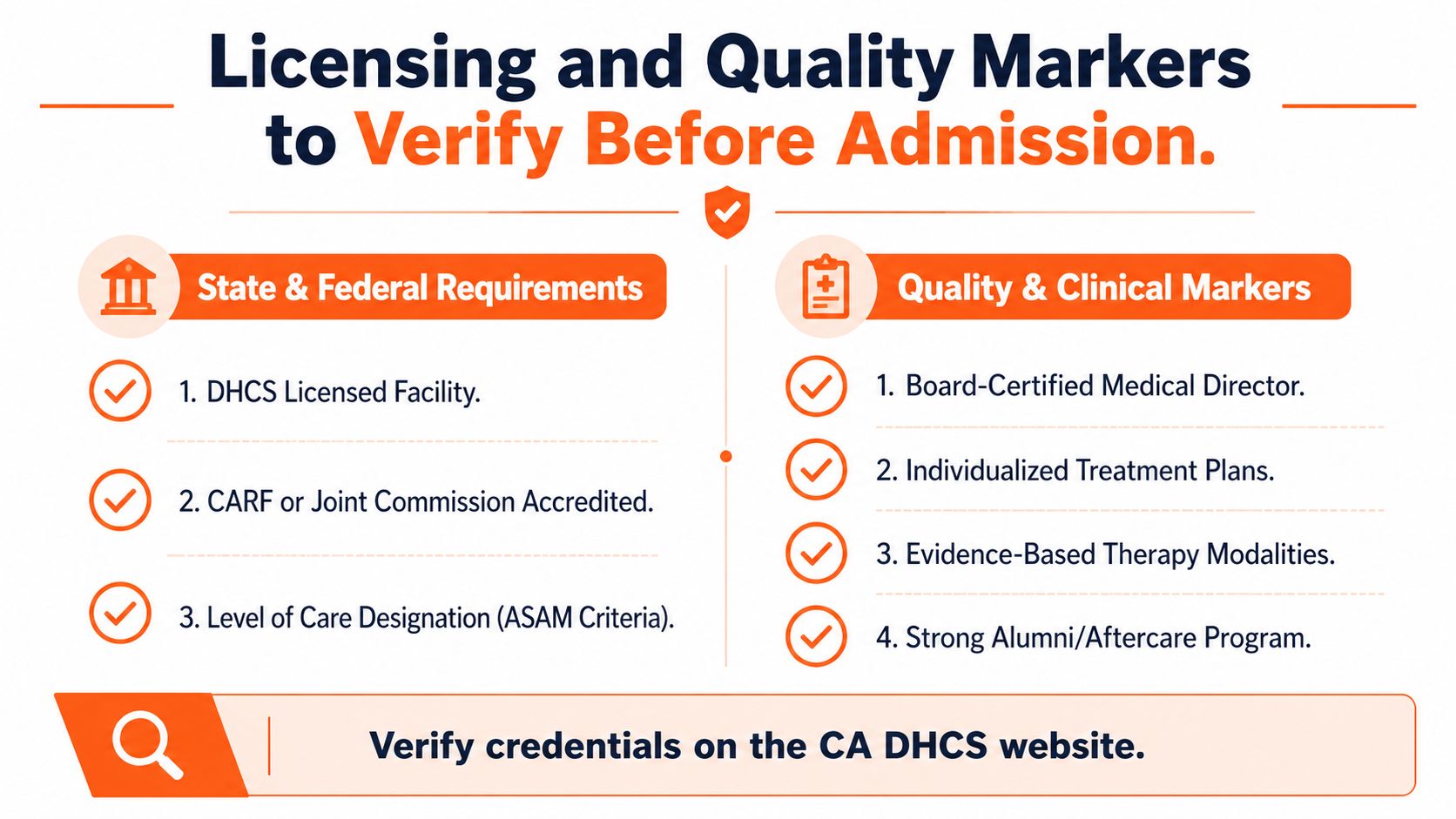
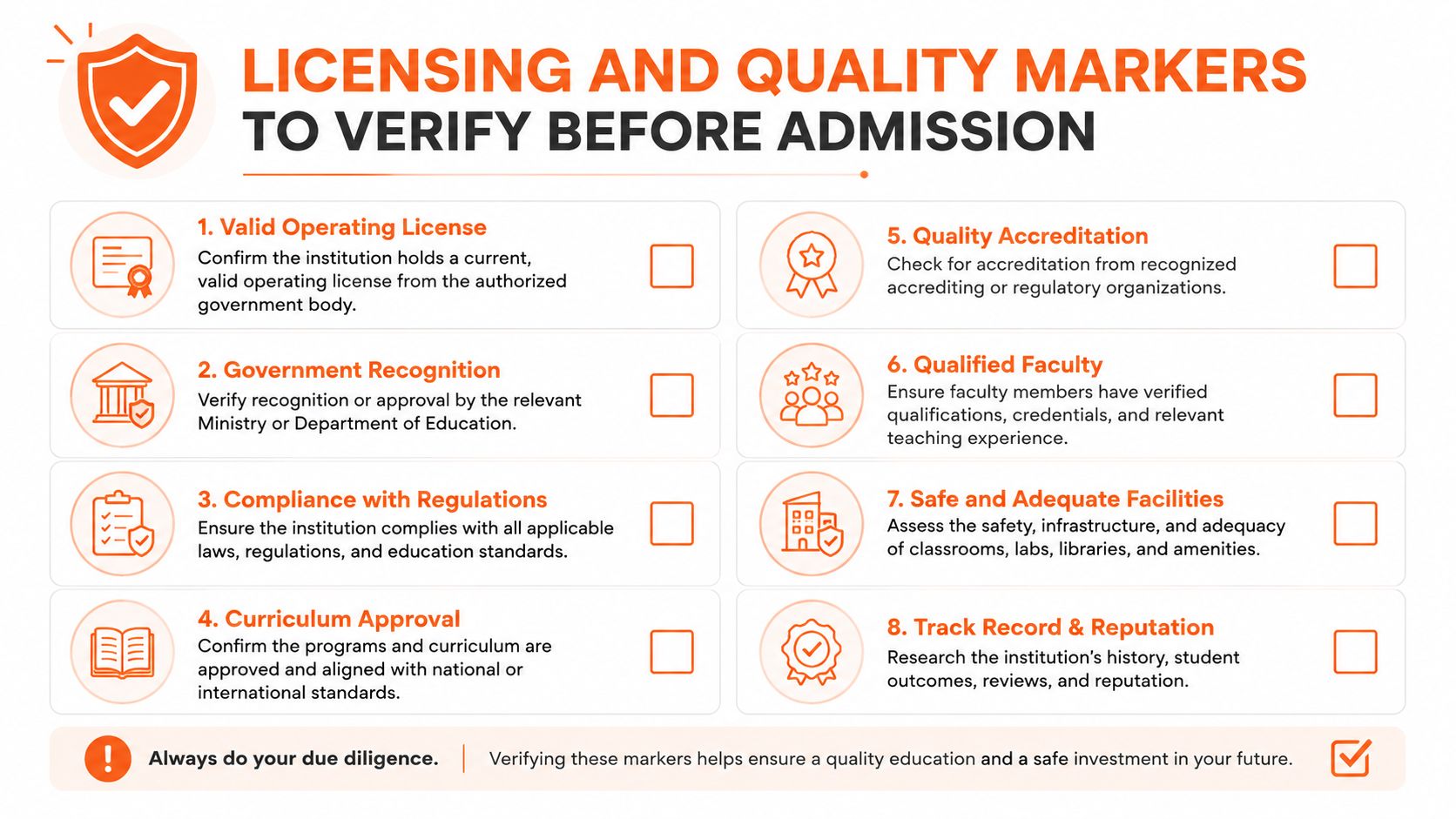
California gives families and referral professionals a concrete starting point. A residential alcohol or drug recovery facility that provides services such as detoxification, individual or group sessions, or treatment planning must be licensed by the California Department of Health Care Services, as explained in the DHCS facility licensing requirements. The state also requires at least one DHCS Level of Care Designation and/or ASAM residential certification that matches the facility's program.
That requirement doesn't tell you everything about a program, but it separates verifiable operations from vague marketing. Confirm the facility's license directly, ask which services the license covers, and determine whether the designation matches the care being promised.
Questions that reveal clinical capacity
Use the admissions call to test specifics rather than collect general assurances:
- Who manages withdrawal? Ask whether nurses monitor symptoms continuously, whether a physician or psychiatric prescriber is available, and what happens if symptoms become more severe.
- Who provides psychiatric care? Clarify the prescriber's role, appointment frequency, medication-review process, and response to mood instability or severe anxiety.
- How is the plan individualized? Request examples of how therapy, medication, family work, and discharge planning change based on assessment.
- What does staffing look like? Ask which disciplines are on site, how overnight coverage works, and who handles emergencies.
- What happens after discharge? The answer should include appointments, medication continuity, crisis planning, family communication, and step-down care where appropriate.
Accreditation can provide another quality signal, but it shouldn't replace direct questions. A facility may hold respected credentials and still be a poor fit for a client who needs privacy, technology access, trauma treatment, or substantial psychiatric oversight.
Marketing claims to challenge
Be cautious with promises of guaranteed sobriety, effortless confidentiality, or treatment that fits smoothly around every professional obligation. Recovery requires time, discomfort, honest participation, and a willingness to change daily behavior. A program that won't explain its boundaries may be selling an experience rather than delivering a treatment plan.
Due diligence standard: Verify the license, identify the actual clinicians, inspect the level-of-care structure, and ask how the program responds when a client becomes medically or psychiatrically unstable.
Insurance, Private Pay, and Regional Considerations in Southern California
Insurance verification should happen before admission whenever possible. Ask the facility to confirm benefits, authorization requirements, covered levels of care, exclusions, deductibles, and the process for continued-stay reviews. Coverage doesn't guarantee placement, and authorization doesn't guarantee that a particular program can meet the client's clinical or privacy needs.
Private pay can offer more flexibility, but it doesn't remove the need for scrutiny. Families should request a written explanation of what the quoted arrangement includes, such as detox, residential treatment, psychiatry, medication management, therapy, laboratory services, transportation, and continuing care coordination. They should also ask what may create separate charges.
The insurance coverage guide for addiction treatment can help families prepare for those conversations, but a facility's financial team still needs to verify the individual policy and explain its limitations.
Choosing a region strategically
Southern California offers geographic separation from a client's usual routines, professional network, or home environment. That distance can support privacy and reduce immediate access to alcohol, but it can also complicate family participation, follow-up appointments, and return-to-work planning. Orange County may be convenient for clients from the region, while clients elsewhere in California may prefer a setting that creates more separation.
Location should follow clinical fit. Compare medical coverage, psychiatric capability, census, privacy procedures, tech rules, therapy intensity, and discharge coordination before comparing scenery or brand reputation. A coastal address can't compensate for weak continuity of care.
For referral professionals, regional planning also matters because capacity changes. California's planning system includes waiting-list and capacity tracking when counties reach high occupancy, which shows that placement logistics remain active constraints rather than solved administrative details. Ask about the current admission pathway, expected timing, and what happens if the preferred level of care isn't immediately available.
Next Steps and Common Questions About California Alcohol Rehab
A practical admission process starts with a clinical conversation, not a tour. The person seeking care, or a trusted advocate with permission, should describe current alcohol use, prior withdrawal, medical history, psychiatric symptoms, medications, previous treatment, work demands, and immediate safety concerns. Accurate information helps the program decide whether it can safely provide care or whether another setting is more appropriate.
A workable decision sequence
- Request a clinical screening. Ask who conducts it and whether a medical or psychiatric professional reviews the information.
- Verify credentials. Confirm DHCS licensing and the relevant level-of-care designation or ASAM residential certification.
- Clarify privacy and technology. Get the device policy, communication boundaries, private-room availability, and confidentiality procedures in writing.
- Review the clinical schedule. Ask about nursing, psychiatry, individual therapy, groups, family work, medication management, and case management.
- Plan the work transition. Identify delegated responsibilities, emergency contacts, message boundaries, and a realistic return-to-work process.
- Build continuing care before discharge. Arrange therapy, psychiatry, recovery support, medication follow-up, and a response plan for cravings or psychiatric deterioration.
Common questions from professionals and families
Can I keep my phone or laptop during treatment?
Some executive-oriented programs permit devices under defined conditions. That may support essential communication, but access should be limited enough to protect sleep, therapy participation, and emotional stability. Ask for the exact policy rather than assuming “executive” means unrestricted access.
Will residential treatment make my absence obvious?
No program can promise that others won't notice an absence. A facility can reduce unnecessary exposure through discreet admissions, controlled communication, confidential records, and careful coordination. The client should discuss professional obligations with the treatment team before admission.
How long will I need to stay?
Duration depends on withdrawal risk, medical stability, psychiatric symptoms, treatment engagement, home support, and progress toward a safe next level. A responsible program won't guarantee a fixed result or push a client into a shorter stay solely to preserve convenience.
What if anxiety, trauma, ADHD, depression, or bipolar symptoms are involved?
The program should assess and treat those conditions alongside alcohol use. Ask who provides psychiatric care, how medication decisions are monitored, which therapies are available, and how clinicians distinguish substance-related symptoms from an independent mental health disorder.
Can I detox at home?
That decision requires medical assessment. Because alcohol withdrawal can become dangerous, a person with significant use, prior complications, medical vulnerability, or uncertain history shouldn't assume home detox is safe. Contact a qualified medical professional or emergency service when severe symptoms or immediate danger are present.
What should referral sources send at intake?
Provide a concise clinical summary, medication list, recent risk information, withdrawal history, diagnoses under consideration, current providers, consent status, and the reason for seeking a particular level of care. Clear documentation helps the receiving team respond quickly and reduces avoidable delays.
The most useful first call is direct. Ask what the facility can safely treat, what it can't provide, how it protects confidentiality, and how it will support the client after discharge.
Capo Canyon Recovery offers licensed detox and residential treatment in Mission Viejo, with 24/7 nursing and psychiatric oversight, dual-diagnosis care, individual therapy, and an executive treatment pathway that permits structured access to phones and laptops. Visit Capo Canyon Recovery to discuss privacy-conscious alcohol rehab options in Orange County and request an assessment.