
Pure vanilla extract must contain at least 35% alcohol by volume, which is 70 proof under U.S. federal standards. That means the bottle in your baking cabinet is closer to a low-dose spirit than a nonalcoholic flavoring, even though you only use a little at a time.
That fact surprises a lot of home cooks because vanilla usually shows up in sweet recipes, not in conversations about alcohol. It matters for parents, people in recovery, and anyone avoiding alcohol for religious or personal reasons, because the answer changes depending on whether the extract is baked, stirred into frosting, or swallowed straight.
The Surprising Alcohol Content in Pure Vanilla Extract
Pure vanilla extract does contain alcohol, and it is far more than a trace amount. In the U.S., pure vanilla extract must contain at least 35% alcohol by volume, the same minimum level cited by FDA and TTB labeling standards, which equals 70 proof (TTB scientific services guidance). That requirement is part of the product identity, not a casual choice made by the manufacturer.
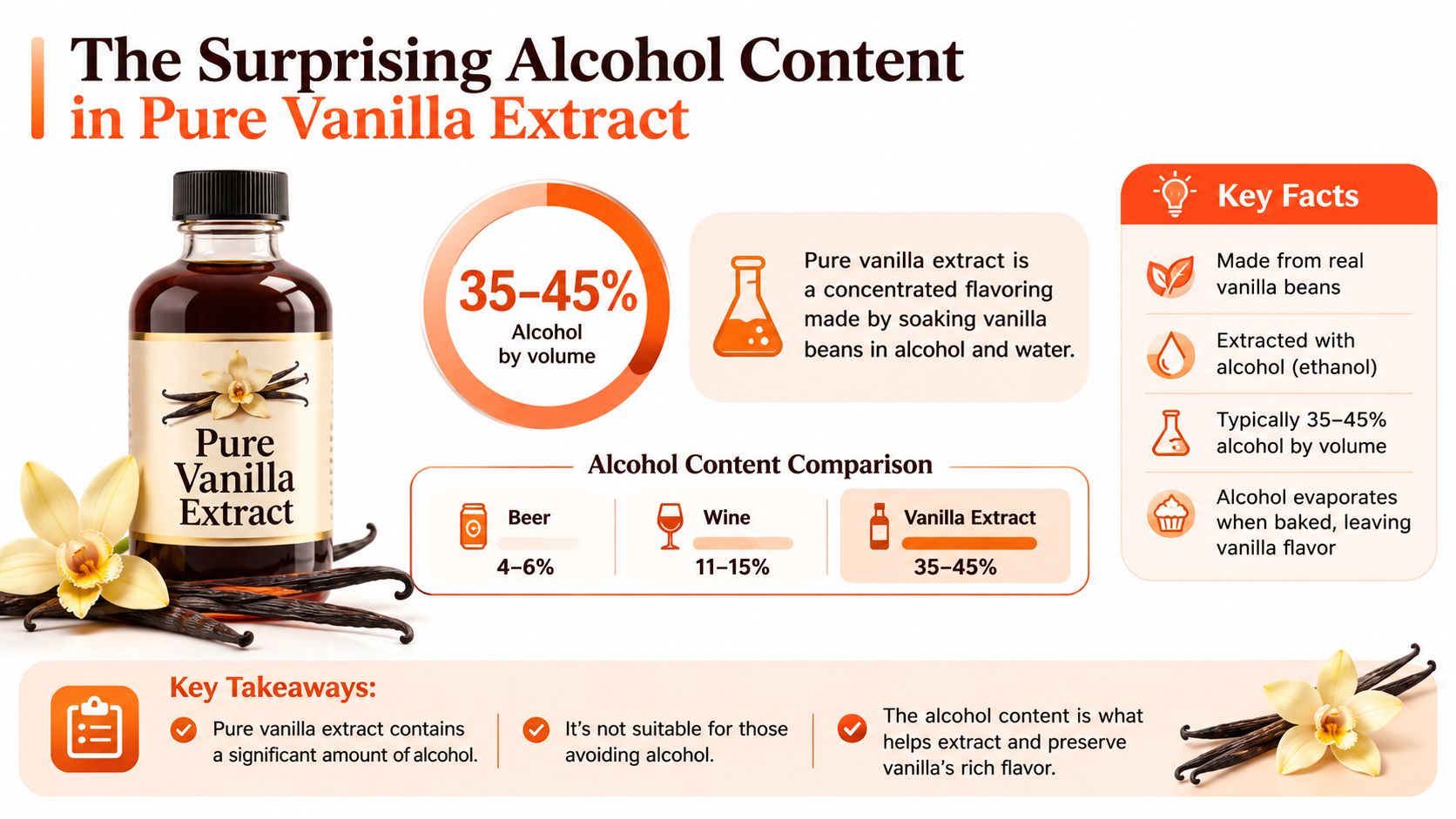
The label matters because pure vanilla extract is a regulated food ingredient with a defined standard. Federal guidance also ties that standard to vanilla content, with 1 unit per gallon for 1X extract and 2 or more units per gallon for concentrated extract. In practical terms, that is why a bottle of pure vanilla extract belongs in the same mental category as a shelf-stable alcohol-based ingredient, not a water-only flavoring.
Why that surprises people
Vanilla extract often shows up in teaspoon-sized amounts, so the bottle can seem harmless at a glance. The concentration inside the bottle tells a different story. A teaspoon of extract contains about 1.47 mL of alcohol, and a tablespoon contains about 4.41 mL (vanilla extract alcohol calculator). Those amounts are small in a recipe, but they are not zero.
For parents and caregivers, that distinction matters. A bottle left within reach can be a real ingestion risk, especially because vanilla extract smells sweet and familiar, which can make it less suspicious to a child than a clear spirit. In homes where alcohol avoidance is part of recovery, religion, or personal boundaries, that same bottle deserves the same attention as any other alcohol-containing pantry item.
Practical rule: if a label says pure vanilla extract, assume it contains alcohol unless the package says otherwise.
That is the part many articles leave out. They answer the flavor question, not the ingredient question. For a curious cook, the useful takeaway is straightforward, vanilla extract is a flavoring built on alcohol, and that alcohol is doing real work.
Why Alcohol Is Essential for Vanilla Extraction
Alcohol gives vanilla extract its depth instead of leaving it thin and one-note. Vanilla beans hold vanillin along with many other aroma compounds, and ethanol pulls those compounds into a stable liquid form. Water does not do that job as well, which is why alcohol-based extraction became the standard for pure vanilla extract.
The solvent logic
Vanilla extraction works on the same basic chemistry as steeping tea, but the important factor is the solvent, not the warmth. Hot water can pull flavor from tea leaves better than cold water because temperature and solvent choice matter. For vanilla beans, ethanol is the solvent that dissolves and carries flavor compounds from cured beans into the finished extract.
A peer-reviewed characterization of commercial vanilla extracts found ethanol levels ranging from 12.38 ± 0.34% v/v to 49.49% v/v across products, showing that commercial formulas can vary a lot while still functioning as extracts (Massey University thesis). That range also shows why the legal minimum is a floor, not a ceiling.
Why the bottle keeps for so long
Alcohol does more than pull flavor out of the beans, it also helps preserve the liquid. The same thesis found that lower-ethanol products relied more on added sugar for microbial stability, while higher ethanol improved solubilization of vanillin and other aroma compounds. That creates a straightforward cause-and-effect relationship, stronger ethanol supports both flavor extraction and shelf-life preservation, which is why a bottle of extract can sit in a pantry for a long time without spoiling quickly.
The alcohol in vanilla extract is functional. Remove it entirely, and you change how the flavor is extracted, stored, and classified.
That is why alcohol-free alternatives need a different formulation, not just a different label. Some products use glycerin or other solvents, while others are made from alcohol-based extraction and then have the alcohol removed later. The method matters as much as the flavor, especially in homes where alcohol avoidance is part of recovery, pregnancy planning, or child safety. For a practical example of that kind of food choice, see how to avoid temptation at the Thanksgiving table.
What Happens to Alcohol When You Cook or Bake With Vanilla
Heat changes alcohol, but it does not make it disappear at once. In food chemistry terms, alcohol behaves like water and other volatile compounds, it begins to evaporate as temperature rises, but the amount left behind depends on the recipe, the cooking time, the surface area, and whether the vanilla is folded into a batter or left in a cold mixture. A long-baked cake and a spoonable frosting do not expose the extract to the same conditions, so they do not reduce the alcohol in the same way.
The amount in the recipe is still small, but real
Vanilla is usually measured in teaspoons, so the starting amount of alcohol is limited. One teaspoon contains about 1.47 mL of alcohol, while one tablespoon contains about 4.41 mL. In a finished dessert, that can be diluted across many servings, but the raw ingredient is still present before heat has time to do its work.
The amount also depends on how the recipe is used. A batter that spends time in the oven gives the alcohol more chance to evaporate than a no-bake filling or a chilled sauce. The same extract behaves very differently once it is whisked into whipped cream, folded into frosting, or stirred into a cold dessert base.
When the question changes from baking to avoidance
For an adult dessert at the end of a meal, the remaining alcohol in vanilla is often not the main concern. For a child, someone in recovery, or a person avoiding alcohol for religious reasons, the question is different. In those settings, it helps to read the recipe the way you would read a pantry label, because raw extract in a cold mixture can carry more of the original formulation than a fully baked dish.
Alcohol-free vanilla is often the cleaner choice in those households, especially for recipes that are served uncooked or only lightly heated. That is the same kind of practical label-awareness described in navigating temptation at the Thanksgiving table, where ingredient choices matter as much as the final flavor.
Rule of thumb: less heat and less cooking time mean more of the original extract remains relevant.
Vanilla in baked goods and vanilla in frosting are not equivalent situations. The ingredient is the same, but the amount of alcohol left in the food can be very different.
Hidden Risks for Children and Accidental Ingestion
A bottle of vanilla extract sitting on a high shelf rarely looks like a poison-control issue, which is part of the problem. Flavoring extracts can contain up to 35% ethanol, and poison-control guidance warns that a small amount can matter a lot more for a child than for an adult. In that guidance, even 10 mL of 35% vanilla extract in a 6 kg child is described as enough to produce an estimated blood alcohol level above 80 mg/dL, with possible outcomes including CNS depression, respiratory depression, and hypoglycemia (VUMC poison control guidance).
A pantry scenario that parents should take seriously
A toddler finds an open bottle, takes a few swallows, and the adult in the kitchen assumes it is “just vanilla.” That assumption can delay action. Small children process alcohol very differently from adults, and the poison-control guidance treats extract as a low-dose alcohol product before it ever reaches a pan or oven, which is why the risk is easy to miss in the pantry.
That same concern applies to foods served cold or barely heated. Frosting made with raw extract, spoonable fillings, and chilled dessert sauces can keep the flavoring closer to its original form. In a baked dessert, heat may reduce some of the alcohol, but in these no-bake uses the extract remains part of the finished food in a more direct way.
What parents should watch for
If a child may have swallowed vanilla extract, don't rely on the smell of the bottle to judge the situation. Poison-control advice links extract ingestion with symptoms such as sedation and low blood sugar, and those signs can become serious quickly in small children (VUMC poison control guidance).
If a child drank extract, treat it as a real ingestion event, not a harmless tasting mishap.
That does not mean every accidental lick becomes an emergency. It does mean vanilla extract deserves the same locked-away treatment you would give other alcohol-containing products in the home. Recovery-focused households and families with children often make a simpler choice and keep alcohol-free vanilla on hand for cold desserts and other uncooked uses. For broader context on alcohol's effects on the body, see this overview.
Alcohol-Free Vanilla Alternatives Compared
Vanilla choices are not interchangeable. A bottle labeled pure vanilla extract, vanilla flavor, imitation vanilla, or alcohol-free vanilla may look similar on the shelf, but those names can point to very different ingredients and processing methods. That distinction matters for recovery-focused households, pregnancy, and faith-based dietary needs, where even small amounts of alcohol or unclear processing can change whether a product feels acceptable.
| Product Type | Alcohol Content | Flavor Quality | Best Use Case |
|---|---|---|---|
| Pure vanilla extract | Typically alcohol-based in the standard formulation, with at least 35% ABV in the U.S. | Strong, classic, deep | Everyday baking when alcohol is acceptable |
| Alcohol-free vanilla products | No alcohol in the finished product, though some are made with alcohol during extraction and later de-alcoholized | Varies by brand | Households avoiding alcohol in the final ingredient |
| Vanilla flavor | Depends on formulation and label language | Can be good, but inconsistent | Recipes where the ingredient statement has been checked carefully |
| Imitation vanilla | Can range from 0% to 2% alcohol in some products | Often lighter or simpler | Cost-conscious baking, or lower-alcohol needs |
| Vanilla beans, powder, or paste | Typically alcohol-free in the ingredient form itself | Strong, direct vanilla note | Baking when ingredient transparency matters most |
The label word that matters most
The phrase alcohol-free sounds simple, but the processing behind it can still matter. Some products start with alcohol-based extraction and then remove the alcohol later, which leaves the finished bottle alcohol-free even though alcohol was used earlier in production, as described in a Baking Bites analysis of alcohol-free vanilla processing. That may fit some households and not others. If someone wants to avoid even trace exposure or wants a cleaner fit with recovery concerns, a product that never used alcohol as the solvent is easier to judge.
Vanilla beans, vanilla powder, and some glycerin-based products usually feel less ambiguous for that reason. Their ingredient lists tend to be shorter, and the source of the flavor is easier to identify at a glance. For shoppers who want fewer unknowns, the safest choice is the one that clearly states both the solvent and the processing method.
Best practice: do not buy by front-label wording alone, read the ingredient statement and processing notes.
The choice is not “vanilla or no vanilla.” It is whether you want pure extract, a lower-alcohol option, or an alcohol-free substitute that matches your household rules.
How to Read Vanilla Labels for Alcohol Content
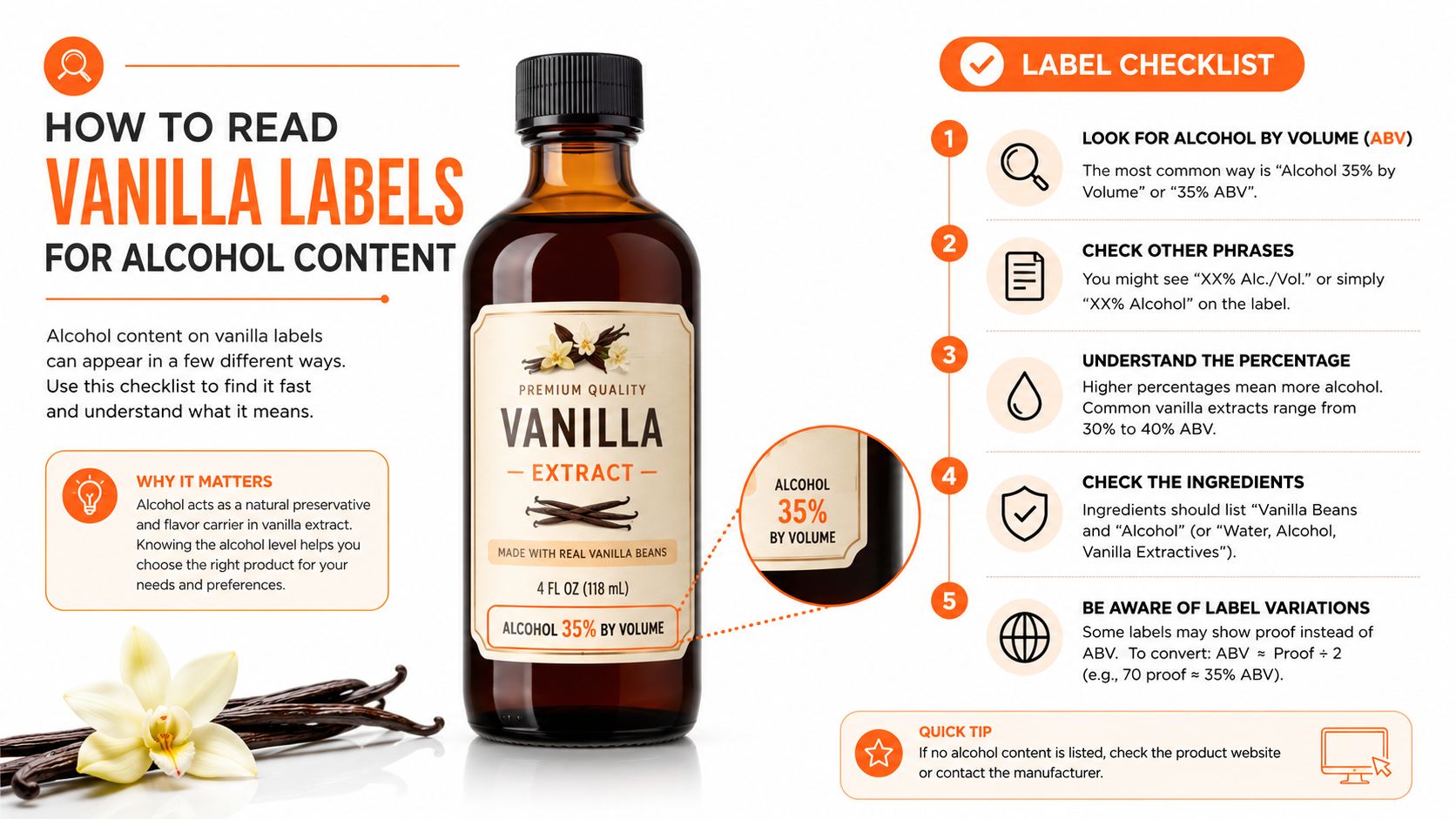
Vanilla labels can look plain, but they often hide the part that matters most for household safety. The front of the bottle tells you the marketing category, while the ingredient panel and processing notes tell you whether alcohol is part of the product and whether that matters for your kitchen. That distinction matters most in homes with children, in recovery-focused households, and for anyone trying to avoid even small, unwanted exposure.
Words that usually mean alcohol is involved
The phrase pure vanilla extract usually signals that alcohol is part of the standard formulation. If a label uses that wording, read it as a cue to expect a solvent-based extract rather than a simple vanilla flavoring. By contrast, alcohol-free on the front label tells you the finished product does not contain alcohol, but you still need to check how it was made and whether alcohol was used earlier in processing. Some people are comfortable with that distinction, while others want a product that never relied on alcohol at any stage.
A simple grocery aisle checklist
- Check the identity statement first: Pure vanilla extract means alcohol is part of the standard formulation.
- Read the ingredient list second: look for alcohol, glycerin, water, or other solvents.
- Watch for vague marketing language: “natural” does not automatically mean alcohol-free.
- Look for process notes: some alcohol-free products explain whether they were de-alcoholized after extraction.
- Contact the maker if needed: if the label does not clearly state the solvent, ask the manufacturer directly.
The ingredient list is like a pantry receipt. If the front label sounds reassuring but the back panel is vague, trust the back panel less, not more. For people who are making a choice around sobriety, pregnancy, or child safety, that extra minute of reading is not overcautious, it is practical.
Where people get misled
The word imitation can sound less desirable, but it does not automatically mean more alcohol. Some imitation products can still contain a small amount of alcohol, while others do not, so the label alone is not enough to judge the bottle. A product can also look safer than it is if the front label emphasizes flavor quality instead of solvent details.
If you want a broader recovery lens on food and routine, this recovery-focused healthy eating guide can help frame the day-to-day choices that support stability.
For households that want the clearest possible answer, the safest path is the product that states its solvent and processing method in plain language. Brand trust helps, but transparency helps more. A friendly front label does not change what is inside the bottle.
Practical Guidance for Recovery, Pregnancy, and Dietary Concerns
If you're in recovery, the key question isn't whether a recipe technically contains a tiny amount of alcohol. It's whether the ingredient creates discomfort, triggers, or avoidable stress. Some people are fine with baked vanilla in a cake and not fine with raw extract in frosting, and both reactions are valid. If you want a broader recovery lens on food and routine, this healthy-diet recovery resource can help frame the day-to-day choices that support stability.
For pregnancy, the safest approach is the most transparent one. If alcohol avoidance is your preference, use an alcohol-free product or a vanilla bean product with a clear ingredient list. If you're unsure about a specific brand, choose the option whose processing method is easiest to verify.
For parents, store vanilla extract like an alcohol-containing product, not like a harmless spice. Keep it out of reach, secure uncapped bottles immediately, and call a poison center promptly if a child may have swallowed some. For faith-based diets, the deciding factor is often not just the flavor but the solvent and processing method, so look for products that explicitly fit halal, kosher, or alcohol-free standards.
If your household has strict alcohol boundaries, don't rely on assumptions. Rely on the label, the ingredient panel, and the manufacturer's wording.
If vanilla extract concerns are part of a bigger recovery conversation in your home, get support that looks at the full picture, not just one ingredient. Visit Capo Canyon Recovery to learn about private, clinically grounded care that helps people build steadier routines and make healthier choices around alcohol.