
A lot of people asking how long does dab stay in your system aren't asking out of casual curiosity. They're looking at a pre-employment screen, a random workplace test, a licensing issue, or a company policy that could affect income, reputation, and privacy in a very real way.
If that's where you are, generic cannabis advice often isn't enough. Dabs are more potent than standard flower, and that changes the risk picture. The right answer depends on how often you use, how much you use, what kind of test you're facing, and how your body handles THC. It also depends on whether you're talking about occasional use or a pattern that's become hard to stop.
Understanding Your Concern About Dabs and Drug Tests
Professionals tend to minimize their own risk for one simple reason. They compare dabs to regular marijuana use and assume the same timelines apply. That can be a costly mistake.
A single concentrate session can create a very different testing profile than someone expects from prior experience with smoking flower. If you're an executive, clinician, pilot, attorney, entrepreneur, or manager under a strict policy, the consequences aren't abstract. They can affect a contract, a promotion, a credential, or a career move.
Why this question feels urgent
The anxiety usually sounds the same. You stopped. You're drinking water. You're searching timelines. You're trying to decide whether a home test means anything. You may also be wondering whether your use was occasional enough to clear quickly, or whether the product itself changes everything.
That urgency makes people vulnerable to bad advice.
Practical rule: If the cannabis you used was a high-potency concentrate, don't assume standard flower timelines apply.
What actually matters
When someone asks how long does dab stay in your system, the useful answer isn't a single number. It's a risk range shaped by several variables:
- Your pattern of use: One-time use and repeated daily use are not the same.
- The potency of the product: Concentrates deliver much more THC than many users realize.
- The test type: Urine, blood, saliva, and hair measure different things.
- Your body: Fat storage, metabolism, and recent use history all matter.
If you need a straight answer now, here it is. Dabs can stay detectable longer than many people expect, especially with repeated use. For a professional under pressure, it makes more sense to think in terms of exposure risk than internet promises.
What Dabs Are and Why They Complicate Testing
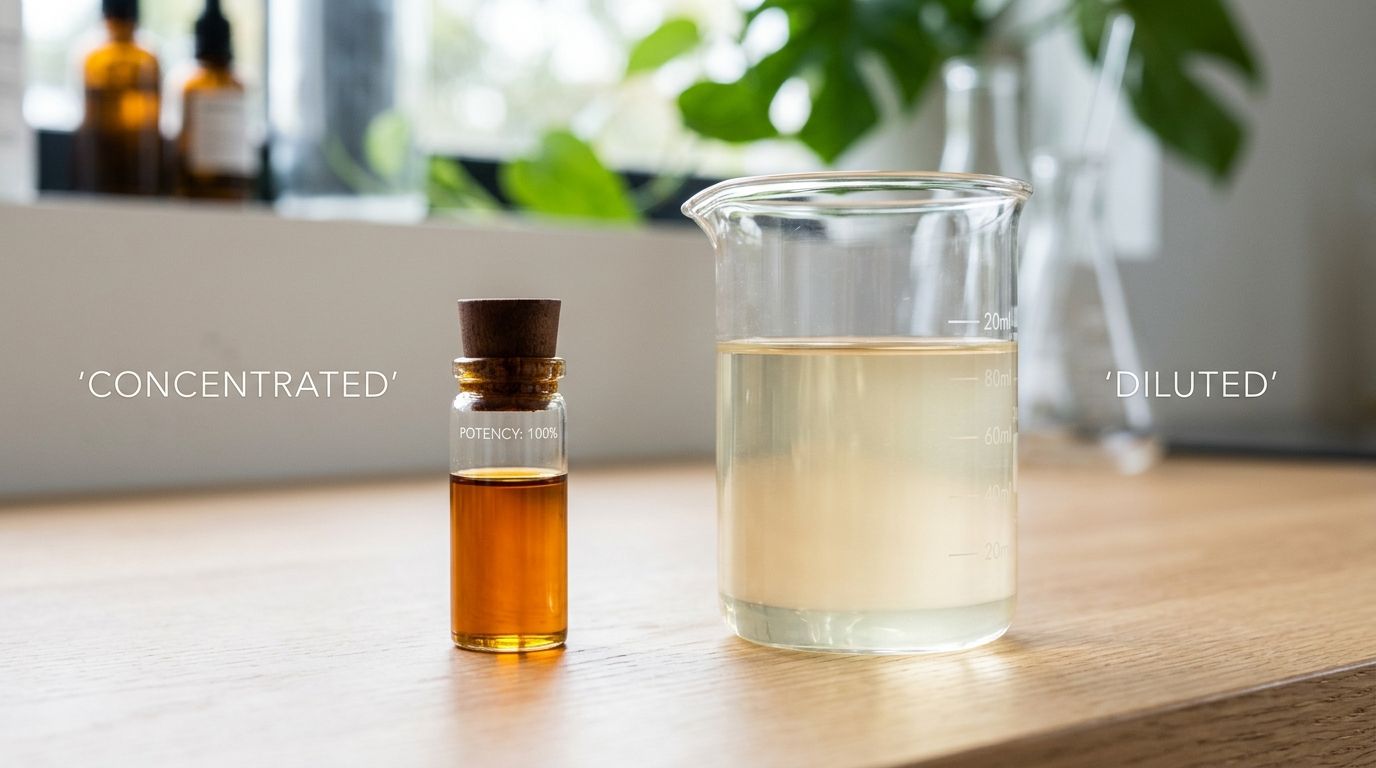
Dabs are cannabis concentrates. The simplest comparison is this: smoking flower is like drinking coffee, while dabbing is closer to taking a concentrated shot. The delivery method may feel efficient, but the potency changes the biological aftermath.
Why concentrate strength matters
Dabs often contain 60 to 90 percent THC according to this concentrate-specific overview. That same source notes this high potency can extend urine detection to 45 to 90 days for daily users. That's the part many professionals miss. The old "give it a month" rule may be too optimistic for heavy concentrate use.
This isn't because the body treats dabs as a different drug. It doesn't. The issue is total THC load. Higher-potency products can build up metabolites faster, especially when use becomes routine.
Why professionals get caught off guard
Many people who dab don't think of themselves as heavy cannabis users. They may use less often than they used to smoke, or they may take small hits from a pen or rig and assume the overall exposure is modest. But concentrated products can subtly shift someone from occasional use into a much higher testing risk category.
That matters even more for people with sedentary schedules, high stress, disrupted sleep, or body composition factors that slow clearance. Those are common realities in executive life.
For readers worried that their use may be moving beyond occasional and into dependence, this overview of marijuana addiction treatment options can help frame what to watch for without panic or shame.
The question isn't just whether you used THC. It's how much THC your body had to process and store over time.
What doesn't work
What doesn't work is relying on standard advice written for casual flower use. It won't tell you enough about concentrate-specific risk. It also won't help you distinguish between one isolated session and a pattern of repeated high-potency exposure.
If your livelihood depends on being realistic, treat dabs as their own category of risk.
THC Detection Timelines by Test Type
A senior employee uses a dab pen on a business trip, then gets notice of a workplace screen two days later. The question is rarely, "Did I feel high?" The question is, "Which test is being used, and what is it measuring?"
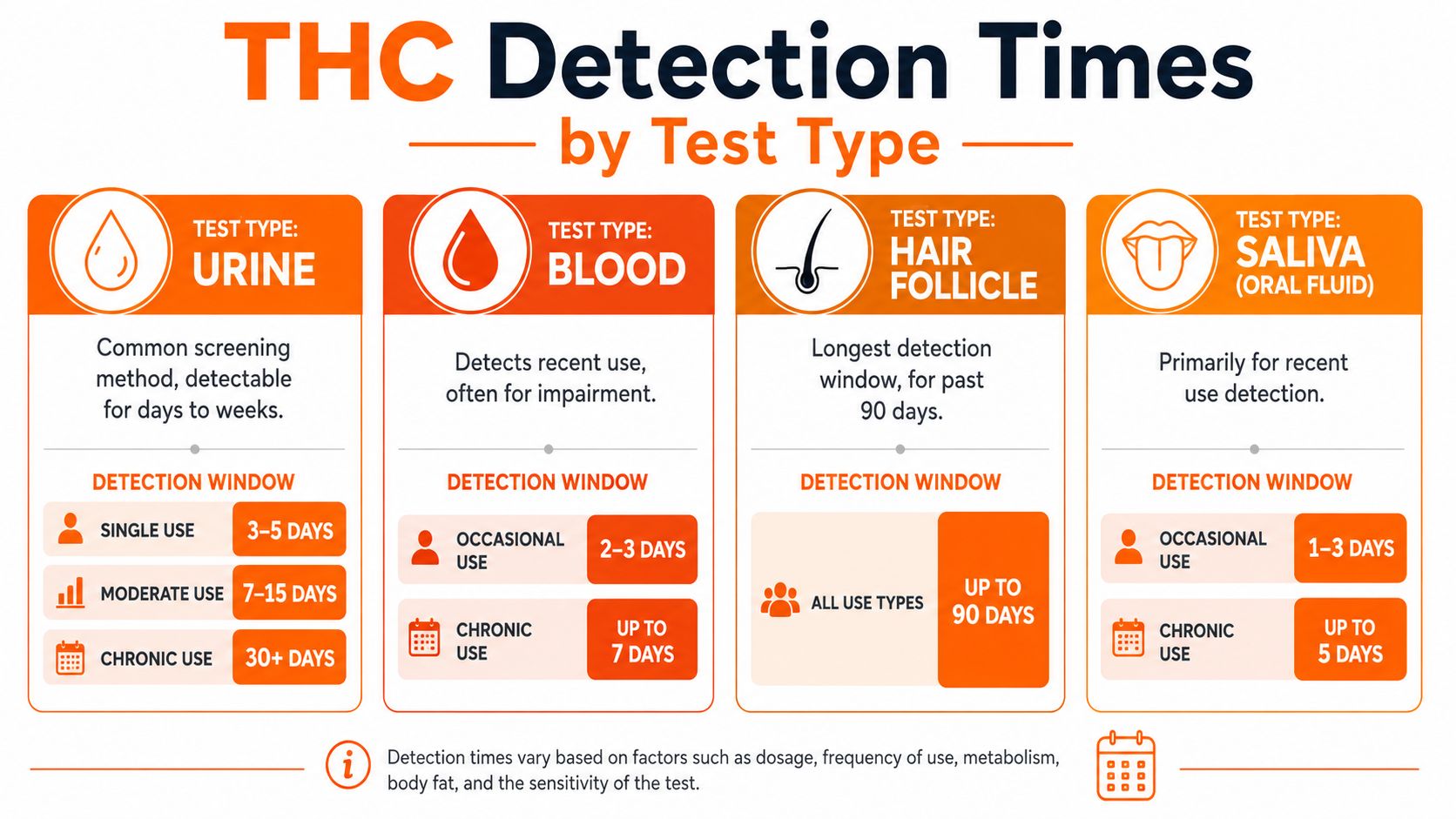
That distinction matters because each test looks for a different signal. Urine usually reflects past metabolite exposure. Blood and saliva are more relevant to recent use. Hair can show a longer history of use.
| Test Type | Occasional Use (1x/week) | Moderate Use (4x/week) | Chronic Daily Use |
|---|---|---|---|
| Urine | around 3 days | 5 to 7 days | 10 to 15 days, and up to 30 days or longer in chronic heavy use |
| Blood | shorter window, mainly used for recent use | shorter window, mainly used for recent use | may remain relevant longer in heavier users, but exact timing varies |
| Hair | long retrospective window | long retrospective window | long retrospective window |
| Saliva | recent-use window | recent-use window | recent-use window, sometimes longer with repeated exposure |
Urine testing
For professionals, urine is usually the highest-risk test because it is common in employment settings and it looks for THC-COOH rather than current impairment. Reported urine ranges commonly cited in clinical summaries are about 3 days for occasional use, 5 to 7 days for moderate use, 10 to 15 days for daily use, and up to 30 days or longer for chronic heavy use, with rare outliers lasting longer, as summarized in this review of Mayo Clinic guidance from the Priory Group.
For dab users, the practical issue is classification. A person who sees themselves as an occasional cannabis user can still produce a urine pattern closer to heavier use if each session involves a high-THC concentrate.
Blood and saliva testing
Blood and saliva are used more often when recency matters. That can come up after a workplace incident, in regulated roles, or in settings where an employer is trying to assess recent exposure rather than a longer history.
These tests create a different kind of risk. A professional may pass a urine screen after enough time, yet still have a problem with blood or saliva if use was recent. New tools are also under active discussion. This overview of marijuana breathalyzers gives useful context on where workplace detection may be heading.
Hair testing
Hair testing works on a much longer retrospective window. It is less useful for showing whether someone is impaired today, but it can be very hard to explain in high-trust roles because it may suggest a broader pattern of use.
Recent abstinence does little to change a hair result in the near term.
The safest interpretation
If dabs are part of the picture, use the longer end of any published range as the safer planning assumption. That is the conservative approach I recommend to executives, clinicians, pilots, attorneys, and other professionals whose income, license, or reputation can be harmed by one overly optimistic guess.
The Science of How Your Body Stores THC
THC sticks around for a biological reason. It is lipophilic, which means it dissolves in fat more easily than in water. Think of oil soaking into a sponge rather than rinsing straight out of a glass.
That matters because your body doesn't eliminate all THC by simple, quick excretion. Some metabolites get stored in adipose tissue, then released gradually back into the bloodstream over time.
Why fat storage changes the timeline
According to Healthline's review of THC elimination, THC's fat-soluble nature contributes to a terminal half-life of 11 to 30 days in chronic users. The same source explains why daily users may be detectable for 10 to 15 days and chronic heavy users for more than 30 days, with some extreme cases reaching up to 70 days.
Those numbers make more sense once you understand the storage pattern. The body isn't clearing one neat dose all at once. It is handling a slow leak from fat stores after repeated exposure.
What half-life means in plain language
A half-life is the time it takes for the amount of a substance to drop by half. That doesn't mean you're "clean" after one half-life. It means the body is reducing the total burden step by step.
With dab use, especially repeated use, that process can stretch out because the body has more THC metabolites stored and more gradual release from fat tissue.
Why two people can have very different results
Two professionals can stop on the same day and still test differently. One may clear faster because they used less frequently, had lower cumulative exposure, or have less adipose tissue storing metabolites. The other may remain positive much longer despite doing all the same internet detox rituals.
Biology is slow. Most quick-fix advice ignores that basic fact.
This is also why panic-driven strategies often fail. You can't out-hack a compound that has already been stored and is still being released.
Personal Factors That Affect Detection Time
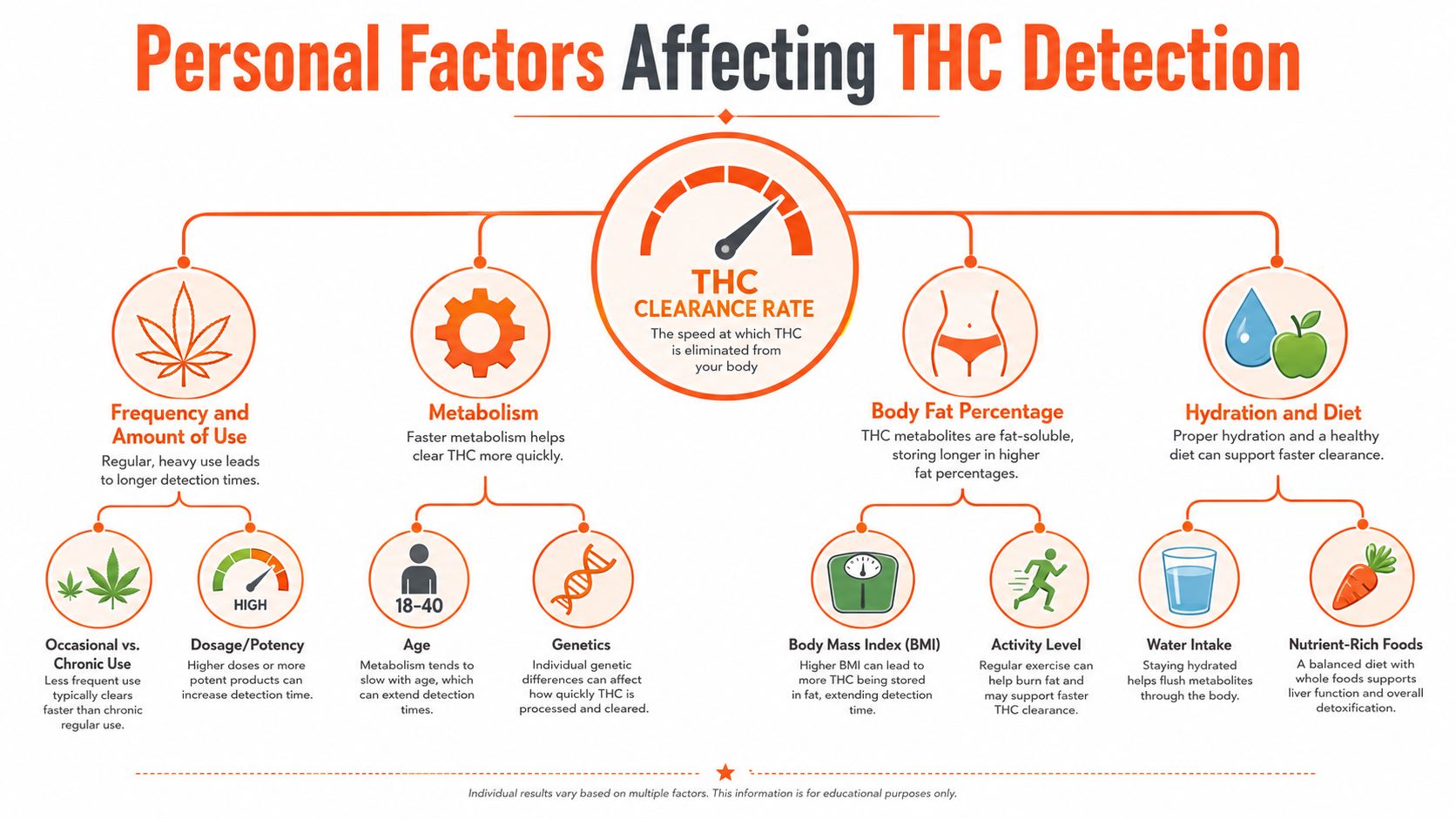
A detection window is never just about the product. It's about the interaction between the product and your body. If you're trying to estimate your own risk, these are the variables that matter most.
The factors to review honestly
Frequency of use: This is usually the biggest driver. Someone who uses once is in a different category from someone who uses most evenings or throughout the day.
Duration of the pattern: A week of repeated use and a year of repeated use are not equal. Long-running exposure gives the body more time to build and store metabolites.
Potency of the concentrate: Dabs are strong by design. Higher potency means a smaller amount can still create substantial exposure.
Body fat percentage: Because THC metabolites are fat-soluble, people with higher adipose stores may retain them longer.
Metabolic rate: Faster metabolism may shorten the timeline. Slower metabolism may lengthen it.
Activity and routine: Exercise, sleep, eating patterns, and general health affect the broader metabolic picture, though not in a magic-detox way.
A special note on micro-dabbing
One emerging gray area involves micro-dabbing, described as 10 to 20 mg THC sessions in this discussion of dabs and duration. That source notes an important evidence gap. It's still unclear whether a single low-dose session shortens urine detection to 1 to 3 days for some people, compared with the much longer windows seen in heavier use patterns.
For professionals, that's frustrating but important. Low dose does not mean no risk. It means the science is less settled than many people want it to be.
A practical self-check
Ask yourself these questions without minimizing:
- Was this occasional, or was it becoming routine?
- Was the product a high-potency concentrate rather than flower?
- Have I been using for months, not just days?
- Am I relying on hope because the stakes feel high?
If you answer yes to several of those, your personal risk is likely higher than the internet's most reassuring estimate.
Debunking Common Detox Myths and Quick Fixes
When a test is coming, people do desperate things. Most of them don't work. Some are dangerous.
Unfortunately, once THC metabolites are stored, there isn't a shortcut that reliably makes them disappear. Time is what lowers risk. Everything else should be viewed with caution.
Myth one: flooding your body with water
Hydration supports normal body function. It does not erase stored THC metabolites. Drinking excessive water right before a test can also create a diluted sample, which may trigger more scrutiny or a retest.
Normal hydration is sensible. Panic drinking is not.
Myth two: detox drinks, pills, and internet kits
Most commercial detox products promise certainty they can't deliver. Many are built around dilution, masking, or unproven supplement combinations. That's why I strongly discourage treating them as a professional risk-management strategy.
For a grounded example of how wellness trends can overpromise, this activated charcoal Ireland guide is useful context. Activated charcoal has legitimate uses in some settings, but it isn't a reliable answer for clearing fat-stored THC metabolites after dab use.
Myth three: niacin, vinegar, bleach, or other extreme ideas
These approaches are not just ineffective. They can be harmful. High-dose niacin can cause medical problems. Caustic or corrosive substances should never be used as self-treatment. If a strategy sounds punishing, secretive, or internet-famous, it usually belongs in the "don't do this" category.
This broader warning on why DIY detox can be dangerous explains the health risks well.
The body clears THC over time. Dangerous hacks don't change the underlying biology.
Myth four: exercise right before the test
People often assume hard exercise will "burn it off." In reality, intense activity close to testing may complicate things because of how stored compounds move as fat is mobilized. That's one reason last-minute self-experimentation is a poor strategy.
What works better is boring, consistent behavior. Stop using. Stay normally hydrated. Keep your routine steady. Don't rely on gimmicks.
Discreet and Effective Support for Professionals
For some readers, the main issue isn't one drug test. It's that dab use has become difficult to control, and now work pressure is colliding with health risk. That's common among high-functioning professionals. It also tends to stay hidden longer because the person still performs well, at least for a while.
At that point, the primary question isn't only how long does dab stay in your system. It's whether you're trying to solve a pattern with secrecy and damage control instead of getting proper help.
What professionals usually need
Most executives and licensed professionals aren't looking for a chaotic, crowded setting. They want privacy, competent medical oversight, and a treatment plan that doesn't force them to abandon every essential responsibility overnight.
In practice, the priorities are usually:
- Confidentiality: A small, discreet setting matters when reputation is on the line.
- Clinical oversight: Withdrawal, insomnia, anxiety, and co-occurring symptoms need real treatment, not guesswork.
- Work continuity: Many professionals need limited access to communication and critical decision-making tools.
- Respect: People engage better when care is structured and nonjudgmental.
Why medical support matters
Quitting at home may sound simpler, but it can become unstable fast when someone is dealing with dependence, panic, insomnia, or underlying depression and anxiety. Medically supervised detox offers monitoring, symptom management, and a safer transition into treatment if more support is needed.
If you're managing employees in regulated roles, broader screening rules still matter. This overview of DOT physical guidance for managers is helpful for understanding how testing concerns can intersect with workplace obligations, even outside cannabis-specific conversations.
The executive-specific difference
Not every treatment setting is built for people with licensing pressure, sensitive positions, or active business obligations. Programs designed for executives and working professionals tend to handle privacy, scheduling, and communication differently.
For readers evaluating options, this page on rehab for working professionals outlines what that kind of treatment structure can look like in practice.
Effective care for professionals should protect dignity as carefully as it treats symptoms.
Frequently Asked Questions About Dab Detection
Can exercise speed up THC clearance?
Not in the simple way people hope. Regular health habits support normal metabolism, but exercise is not a reliable rapid-detox tool. Pushing your body aggressively right before a test can create more uncertainty, not less.
Can CBD dabs make you fail a drug test?
They can, depending on the product. Some hemp-derived or CBD products may contain trace THC, and labeling is not always as clean as consumers assume. If your employment or license depends on a negative result, the safest approach is to avoid products that could introduce THC exposure at all.
Can secondhand dab vapor make you test positive?
In ordinary, ventilated settings, that's unlikely. In unusually enclosed and heavily exposed situations, risk may increase. For most professionals, secondhand exposure isn't the main concern. Direct use is.
Is home detox enough, or should I consider professional help?
That depends on what you're dealing with. If this was isolated use and you're mainly concerned about testing, the issue may be timing and honest risk assessment. If you've tried to stop and can't, or if dab use is tied to anxiety, sleep, burnout, or escalating dependence, professional support is often the safer path.
A useful dividing line is this: if the problem keeps returning, don't treat it like a one-time scheduling issue.
If dab use is affecting your health, judgment, privacy, or professional stability, Capo Canyon Recovery offers a discreet treatment option built for executives and working professionals. The program combines medical detox and residential care with privacy, individualized attention, and a tech-friendly environment that helps clients stay connected to essential responsibilities while getting real support.