
You're high-functioning, busy, and probably still getting things done while alcohol has started costing more than it gives back. That's exactly why how to detox from alcohol safely has to be treated like a medical decision, not a willpower contest, especially if you're trying to protect your privacy, your reputation, and your ability to keep working.
A safe detox plan starts with a hard truth. Alcohol withdrawal can become dangerous quickly, and the right setting depends on your risk, not your job title. If you've been telling yourself you can handle this on your own, read carefully, because the safest path is often the one that looks more structured than you expected.
The First Step Toward Safe Alcohol Detox
The moment this starts to feel real is often ordinary. You may be between meetings, on a flight, or alone late at night, and you realize you are not just drinking to unwind anymore, you are drinking to avoid feeling shaky, wired, or unable to sleep. That is not a character flaw. It suggests the body may have adapted to alcohol in a way that makes stopping more complicated than a simple decision to quit.
Safe alcohol detox begins with a different mindset. The primary goal is to stabilize safely, protect your privacy, and prevent withdrawal from becoming a medical emergency. Clinical detox is a protected window for medical support, then treatment that addresses the underlying alcohol use disorder afterward, because detox alone does not cure it NCBI StatPearls and Harvard Health summary.
For professionals, that distinction matters. A person can still lead a team, answer emails, and meet deadlines while being physically dependent on alcohol. Functioning does not mean low risk. It usually means the problem has been hidden well.
Practical rule: If alcohol has become part of how you start, end, or get through the day, do not treat detox like a weekend reset. Treat it like a monitored medical transition.
The best first move is straightforward, gather facts before deciding where detox should happen. Pay attention to what happens when you stop, whether symptoms show up quickly, and whether you have ever had shaking, confusion, or a detox attempt that became worse instead of better. Those details help determine whether home tapering is even reasonable to discuss, or whether a supervised setting is the safer choice.
Honestly Assessing Your Detox Risk Level
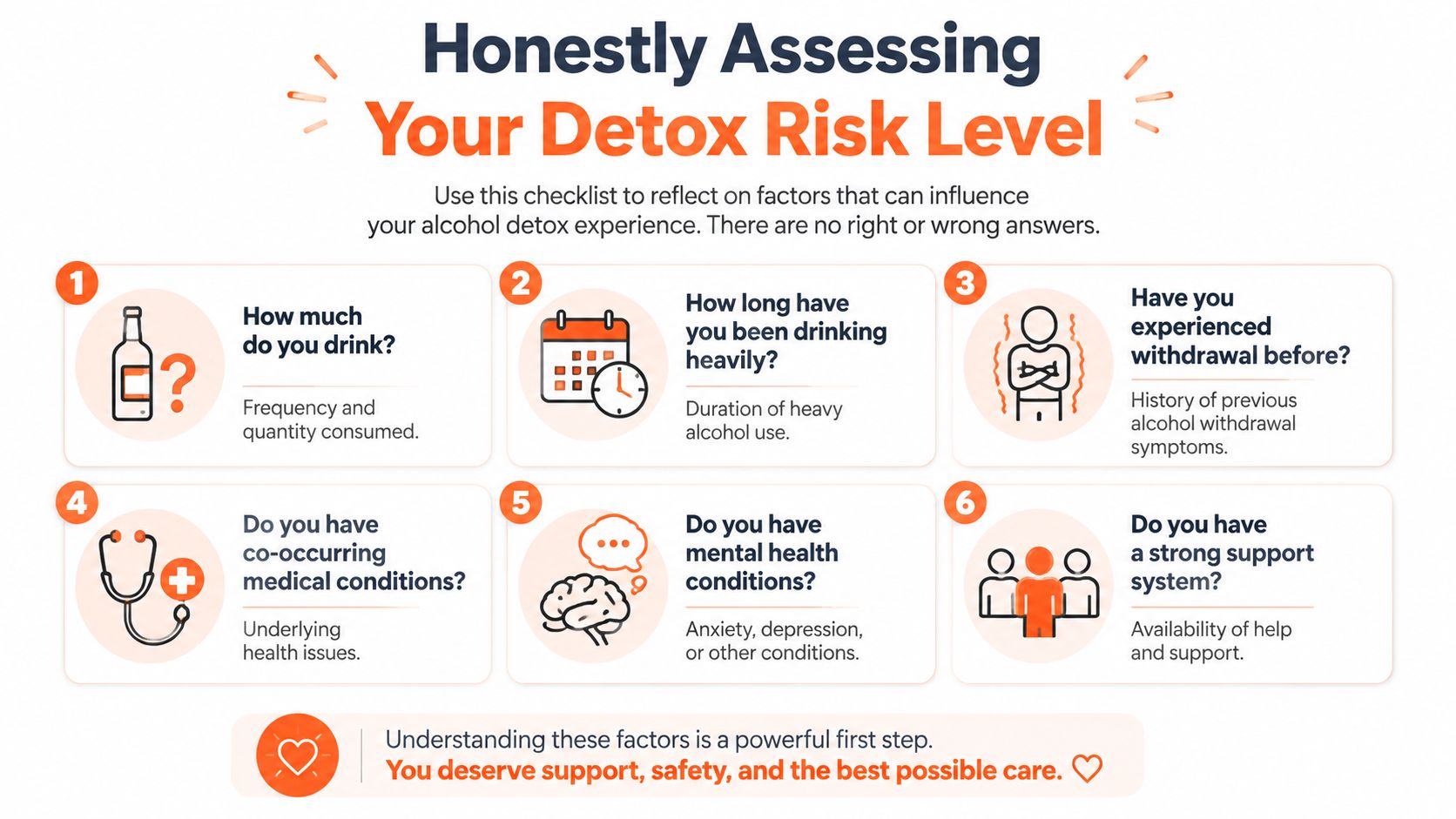
The biggest mistake high-performing people make is confusing endurance with safety. You may be able to hold a presentation, manage a practice, or keep a company moving while drinking heavily, but the body doesn't care how polished you look on the outside. What matters is whether you're physically dependent, because withdrawal risk rises when the nervous system has adapted to regular alcohol exposure.
What should raise concern
A few patterns should push you toward medical evaluation before any detox attempt. Morning tremors, drinking to steady yourself, or needing alcohol to sleep are all signs that the body may be expecting alcohol to stay calm. So are prior withdrawal symptoms, heavy daily intake, seizures, confusion, or significant medical or mental health conditions, especially because neutral clinical guidance says the key gap in many detox articles is risk stratification, not just general advice about where detox can happen PMC clinical review.
That gap matters more for professionals than many people realize. High-functioning drinkers often delay care because they can still perform at work, then underestimate how fast withdrawal can turn. Privacy concerns are real, but privacy should never come at the expense of safety.
Use this checklist thinking:
- Daily pattern: Do you drink most days, or only socially?
- Withdrawal signs: Do shakes, sweating, nausea, or anxiety show up when you delay a drink?
- Past history: Have you ever tried to stop and felt worse instead of better?
- Health load: Do you have liver disease, heart disease, depression, anxiety, or other active medical issues?
- Support: Is anyone around who can notice changes and get help fast?
If symptoms appear while you taper, the taper is too aggressive. That's a cue to pause and get clinician input, not a sign of weakness.
The safest interpretation is conservative. If you need alcohol to feel normal, or if you've had complicated withdrawal before, assume home detox may not be appropriate until a clinician says otherwise. That's especially true for people who value discretion, because the urge to keep things private can make them minimize risk right when risk matters most.
Medical Detox vs At-Home The Safety Decision

A professional with a demanding schedule can be tempted to treat detox like another problem to handle on their own at home. That instinct is understandable. It is also where people misjudge withdrawal risk.
Medical supervision is the safer choice for anyone with heavy use, prior withdrawal symptoms, seizures, confusion, or other medical risks. Alcohol withdrawal can become dangerous quickly, especially when someone has built a long pattern of functioning despite dependence. Clinical guidance from the NCBI safety fact base supports the same core point, withdrawal is unpredictable, and higher-risk cases belong in a monitored setting.
Why the setting matters
At-home detox can look attractive because it feels private, faster, and easier to fit around work. The trade-off is that withdrawal does not stay polite just because you want discretion. Shaking, sweating, vomiting, hallucinations, and disorientation can arrive after the body has already shifted into a more dangerous state.
That is why monitored detox exists. Medical detox gives you continuous observation, so changes in heart rate, blood pressure, tremor, hydration, and mental status can be caught early. It also creates room to address anxiety, depression, and other psychiatric symptoms instead of brushing them aside while you are trying to stay functional.
Privacy matters for executives, physicians, attorneys, founders, and other high-responsibility professionals. A private detox setting can protect confidentiality while still giving you nursing oversight and rapid response if symptoms worsen. The goal is not comfort for its own sake. The goal is controlled safety with as little disruption to your life as possible.
Instead of asking “Can I tough this out?,” the critical question becomes, “What happens if I'm wrong about my risk?” If the answer includes seizures, delirium, or a medical emergency you cannot manage alone, home detox is the wrong setting. For a clear example of that risk, see why you shouldn't attempt alcohol detox on your own.
The Alcohol Withdrawal Timeline What to Expect
Withdrawal is easier to face when you know it can be tracked in phases. The course varies from person to person, but published guidance consistently shows early symptoms can start within hours, with the highest danger often arriving later. A practical way to think about how to detox from alcohol safely is to watch for escalation, not just discomfort day-by-day timeline review.
Typical Alcohol Withdrawal Symptom Timeline
| Time Since Last Drink | Common Symptoms | Potential Severe Symptoms, Seek Medical Care |
|---|---|---|
| 6 to 12 hours | Anxiety, nausea, headache, insomnia, tremor | Rising heart rate, worsening agitation |
| 12 to 24 hours | More visible shaking, sweating, irritability, possible hallucinations | Confusion, marked instability, worsening vital signs |
| 24 to 48 hours | Peak discomfort, tremor, agitation, fever | Seizures possible, severe confusion |
| 48 to 72 plus hours | Ongoing instability, risk of delirium tremens | Delirium tremens, disorientation, rapid pulse, fever |
| Days to weeks | Lingering anxiety, poor sleep, fatigue, irritability | Symptoms that keep worsening instead of settling |
Published taper schedules for heavy drinkers underscore the same principle, safe withdrawal is gradual, not abrupt, and the point of a taper is to reduce symptom severity over several days rather than make a dramatic stop home detox taper examples.
What feels expected versus what doesn't
Mild anxiety, sleep disruption, and shakiness can happen early. Those symptoms still deserve attention, but they're different from confusion, hallucinations, fever, or a seizure. If the person withdrawing is getting more disoriented, not more settled, the course is no longer routine.
Clinical marker: Escalation matters more than the symptom name. If the pattern is getting worse hour by hour, don't wait it out.
The safest response is to document what's happening, then escalate care if symptoms intensify. A written log of drinks, sleep, tremor, heart rate, and symptoms can help a clinician judge whether the course is staying manageable or turning unsafe.
How Medications and Supportive Care Ensure Safety
Medical detox works because it treats withdrawal as a physiological event, not a morale problem. The nervous system has to be steadied while the body clears alcohol, and the process is safer when medication, hydration, nutrition, and observation are used together. A primary-care review recommends daily review by a GP or nurse for at least the first four days, and it advises oral thiamine 200 mg for two weeks before a medicated detox to help prevent neurological damage UHSussex guidance.
What clinicians are trying to prevent
The main safety goals are straightforward. They're trying to prevent seizures, control autonomic overactivity like a racing heart and sweating, reduce agitation, and keep you hydrated and nourished. When needed, teams use medications such as benzodiazepines to reduce withdrawal severity and lower the chance of dangerous complications. Thiamine matters because chronic alcohol use can deplete nutrients the brain depends on, so nutritional support isn't optional.
That's why medical detox isn't “substituting one drug for another.” It's using the right medicine at the right time to interrupt a potentially dangerous rebound state. The structure can also be adjusted if liver problems, anxiety, or other medical issues are present.
Supportive care is just as important as medication. Small, frequent meals, protein-rich foods, and fluids help reduce dehydration and low blood sugar risk during withdrawal. In practice, many people feel more stable once their body is no longer running on caffeine, stress, and alcohol alone.
For readers who want a closer look at the staffing side of detox, 24-hour nursing during detox explains why continuous observation changes the safety equation.
The takeaway is simple. Medication can make detox manageable, but it has to be paired with supervision, nutrition, and a clear plan for what happens if symptoms break through the expected course.
Planning Your Detox Logistics and Aftercare
The professional version of detox planning usually starts with a calendar, not a crisis. One executive I might work with often asks the same practical questions first, what do I tell my team, how much work can I keep handling, and how do I protect my privacy without disappearing from my responsibilities. Those are legitimate concerns, and they're easier to handle when detox is framed as a temporary clinical step rather than a total life interruption.

Build the practical plan before day one
A privacy-conscious detox plan usually starts with a narrow circle of disclosure. Some people tell only one trusted family member or assistant. Others keep work communication minimal and use leave protections when appropriate. The point is to avoid improvising while symptoms are building, because decision-making gets harder once withdrawal starts.
A detox center can also help with the transition from the first 24 hours into ongoing treatment. Before choosing one, it's smart to ask about monitoring, psychiatric support, and whether the program understands executive schedules. What to ask before choosing a detox center is a useful checklist if you're comparing options.
The treatment gap is real. In 2024, about 28.0 million U.S. adults had alcohol use disorder, but only 7.6% received any treatment, which is one reason detox has to be paired with a real follow-through plan, not treated like the finish line NIH/NIAAA data reported in Gut.
Aftercare is part of safety
Detox stabilizes the body, but it doesn't teach the brain new ways to cope. That's why continuing care matters, whether that means residential treatment, therapy, medication support, or structured outpatient work. If you return to the same stressors without a plan, relapse risk stays high even if the withdrawal phase itself went smoothly.
A good aftercare handoff should answer three questions. What's the next level of care, who is coordinating it, and what happens if cravings, anxiety, or sleep problems return? Professionals often want the shortest possible interruption to work, but the smartest plan is the one that keeps the next 90 days from turning into another cycle.
Your Path Forward After Detox
The safest alcohol detox plan starts with honesty about risk, not optimism about control. If you have signs of dependence, a history of withdrawal, or medical or mental health concerns, supervised detox is the prudent choice. For busy professionals, the right setting should also protect privacy, support communication needs, and keep the focus on stabilization rather than disruption.
Detox is the beginning of recovery, not the end of it. Success lies in leaving withdrawal safely, then moving into care that helps you stay steady at work, at home, and in your own body.
Capo Canyon Recovery provides medically supervised alcohol detox and residential care in a private setting for professionals who need discretion, structure, and continuity. If you're deciding how to detox from alcohol safely, visit Capo Canyon Recovery to review care options that support stabilization and the transition into ongoing treatment.