
You can be in the middle of a packed workweek, skip dinner, try a “clean” weekend reset, and still wake up on Monday with a pounding headache, lightheadedness, and the kind of fatigue that makes every meeting feel louder than it should. A lot of high-performing people assume those symptoms mean the detox is “working.” In practice, they often mean the body is under stress, not that toxins are leaving.
The side effects of detoxing the body are especially confusing because the word detox gets used for very different things. A commercial cleanse, alcohol reduction, and medically supervised withdrawal are not the same process, and they should never be treated that way. The wrong assumptions can turn a private wellness experiment into dehydration, electrolyte problems, or a missed withdrawal emergency.
Why Detox Side Effects Catch Professionals Off Guard
An executive usually notices the problem in the most inconvenient way possible. Day one of a juice cleanse feels disciplined, even efficient. By day two, the calendar is still full, but the body is not cooperating, with headache, dizziness, nausea, or crashing energy making normal work feel harder than the cleanse itself.
That disconnect is why this topic deserves a clear map. The phrase side effects of detoxing the body gets used for at least three different scenarios, and each one has its own risk profile. Commercial cleanses, substance withdrawal, and medically supervised detox are not interchangeable, even if marketing language tries to blur them together.
What most people expect, and what actually happens
People usually expect a short period of discomfort followed by a cleaner, sharper, lighter feeling. In practice, the body may respond with stress, low intake, or withdrawal symptoms that feel nothing like a wellness reset. The NIH's National Center for Complementary and Integrative Health says there is “little evidence” that detoxes or cleanses remove toxins, and it notes that the body already handles detoxification through the liver, kidneys, lungs, skin, and digestive tract.
That matters because many symptoms blamed on “toxins leaving” are more plausibly caused by calorie restriction, dehydration, fluid loss, or actual withdrawal. For a busy professional, that distinction changes the response. A bad morning after a cleanse may call for food, fluids, and rest, while alcohol or drug withdrawal may require medical oversight.
Practical rule: if symptoms worsen when intake drops, sleep is poor, or alcohol or other substances are removed, do not assume that means detox is “working.” Assume the regimen needs to be evaluated.
The reason discreet care exists is simple. Some people cannot disappear for a week, but they also cannot safely white-knuckle symptoms at home. They need a plan that separates a commercial cleanse from true withdrawal and protects work obligations without pretending the body can tolerate anything.
What Detoxing Really Means for the Body
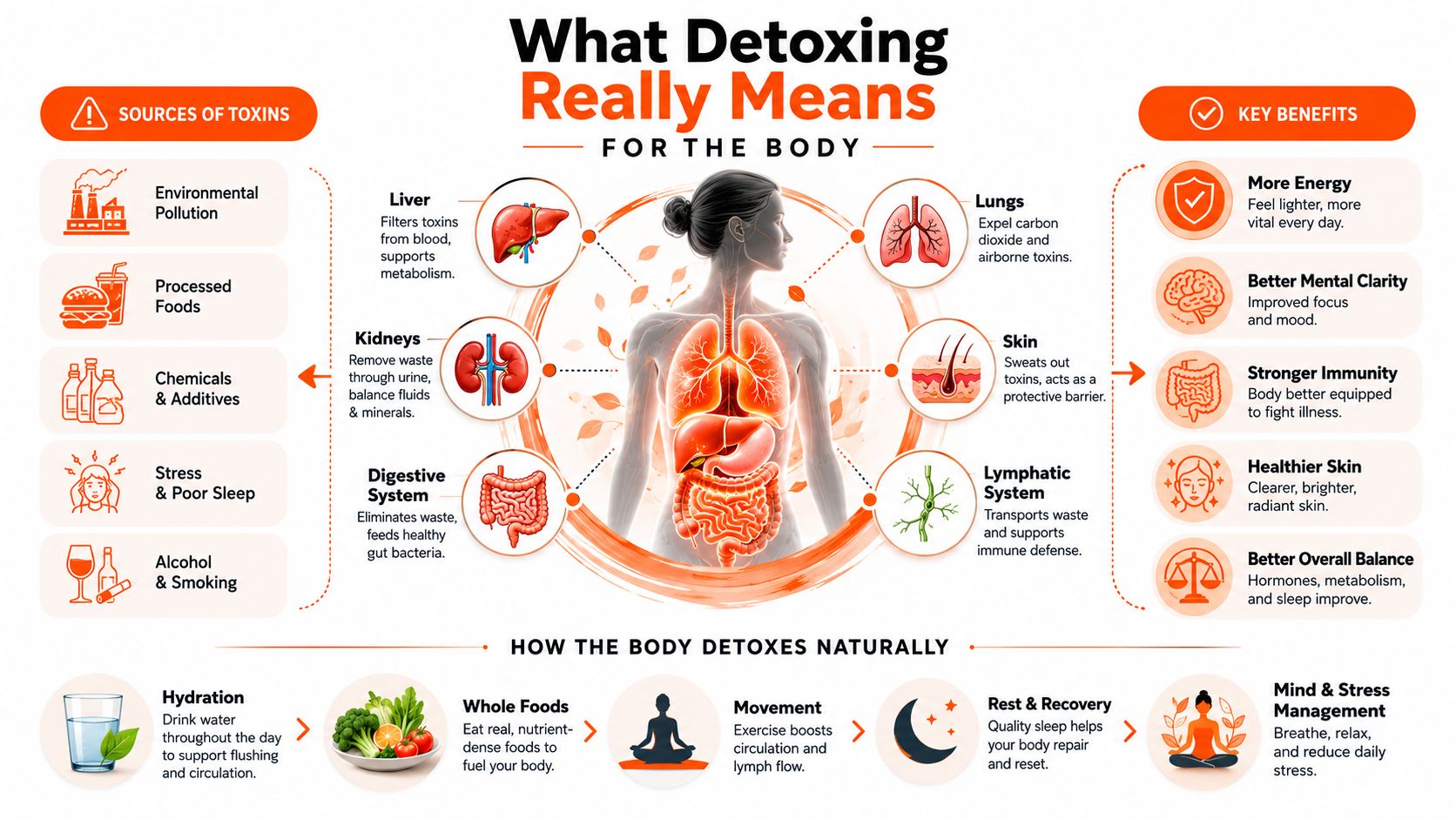
A person can feel worse during a cleanse and still assume the program is “working.” In clinical terms, that assumption is shaky. The body already has a built-in detoxification system, and it runs all the time. The liver processes compounds, the kidneys filter waste, the lungs handle gas exchange, the skin participates through sweat, and the digestive tract eliminates what doesn't belong. That is basic physiology, and it is the main reason most commercial detox products are unnecessary.
Why the marketing story breaks down
The modern detox industry grew around the idea that the body needs outside help to “purify” itself. The scientific consensus has moved the other way. The NIH says there is little evidence detoxes or cleanses remove toxins, and medical literature describes detox diets as no more effective for weight loss than ordinary caloric restriction.
That matters because many detox plans are really aggressive calorie cuts with a branding layer on top. If somebody feels shaky, nauseated, or foggy, those symptoms can come from starvation, low fluid intake, or loss of electrolytes, not from toxins being expelled. The body does not need a punishment protocol to do its job.
Why the symptom story gets misread
People get misled by timing. A headache after two days of liquid meals does not prove the cleanse is clearing hidden contaminants. It may mean the person has eaten too little, drunk too little, or changed caffeine or alcohol intake too quickly.
For professionals, that distinction is more than academic. It changes the response. If the issue is a commercial cleanse, the priority is usually stopping the regimen and restoring hydration and nutrition. If the issue is alcohol, benzodiazepine, or opioid withdrawal, the priority may be monitoring, medication stabilization, and psychiatric support. For opioid withdrawal symptoms in more detail, this overview of opioid withdrawal signs and treatment considerations is a useful starting point.
The body already does the work. The question is whether the chosen regimen supports that process or adds avoidable stress to it.
That is the clean mental model. Detox products are rarely necessary. Symptoms deserve a medical lens, not a marketing one.
Common and Serious Side Effects by Substance and Timeline
The symptoms people call “detox side effects” do not all mean the same thing. The timeline matters, the substance matters, and the risk level changes fast when alcohol, benzodiazepines, or opioids are involved. A cleanse can make someone uncomfortable. Withdrawal can make someone medically unstable.
Detox Side Effects by Substance and Phase
| Substance / Regimen | Early (0-72h) | Later (3-10 days) | Serious Risk |
|---|---|---|---|
| Alcohol withdrawal | Anxiety, tremor, sweating, nausea, insomnia, rapid heartbeat | Symptoms can intensify, with confusion or hallucinations possible | Seizures, life-threatening withdrawal, delirium, death |
| Benzodiazepine withdrawal | Rebound anxiety, insomnia, agitation, tremor | Worsening neurologic symptoms can emerge | Seizures, hallucinations, life-threatening withdrawal |
| Opioid withdrawal | Nausea, abdominal cramping, diarrhea, chills, restlessness | Ongoing GI upset, sleep disruption, exhaustion | Severe dehydration, relapse risk, psychiatric destabilization |
| Commercial cleanse or juice fast | Headache, dizziness, fatigue, nausea, diarrhea | Weakness, dehydration, irritability, poor concentration | Electrolyte imbalance, kidney failure, infection, death in extreme cases |
For opioid withdrawal symptoms in more detail, this overview of opioid withdrawal signs and treatment considerations is useful because it separates discomfort from danger.
How the serious harms show up
WebMD notes that rectally administered coffee enemas have been linked to at least three deaths, including two from severe electrolyte imbalance and one from infection. The same source warns that overly restrictive detox diets can cause diarrhea, fluid loss, dehydration, vitamin and mineral deficiencies, and protein deficiency. WebMD on detoxification risks
Open-access review literature also points to kidney failure associated with juice-cleanse diets, including a green smoothie cleanse, along with fatigue, irritability, abdominal cramping, diarrhea, nausea, and electrolyte imbalances.
The clinical takeaway is direct. If symptoms stay in the lane of mild headache or brief fatigue, the cause may be dietary restriction. If they move toward confusion, fainting, chest symptoms, severe vomiting, or neurologic changes, that is a different category entirely.
Risk Factors That Make Detox More Dangerous
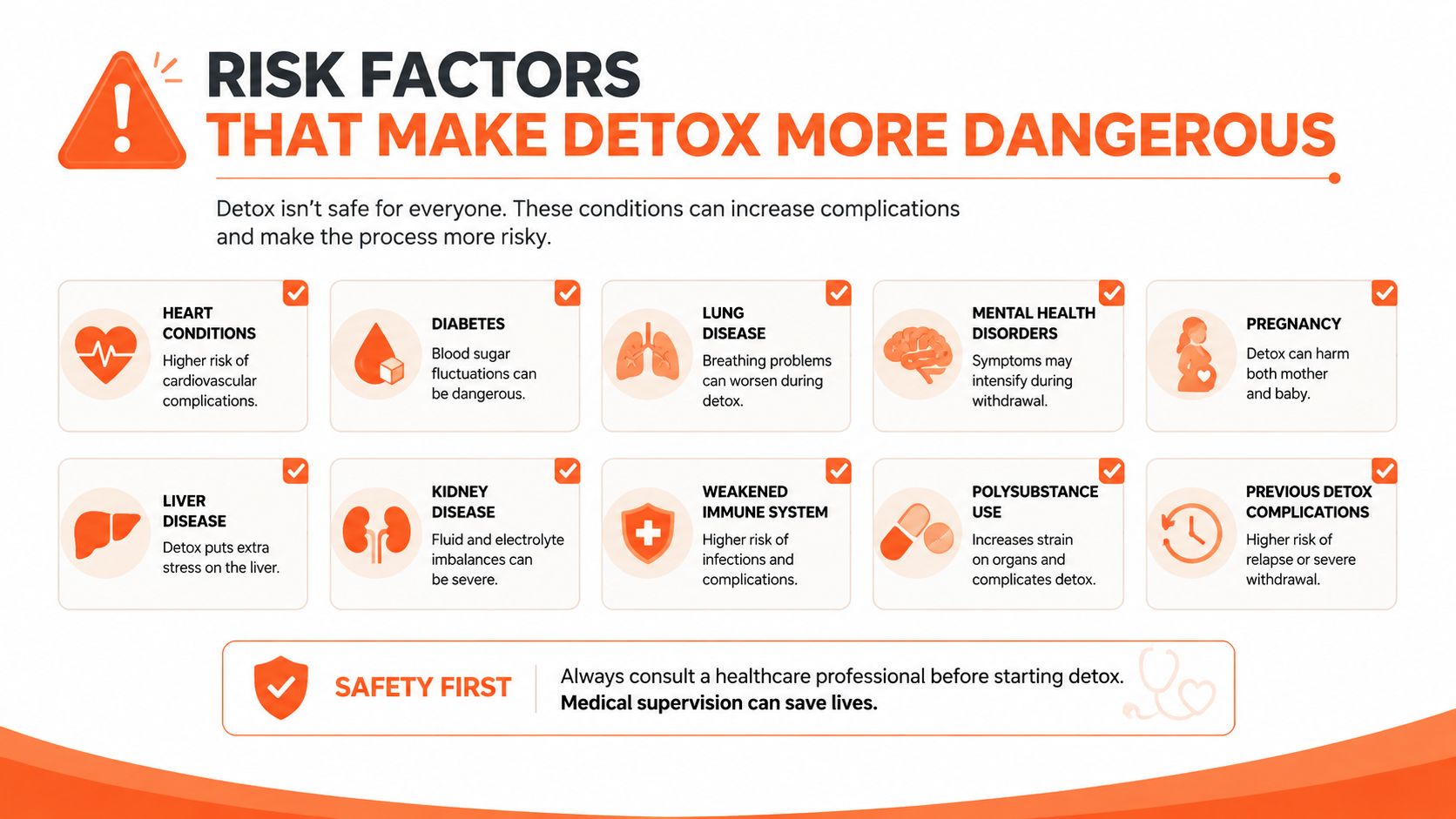
A short cleanse can be manageable for one person and destabilizing for another. The difference is often reserve. People with less buffer for fluid loss, sodium shifts, or stress on the heart and kidneys can become unstable faster, especially when a detox plan depends on fasting, laxatives, or large fluid swings. That is why electrolyte disruption matters so much in these situations. When intake is too low or losses are too high, dehydration, hyponatremia, and other electrolyte imbalances can follow.
The body does not handle added stress well
The physiology is basic. If intake drops, sodium, potassium, and magnesium can fall with it. If diarrhea or vomiting is added on top, fluid and mineral losses rise further. The result can be weakness, dizziness, arrhythmias, and cardiac instability.
Baseline health changes the risk quickly. Kidney disease, diuretic use, eating disorders, and concurrent alcohol or benzodiazepine withdrawal all reduce the body's margin for error. In those settings, the same regimen that feels like ordinary “detox symptoms” for one person can become a medical problem for another.
A practical risk checklist
- Kidney or heart disease: there is less room for fluid and electrolyte shifts.
- Diuretic use: sodium and potassium can fall more easily.
- Eating disorder history: fasting and restriction can trigger unsafe patterns quickly.
- Concurrent withdrawal: autonomic stress adds to dehydration and electrolyte loss.
- Mental health symptoms: anxiety, depression, or trauma can worsen with sleep loss and unstable intake.
Clinical bottom line: if there is baseline organ disease, a restrictive eating history, or active substance withdrawal, unsupervised detox is not just uncomfortable. It can be hazardous.
Monitored care exists for this reason. It tracks more than discomfort and catches the point where symptoms start turning into instability. For readers considering a structured setting, a practical example is the way 24-hour nursing support during detox can help staff observe changes before they become dangerous.
How to Manage and Mitigate Detox Symptoms Safely
Safe management starts by naming the problem. If someone feels weak after a cleanse, the fix is rarely more “detox.” It's usually hydration, nutrition, rest, and stopping the regimen that created the problem. If the symptoms are from substance withdrawal, the answer is medical supervision, not more discipline.
What actually helps
The first step is to correct intake. Fluids matter, but so do electrolytes and food. A body that has been underfed or underhydrated can't stabilize on motivational language. It needs actual substrate.
If the person is detoxing from alcohol, benzodiazepines, or opioids, the safer path is a setting that can monitor symptoms, support sleep, and use medication when appropriate. That's especially important when anxiety, depression, trauma, or insomnia are already in the picture, because those conditions can make withdrawal feel much worse and more chaotic.
What clinical structure looks like
Medically supervised detox is not a luxury add-on. It's the format that makes it possible to track vitals, manage symptoms, and adjust care before trouble escalates. Capo Canyon Recovery's detox program includes 24/7 nursing and psychiatric oversight, medication stabilization, and individual therapy across disciplines. Its 24-hour nursing model during detox reflects the basic clinical idea that changing physiology needs observation, not guesswork.
That structure matters because many professionals try to stay half-connected to work while managing withdrawal. They often need a setting that can support both realities at once. In a supervised program, the team can watch for dehydration, sleep disruption, mood destabilization, and symptoms that don't belong in a simple cleanse.
A simple rule for self-management
- Mild cleanse discomfort: stop the cleanse, hydrate, eat, reassess.
- Confirmed withdrawal: seek monitored detox.
- Confusion, chest symptoms, hallucinations, or seizures: emergency care.
This is not about toughness. It's about matching the response to the actual physiology.
When Detox Symptoms Are a Medical Emergency
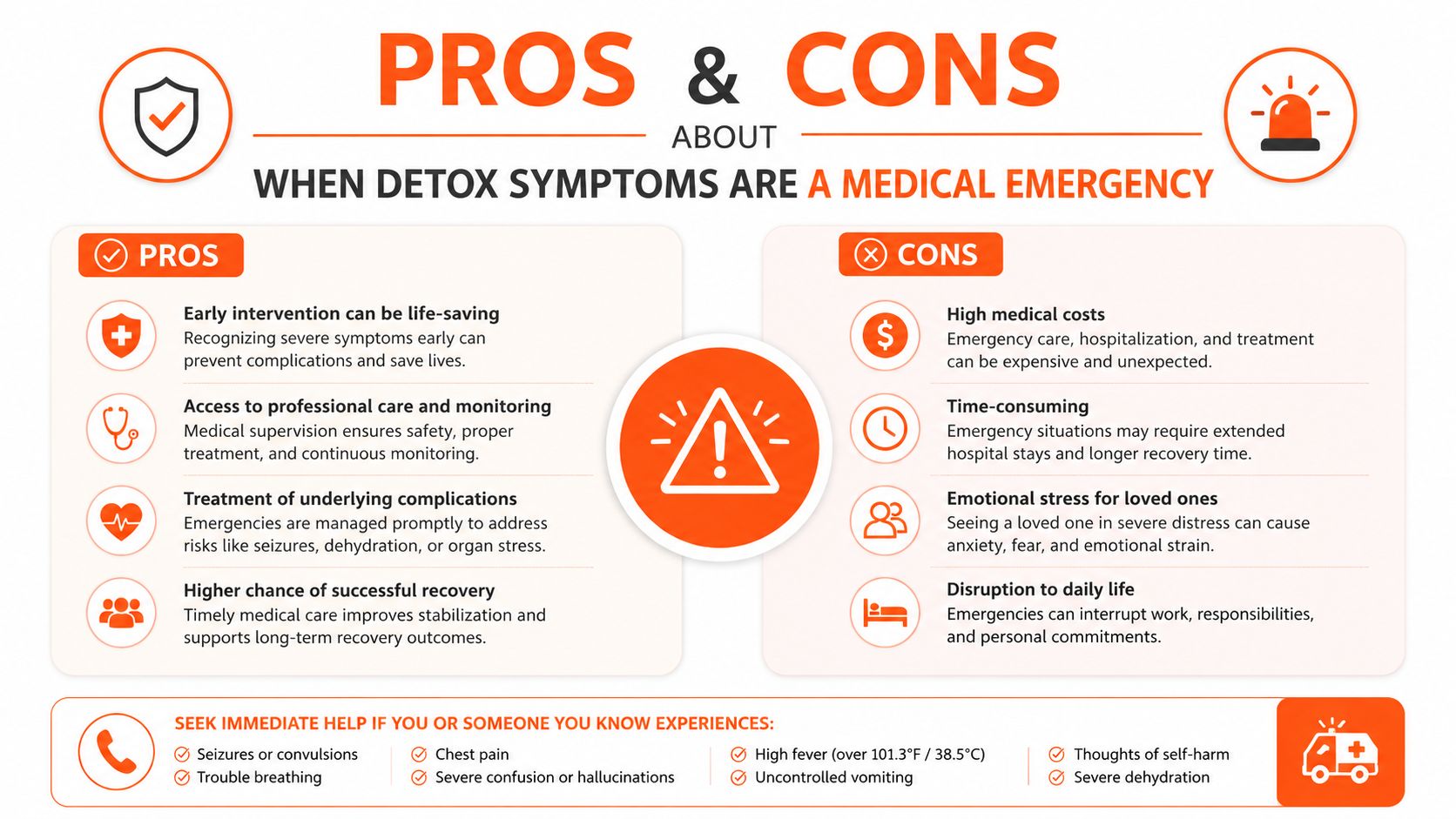
A lot of people call everything “detox” because that word feels less alarming than “withdrawal.” Clinically, that shortcut is dangerous. Hallucinations, seizures, rapid heartbeat, and suicidal ideation are not normal cleanse reactions. They're red flags that need urgent assessment.
The symptoms that should not wait
Alcohol and benzodiazepine withdrawal can be life-threatening without medical oversight. That's not an edge case, it's a core clinical fact. If someone has tremors that are worsening, confusion, hallucinations, seizures, or a racing pulse that won't settle, home management is the wrong layer of care.
The same caution applies when a cleanse creates severe vomiting, dehydration, or collapse. Once the body starts showing instability, the question is no longer whether the regimen was “clean.” It's whether the person needs medical treatment now.
What separates an emergency from discomfort
A useful filter is simple. Mild detox discomfort tends to be inconvenient but coherent, things like low energy, headache, or transient nausea. Emergency-level symptoms impair orientation, breathing, heart rhythm, safety, or judgment.
That includes:
- Hallucinations or confusion
- Seizures
- Chest pain or rapid heartbeat that doesn't ease
- Severe vomiting or inability to keep fluids down
- Suicidal thoughts or self-harm risk
If the symptom threatens safety, don't troubleshoot it with supplements, coffee, or another cleanse product. Get evaluated.
This is the point where the distinction between commercial detox and true withdrawal matters most. A product may promise purification, but dangerous neurologic or cardiac symptoms need clinicians, not branding.
Private Detox Care for Executives and Professionals
A partner may be trying to keep up with board calls, client deadlines, and family obligations while also dealing with withdrawal, and the pressure to look composed can delay care. A private detox setting gives that person medical support without turning treatment into a public interruption.

What discreet care has to provide
For executives, privacy is part of follow-through. Small census, private rooms, and rules that permit work communication can reduce the chance that treatment collides with professional obligations. Capo Canyon Recovery in Mission Viejo serves approximately five clients at a time, allows cell phones and laptops, and is licensed by the California Department of Health Care Services, #300359AP. Its private detox pathway is designed for people who need confidentiality and structure in the same setting.
That matters because many high-functioning patients are not trying to disappear from work. They are trying to stay medically stable while keeping necessary communication intact. A discreet program can support that goal without weakening the clinical side of care.
Why executive care is different from a commercial cleanse
A cleanse asks the client to push through symptoms. Medical detox asks the team to observe, adjust, and intervene when symptoms change. For professionals with co-occurring anxiety, depression, trauma, or unstable sleep, that difference can shape whether they stay safe enough to complete treatment.
Capo Canyon Recovery also provides 24/7 nursing and on-site psychiatric support, private bedrooms, chef-prepared meals, and a treatment model that includes individualized therapy and medication stabilization. Those services make care workable for someone who cannot disappear from life for a week, but also cannot safely improvise recovery at home.
The question is which approach protects both discretion and medical safety. A polished-sounding cleanse may preserve privacy on the surface, but a licensed setting is what manages risk when withdrawal symptoms are part of the picture.
Key Takeaways on Detox Side Effects and Safe Care
Most side effects of detoxing the body are better understood as the result of restriction, dehydration, electrolyte loss, or withdrawal, not toxin release. The body already detoxifies itself, and commercial cleanses rarely improve that process. When symptoms escalate, the safest next step is to separate mild discomfort from true withdrawal and act accordingly.
If you're evaluating detox for yourself or someone you advise, choose a setting that can tell the difference between a cleanse reaction and a medical withdrawal emergency. Capo Canyon Recovery offers licensed detox support, 24/7 nursing, psychiatric oversight, and a private track designed for professionals who need discretion as much as stabilization. Visit Capo Canyon Recovery to review private detox options and confirm whether the level of care fits the symptoms you're dealing with.