
A lot of professionals start in the same place. A back injury after travel. Neck spasms from long hours at a desk. A prescription for Soma, Flexeril, or a benzodiazepine used as a muscle relaxer after a procedure. At first it feels responsible, temporary, and medically justified.
Then the pattern shifts. One dose becomes the only way to sleep. Another becomes the only way to get through a board meeting without feeling wired, tight, or shaky. The person still performs. Deadlines get met. Calls get returned. From the outside, nothing looks obviously wrong. Inside, there's rising panic about running out, being seen, or trying to stop.
That's where the search for detox in Orange County often begins. Not with a dramatic collapse, but with a private realization that the medication is no longer serving its original purpose, and stopping alone may not be safe.
The Hidden Addiction Among Professionals
At 6:30 a.m., a managing partner takes a pill before the first flight of the day because the back tightness is back, sleep was poor, and there is no room in the schedule to feel off. By late afternoon, the bigger concern is no longer the original muscle pain. It is whether there are enough tablets left to get through the client dinner, the hotel night, and tomorrow's presentation without shaking, sweating, or losing focus.
That pattern stays hidden for a long time in professional circles because performance can hold up long after dependence has started. Calendars stay full. Revenue targets get hit. A physician, attorney, founder, or executive may still look polished while privately organizing life around refills, dosing windows, and the fear of being seen as impaired.

When legitimate use becomes dependence
In clinical practice, I see professionals miss the shift because the early story still sounds reasonable. The medication was prescribed. It helped. Work continued. There was no arrest, no public incident, no obvious collapse.
The problem is that outward stability can mask a physiological change. Someone may begin taking a muscle relaxer for a short-term injury, then start using it to sleep before investor calls, settle nerves before court, or get through travel without feeling physically and mentally frayed. At that point, the drug is no longer serving one narrow medical purpose. It is becoming part of how the person regulates stress and function.
Three terms matter here:
- Use means the medication is taken as directed for a clear medical reason.
- Dependence means the body has adapted, and reducing or stopping it leads to withdrawal symptoms.
- Addiction means use continues despite harm, secrecy, impaired judgment, or loss of control.
Professionals often present in the dependence stage while insisting they are still “fine” because they have preserved status, income, and routine. That is a costly misconception. In many cases, the medication is no longer improving performance. It is preventing disruption caused by the body's adaptation to the drug. Families who want a clearer picture of the effects of prescription drug abuse on the body often recognize this pattern once they understand what long-term sedative use does to sleep, memory, mood, and coordination.
Why professionals hide it longer
The barriers are different for this population. A senior employee may worry that treatment will trigger reporting requirements, damage a partnership track, or raise questions from a board, hospital system, or licensing body. Privacy is not a preference here. It is often the deciding factor in whether someone asks for help at all.
There is also a persistent belief that prescription sedatives are less serious than alcohol or street drugs because they started in a medical setting. That belief delays care. It also ignores a basic clinical fact. A prescribed medication can still create dangerous dependence, especially when dosing drifts upward, prescriptions overlap, or the drug becomes the person's main way to sleep or stay steady under pressure. Broader sedative patterns show up with other medications too, which is why some families compare this issue with how clinicians safely manage Ambien use.
In Orange County, the practical need is clear. Professionals need detox options that protect confidentiality, assess withdrawal risk carefully, and make room for work continuity when clinically appropriate. The wrong program can scare this group away. The right one gets them into treatment before a private dependency becomes a medical crisis or a public one.
Understanding Muscle Relaxer Dependence
Muscle relaxers don't all work the same way, but many of them reduce activity in the central nervous system. In plain terms, they turn down the volume on the body's communication system. Pain signals feel less sharp. Muscles loosen. Anxiety may briefly drop. Sleep may come easier.
The problem is that the nervous system adapts. If the brain gets used to the drug doing some of its calming work, it starts relying on that outside chemical support. Over time, the original dose may feel weaker, and the absence of the drug feels louder.
Why stopping feels harder than people expect
Many capable adults often blame themselves. They say, “I should be able to stop. It's just a prescription.” But dependence is physiological, not a character flaw.
Common examples include:
- Soma or carisoprodol can create strong reinforcement because it changes how the brain experiences sedation and relief.
- Cyclobenzaprine or Flexeril may seem milder, but repeated use can still create a pattern of psychological reliance.
- Benzodiazepines prescribed partly for muscle tension carry a different level of withdrawal risk and often require slower, medically guided tapering.
For people comparing sedative medications more broadly, it can help to review how clinicians safely manage Ambien use, because the same larger principle applies. Medications that quiet the nervous system can become difficult and risky to stop without supervision.
What the body starts doing
As dependence develops, the medication often shifts from “relief” to “maintenance.” The person is no longer taking it mainly to feel better. They're taking it to avoid feeling worse.
You may see this progression:
- Therapeutic phase. Medication is used for pain, spasms, or sleep disruption.
- Tolerance phase. The same amount feels less effective, or doses become more important to the day.
- Withdrawal avoidance. A missed dose produces anxiety, sweating, insomnia, shakiness, or rebound tension.
- Compulsive use. Decisions start revolving around access, concealment, and control.
A broader look at the effects of prescription drug abuse on the body can help families understand why these drugs affect far more than pain symptoms alone.
Clinical point: If someone says, “I'm not trying to get high. I'm just trying to feel normal,” that often signals dependence has already taken hold.
Signs of a Developing Problem
Professionals are often skilled at masking impairment. They know how to stay polished in public, defer difficult conversations, and structure their day around symptoms. That's why early signs can look more like rigid self-management than obvious collapse.
Behavioral signs professionals tend to hide
Look for changes in routine that revolve around access to the medication.
- Dose-centered scheduling. Meetings, travel, dinners, or workouts are planned around when the person can take the next pill.
- Refill preoccupation. They become unusually anxious about pharmacy timing, insurance issues, or whether a bottle is running low.
- Symptom exaggeration. Pain or spasm complaints may become more dramatic when a refill is needed.
- Increased secrecy. Bottles are hidden, labels are removed, or the person becomes defensive when asked basic questions.
- Doctor shopping or fragmented care. Different prescribers, urgent care visits, or vague explanations appear in the background.
These behaviors matter because they show a shift from treatment compliance to medication control.
Physical and cognitive clues
The body and mind usually show strain before work performance fully drops.
| Area | What families or colleagues may notice |
|---|---|
| Physical | Drowsiness, slowed reactions, dizziness, unsteady walking, slurred speech, or unusual fatigue |
| Mental | Foggy thinking, poor short-term memory, irritability, rebound anxiety, and difficulty shifting attention |
| Sleep | Trouble sleeping without the drug, sleeping at odd hours, or appearing overly sedated |
| Mood | Sharp frustration when a dose is delayed, emotional flatness, or rising panic that doesn't match the situation |
The high-functioning trap
The hardest cases are often the ones where the person still looks productive. They're billing hours, seeing patients, managing teams, or appearing socially intact. That doesn't mean the problem is mild. It often means the cost is being paid privately through isolation, fear, and constant self-correction.
If a person can't comfortably get through a workday, flight, dinner, or night of sleep without calculating medication access, the issue is no longer just pain control.
Family members often sense this before they can name it. They notice a loved one who's physically present but emotionally narrowed, less spontaneous, and more brittle. That's usually the right time to stop debating labels and start evaluating medical risk.
The Risks of Withdrawal and The Need for Medical Detox
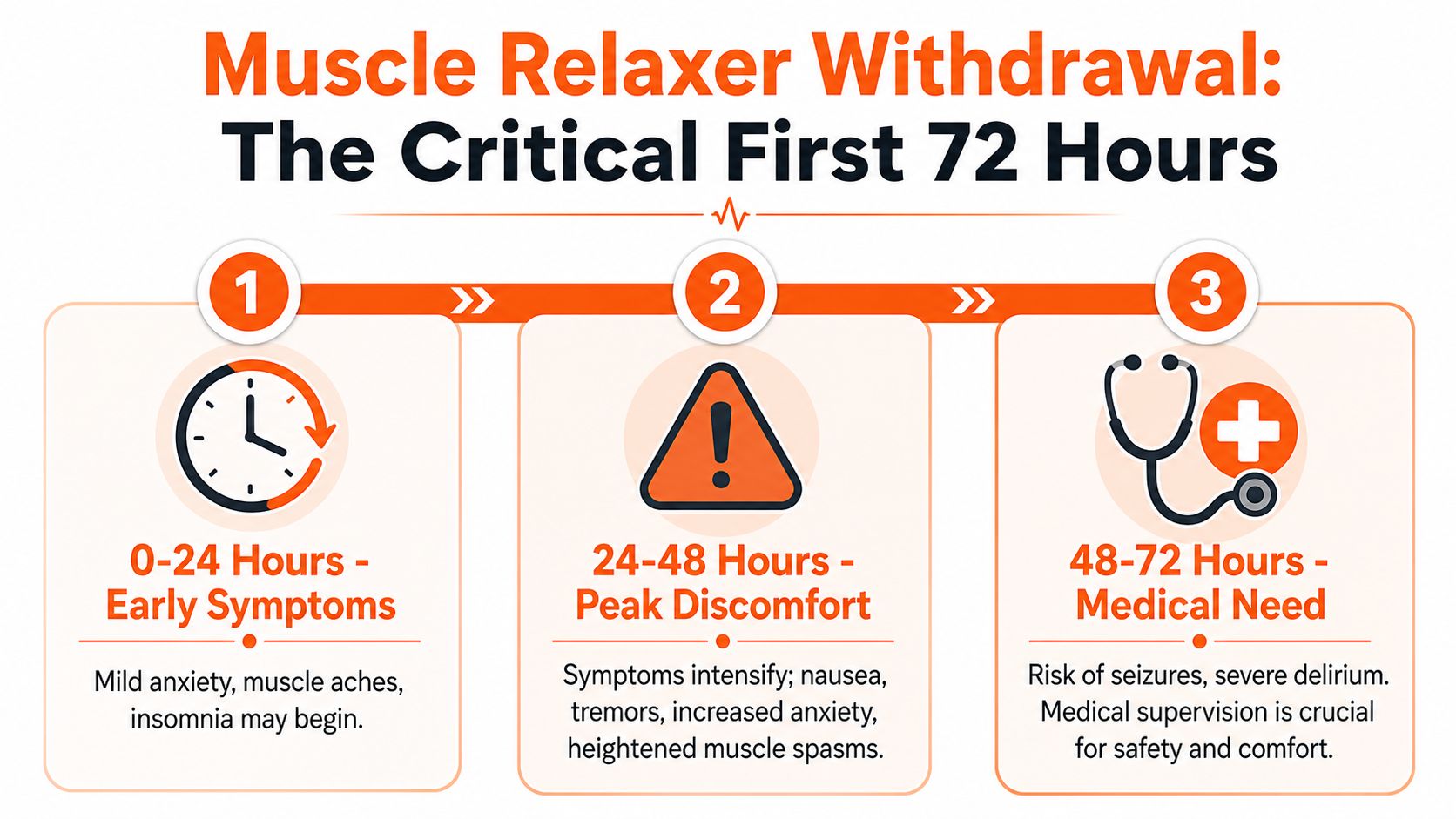
A common scenario looks stable from the outside. An executive clears meetings, answers emails, and insists they can stop the medication over a long weekend. By Monday, they may be dealing with escalating anxiety, tremor, rebound insomnia, rising blood pressure, or confusion. At that point, privacy is no longer the main concern. Safety is.
Withdrawal from muscle relaxers and other sedating medications can become medically dangerous, especially when use has been heavy, prolonged, or mixed with alcohol, sleep medications, opioids, or benzodiazepines. The exact risk depends on the drug, the dose pattern, and what else is in the system. That is why a proper detox starts with assessment, not guesswork.
Why home detox is the wrong call
Professionals often choose home detox for one reason. They want to protect their name, their role, and their schedule. I understand that instinct. The problem is that home withdrawal can change quickly, and the person going through it is rarely the best judge of how unstable they have become.
Early symptoms may seem manageable. Poor sleep, restlessness, sweating, nausea, irritability, and increased muscle pain are common starting points. In higher-risk cases, those symptoms progress to marked agitation, panic, disorientation, delirium, or seizures. What begins as an attempt to stay discreet can end in an emergency room visit, which is usually far less private and far more disruptive than a planned admission.
Several approaches create unnecessary risk:
- Stopping abruptly without a medical review
- Trying to copy an online taper that does not match the actual drug or dose
- Adding alcohol, sedatives, or extra prescriptions to blunt symptoms
- Continuing full work responsibilities while judgment, reaction time, and sleep are impaired
A supervised detox protects more than physical safety. It also protects decision-making, confidentiality, and continuity. A clinical team can monitor vital signs, mental status, hydration, and sleep while adjusting the plan in real time. In Orange County inpatient detox settings, staff often use structured withdrawal tools such as CIWA or COWS when clinically appropriate, along with physician oversight and round-the-clock nursing, as described in Orange County detox protocol guidance.
What medical detox actually does
A good detox program does more than watch for complications.
It identifies every substance involved, including prescribed medications, alcohol, and sleep aids that patients may minimize or forget to mention. It determines whether the patient needs a taper, symptom-targeted medications, seizure precautions, or a higher level of monitoring. It also separates withdrawal symptoms from other medical or psychiatric problems that can look similar in the first few days.
That matters for high-functioning adults who are used to pushing through discomfort. Withdrawal is not a performance problem to manage on one's own. It is a medical process that can impair judgment at the same time the person is insisting they are fine.
Withdrawal management is medical care. It should be planned with the same seriousness as any other acute health risk.
For families and colleagues weighing detox in Orange County, the best setting is the one that keeps the patient safe, preserves privacy, and gives them a realistic chance of returning to work with a clear head instead of a deeper crisis.
Effective Treatment Pathways Beyond Detox
A physician can clear withdrawal in several days. Returning a professional to stable, reliable functioning takes longer.
That difference matters with muscle relaxer dependence because the drug often sits inside a larger pattern. The patient may be chasing sleep after late-night work, trying to control pain without slowing down, or using medication to stay outwardly composed under pressure. If treatment stops at detox, the person often goes back to the same calendar, the same stress load, and the same private justifications that kept the problem hidden.
What a full treatment plan should cover
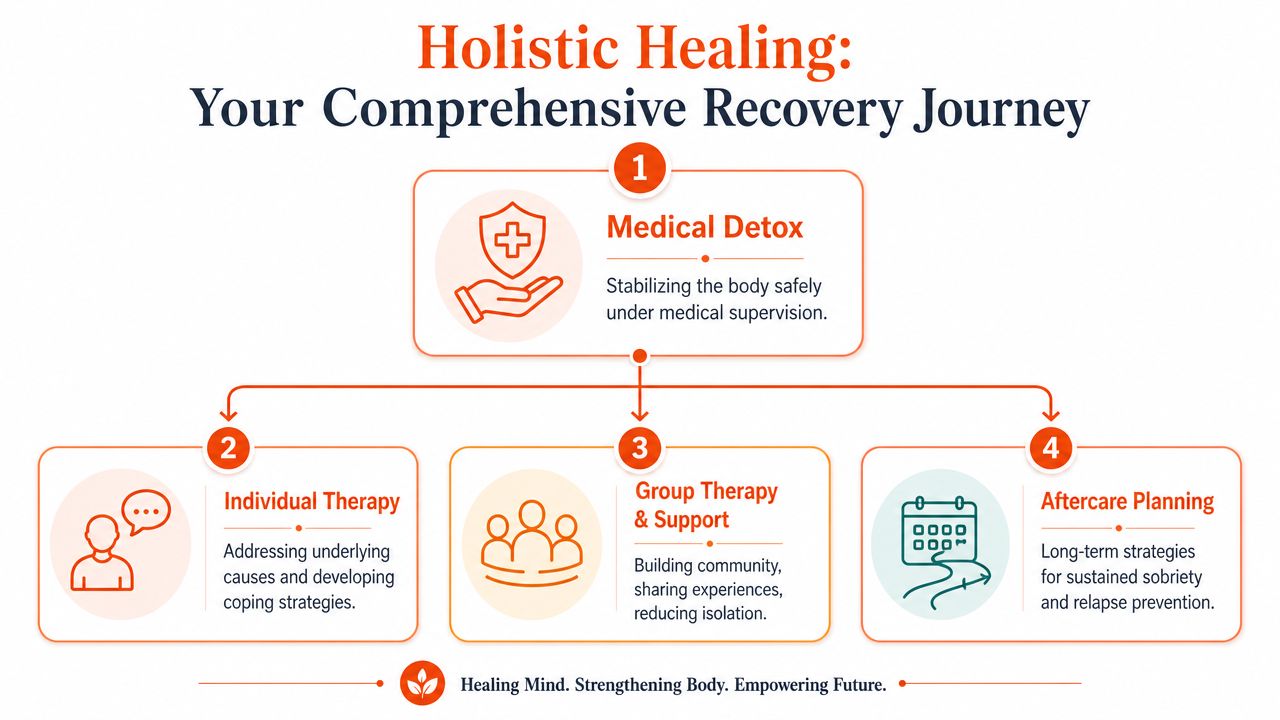
For professionals, post-detox care needs to answer four clinical questions at once. What is driving the drug use. What happens to pain and sleep once the medication is removed. Which psychiatric symptoms are present underneath the sedation. How will the patient step away from work long enough to recover without creating unnecessary exposure.
Residential treatment is often the cleanest starting point because it interrupts the refill cycle and the rituals around use. It also lets clinicians observe the gap between what the patient reports and what is happening with sleep, anxiety, irritability, concentration, and pain behavior. That matters in high-performing adults who are used to minimizing symptoms and protecting appearances.
Dual diagnosis treatment also belongs early in the plan. In practice, I rarely see a lasting recovery when anxiety, trauma, depression, or chronic insomnia are treated as side issues. The sedating medication may be gone, but the reason it became useful is still active.
Therapy should stay practical. CBT can challenge the beliefs that keep professionals stuck, such as “I need this to sleep” or “I cannot miss a day and still keep my position.” DBT helps patients tolerate distress without immediately shutting it down pharmacologically. Trauma-focused work may be appropriate once the patient is stable enough for it. Family work is often needed too, especially when a spouse, assistant, or business partner has been discreetly covering for the problem.
Why length of care changes outcomes
The first week usually brings relief. Clearer thinking returns. Appetite improves. The patient starts making promises. Families want to believe the crisis has passed.
Sometimes it has not.
Longer treatment gives the team time to test a real recovery plan under pressure. Can the patient sleep without sedatives. Can pain be managed with safer strategies. Can they tolerate conflict, deadlines, and embarrassment without reaching for medication. Those answers do not appear in a short stay.
The National Institute on Drug Abuse describes addiction as a chronic, treatable condition that often requires ongoing management rather than a single acute intervention, as outlined in its overview of treatment and recovery. SAMHSA makes a similar point in its guidance on continuity of care for substance use treatment and recovery support. In plain terms, detox starts the work. Repetition, monitoring, and step-down care help it hold.
Matching the setting to the patient
One executive may need residential treatment with psychiatric evaluation, medication review, and temporary removal from all work contact. Another may need a private room, limited technology access, and a tightly managed schedule that allows brief business continuity without letting work take over treatment. Those are different clinical setups, not luxury preferences.
One option in Orange County is Capo Canyon's private detox and residential program, which offers detox, residential care, dual diagnosis treatment, and a tech-friendly executive track. Families who are weighing discretion as heavily as clinical quality should also review how privacy protections can support recovery and reputation. For out-of-area patients or families trying to avoid public travel exposure, it may also help to explore medical transport services.
The right plan is the one that treats the addiction, the sleep and pain issues around it, and the professional reality the patient has to return to. If any one of those pieces is ignored, relapse usually follows through that opening.
Confidential Care for Executives and Professionals
A partner calls at 6:30 a.m. because the managing director missed another flight, slurred through a client dinner, and insists the problem is only back pain and poor sleep. Families in this position are often dealing with more than substance use. They are also trying to protect a career, a reputation, and the basic ability to keep work from collapsing while treatment begins.
That pressure changes admission decisions.
Professionals often delay detox because they expect an all-or-nothing choice. Go away completely and risk exposure at work, or stay available and keep using. In practice, good executive care is more disciplined than that. It sets tight clinical boundaries while making room for limited, necessary contact with the outside world.

The question is not whether a patient gets a phone or a laptop. The question is who controls access, when it is allowed, and whether it interferes with withdrawal monitoring, medication adjustments, sleep restoration, and psychiatric stabilization. I have seen senior professionals do well with one brief scheduled check-in a day. I have also seen work contact keep a patient activated, evasive, and medically harder to stabilize.
A private professional track should account for that reality. The features that matter are practical:
- Private rooms that reduce exposure, support sleep, and give patients a controlled setting for approved communication
- Low census environments that protect discretion and reduce social pressure during early withdrawal
- Structured technology policies with clinician oversight, not unrestricted access and not automatic confiscation
- Psychiatric and nursing supervision so medication changes, anxiety, insomnia, and rebound symptoms are managed in real time
- Case coordination for leave planning, family updates, legal or licensing concerns, and communication that needs to happen without turning treatment into another workday
Privacy starts before check-in. Some patients should not manage commercial travel, airport visibility, or a stressful family escort while impaired or unstable. In those cases, families may want to explore medical transport services to reduce exposure and make admission safer.
Families should also ask how the program protects identity once the patient arrives. Room placement, visitor rules, device handling, release-of-information procedures, and staff discretion all matter. A useful reference on how privacy protections support recovery and reputation can help clarify what that should look like in day-to-day treatment.
Privacy helps people enter care. It should never be allowed to weaken the care itself. The strongest executive programs treat confidentiality as part of the clinical plan, not as a hotel amenity.
How to Find the Right Detox in Orange County
A vice president can keep a board meeting on the calendar while hiding a growing dependence on muscle relaxers. What usually breaks the pattern is not a public collapse. It is a spouse noticing confusion at night, a physician refusing an early refill, or a professional realizing they cannot stop without feeling worse. At that point, the right question is simple. Which detox can manage the withdrawal safely, protect privacy, and keep the rest of the patient's life from unraveling?
Orange County has no shortage of treatment programs. The harder task is separating centers that offer real medical detox from those that mainly offer a pleasant setting and a broad promise of individualized care. For executives and licensed professionals, that distinction matters. A weak admission process, limited medical coverage, or casual handling of confidentiality can create problems that outlast the withdrawal itself.
Questions worth asking on the first call
The first call should sound like a clinical screening, not a sales pitch.
- Who is evaluating the patient before admission? Ask whether a nurse, prescribing clinician, or physician reviews current medications, dose patterns, alcohol use, and psychiatric history before arrival.
- What is your actual experience with sedative-type withdrawal? Muscle relaxers are not all managed the same way. A center should explain how it handles tapering, monitoring, and rebound symptoms without speaking in generalities.
- How quickly can medication and psychiatric issues be addressed after check-in? Professionals often arrive sleep-deprived, anxious, and worried about work consequences. Delayed evaluation can make the first 24 hours harder than they need to be.
- How do you handle confidentiality in practice? Ask about intake timing, private rooms if indicated, staff communication standards, releases of information, and how phone access is managed.
- Can you support limited work continuity without letting work take over treatment? Some patients need one protected call a day, coordination with counsel, or communication with an assistant or spouse. The program should be able to set clear limits.
- What is the plan after detox ends? Detox is a starting point. If the center cannot explain what comes next for relapse prevention, psychiatric care, and family involvement, the discharge plan is too thin.
Families who want a clearer picture of what discreet admission and private medical detox can look like can review options for private detox near you in Orange County.
One more point matters in Orange County. County systems and private programs both exist, but they are built for different needs. A patient with high reputational exposure, complex prescribing history, or urgent workplace concerns usually needs more coordination than a standard bed search provides.
What to do next
Call before the situation turns into an ER visit, an arrest, or a licensing crisis.
A good program will ask detailed questions, explain any immediate safety concerns, and tell you if the case exceeds what they can manage. I respect centers more when they draw that line clearly. Families should, too.
The right detox in Orange County does three things well. It stabilizes the patient medically, protects privacy without theatrics, and builds a realistic plan for the week after discharge. For professionals, that is what makes treatment possible in the first place.
Frequently Asked Questions for Professionals
Will my employer or licensing board be notified if I go to detox?
A common call starts the same way. A physician, attorney, pilot, or business owner asks whether one admission will trigger a report that damages a career they spent years building.
In most cases, treatment remains confidential. The actual answer depends on the license involved, any current board order or monitoring contract, workplace drug testing requirements, and whether there is an immediate safety issue tied to practice. Professionals should get a plain-language explanation of privacy limits during the first call. I advise families to ask who can access records, what is documented, and under what circumstances a release of information would be needed.
What happens after the first week?
The first week is for stabilization. It does not resolve the pattern that led to misuse.
Some professionals can step down to residential care with limited work contact. Others may need a dual diagnosis track, medication review, sleep treatment, trauma therapy, or a structured outpatient plan if they have strong support and lower immediate risk. The discharge plan should account for job demands, travel, family pressure, and the fact that returning too quickly to a high-stress role can undo early progress.
What if anxiety or depression is part of the problem?
That is common, especially in professionals who have been using a muscle relaxer to sleep, quiet panic, or get through chronic pain without appearing impaired. Detox should include psychiatric assessment, not just withdrawal monitoring.
If a program treats the medication problem but ignores anxiety, depression, trauma, or insomnia, the patient usually leaves with the same drivers that fed the addiction. In executives and other high-responsibility patients, untreated psychiatric symptoms often show up as overwork, irritability, isolation, and private medication misuse long before anyone sees an obvious collapse.
Can family be involved without taking over?
Yes, if the structure is clear. Family can provide timeline details, prescription history, behavior changes, and practical support around leave from work or childcare.
What helps is guided involvement. That may mean scheduled updates with consent, family sessions, and coaching on boundaries. What tends to make matters worse is constant checking, emotional bargaining, or a spouse trying to manage medications at home after a failed quit attempt.
Can I keep working during treatment?
Sometimes, but only within limits that protect the treatment process. During acute withdrawal, concentration, judgment, sleep, blood pressure, and mood can all be unstable. Patient care, legal decisions, trading activity, and high-stakes negotiations should not continue as if nothing is happening.
After the patient is medically stable, some executive-focused programs allow tightly managed contact for time-sensitive matters. That can include one scheduled call, coordination with counsel or an assistant, or brief laptop access for a decision that cannot wait. If work contact starts to compete with groups, medical care, or rest, the program should scale it back.
If you're looking for a discreet, medically supervised path forward, Capo Canyon Recovery offers private detox and residential treatment in Mission Viejo for executives, professionals, and families who need confidentiality, dual diagnosis care, and a treatment setting that can accommodate essential work communication without losing clinical focus. The first step is a confidential conversation about safety, withdrawal risk, and whether detox in Orange County is the right starting point now.