
You're off shift, but your body hasn't gotten the message. The call is over, the scene is cleared, and your gear is back in the locker, yet the adrenaline is still humming and the memory keeps replaying. For a lot of first responders, that's the moment drinking, pills, or another quick escape starts to feel less like a choice and more like a relief valve.
What makes first responder addiction treatment different is that the substance use usually isn't the whole story. Trauma, sleep disruption, and the pressure to stay functional can sit underneath it, and a generic program often misses that layer. The safest path is a plan that treats the addiction, the stress response, and the career risks at the same time.
Hidden Toll of First Responder Addiction
The quiet part comes after the call. A paramedic gets home, drops the bag by the door, and tries to sleep, but the body stays in fight-or-flight. A drink or a pain pill can look like the fastest way to turn the volume down, and that is often how a hidden pattern begins.
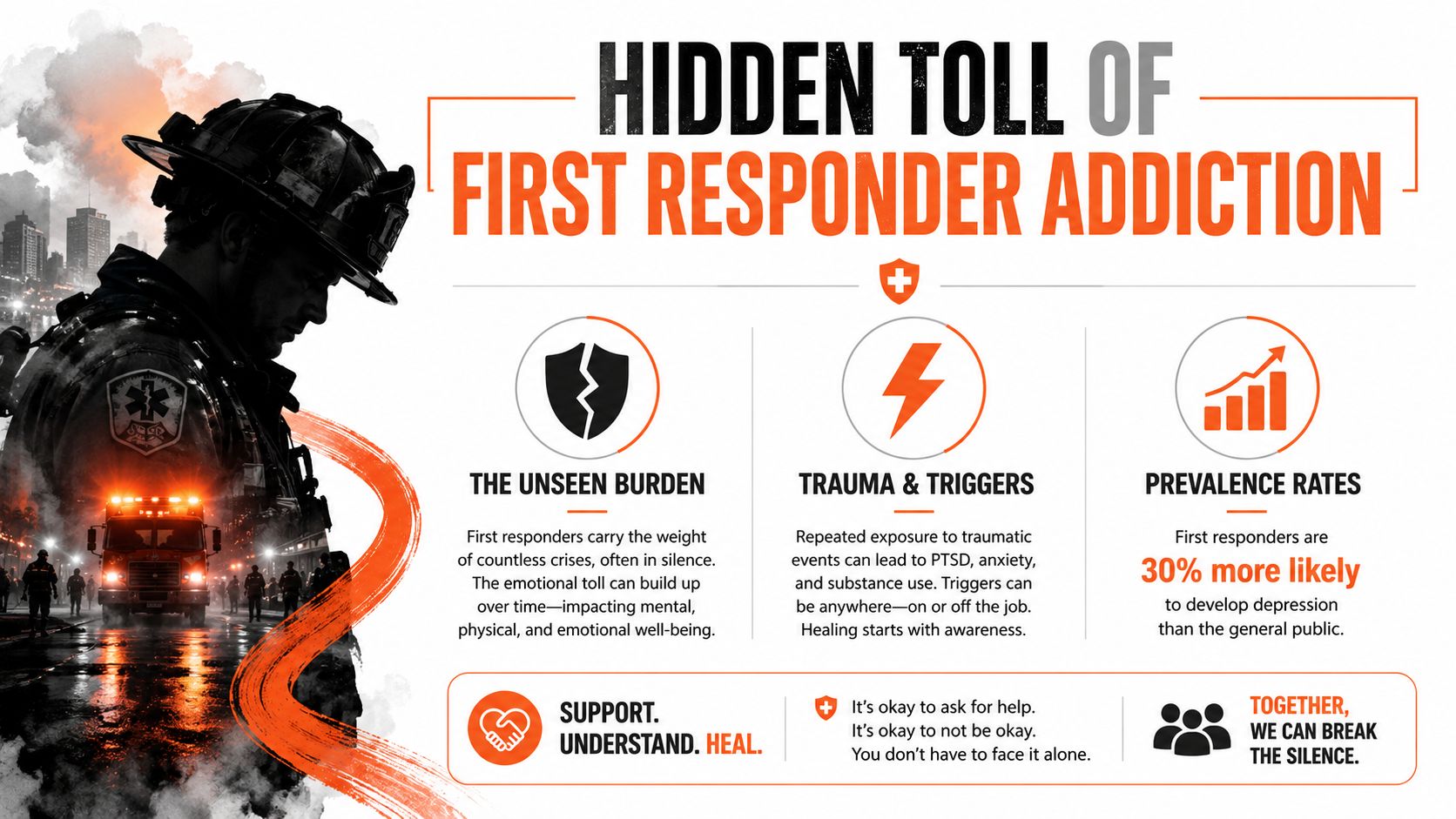
The burden most people do not see
SAMHSA's 2018 report estimated that 30% of first responders develop behavioral health conditions such as depression and PTSD, compared with 20% in the general population, which helps explain why so many cases involve more than substance use alone (SAMHSA report). That difference matters because a firefighter, EMT, or police officer may look “fine” on paper while carrying symptoms that are invisible at work.
The hidden part is not just shame. It is also the pressure to keep showing up, keep your composure, and keep other people safe even when your own nervous system is overloaded. A strong treatment plan has to recognize that reality instead of asking the person to pretend it is not there.
Practical rule: if the substance use seems tied to calls, sleep loss, or nightmares, the problem is probably not isolated addiction, it's a trauma-linked pattern.
The warning signs often show up in small ways first, like using more after a rough shift, needing alcohol to fall asleep, or feeling irritable on days off. Families may notice the change before the responder does. That's why early recognition matters, and why burnout signals should never be brushed aside, especially when they start stacking up in the background of a demanding job like the one described in this guide to early warning signs of burnout.
Why generic rehab falls short
A standard program can help with abstinence, but it may miss the trigger map. First responders often carry trauma symptoms, job culture pressure, and repeated critical-incident exposure, so the alcohol or drug use is sometimes a coping strategy, not the root cause.
That is why the treatment roadmap has to go deeper than “stop using.” If the nervous system is still stuck in emergency mode, relapse risk stays high. Real recovery starts when the person gets support for both the substance use and the trauma response behind it.
Understanding Addiction in First Responders
The clearest way to understand this pattern is to think of trauma like a wound that keeps getting reopened. It may look closed from the outside, but the pressure of the job keeps pulling the scab off. For many first responders, alcohol or drugs become a fast, familiar bandage, even though they never solve the injury underneath.
How stress turns into self-medication
First responders are trained to stay composed, act quickly, and keep moving. That culture can be lifesaving on scene, but it also makes it harder to admit pain, ask for help, or name the toll a series of critical incidents is taking. When the job teaches you to push through, self-medication can feel like the only off switch available.
Trauma symptom severity independently predicts problematic substance use even after general occupational stress is accounted for, which is why treatment has to assess PTSD, depression, and anxiety alongside alcohol or opioid use (balanced mind clinical guidance). In practical terms, that means the person is not merely “using too much.” They may be trying to quiet flashbacks, insomnia, hypervigilance, or emotional numbing.
Shift work adds another layer. Sleep disruption makes stress harder to regulate, and irregular schedules can leave a responder with no predictable time to reset. Over time, that combination can turn a casual coping habit into a reinforced cycle.
Families often ask whether the addiction is the “real problem” or whether the trauma is. The answer is that both matter, and they feed each other. If treatment only addresses one side, the other side keeps pushing the person back toward use.
Clinical shortcut: when trauma symptoms and substance use travel together, treat them as one case with two faces, not two separate problems.
For readers comparing workers' compensation or legal pathways, there's also a practical reason to understand the injury pattern clearly. A specialized resource such as CA workers comp for PTSD can help frame how occupational trauma may be documented and discussed without treating addiction as a moral failure.
Why dual-diagnosis care is the right model
The old model was “get sober first, then deal with trauma later.” That approach often leaves people raw, dysregulated, and vulnerable to relapse. Integrated care works better because it treats the addiction and the trauma together, which is exactly what many first responders need when they enter treatment carrying both symptoms and job pressure.
Unique Clinical and Occupational Needs
A firefighter doesn't just wonder whether treatment will work. They wonder who will know, whether the department will find out, and whether a paper trail could affect a badge, credential, or fitness-for-duty review. Those concerns are not side issues, they're central to whether someone will walk through the door.
Confidentiality is part of treatment, not an extra
SAMHSA notes that first responders often avoid treatment because of reporting fears, and that clear private pathways and role-specific confidentiality rules are essential for trust (SAMHSA guidance on confidentiality and access). That means a good program should be able to explain, in plain language, what stays private, what may require disclosure, and what protections exist for different roles.
A police officer, an EMT, and a licensed professional may all face different reporting pressures. Generic rehab content often treats privacy as a vague promise, but real care needs to spell out the practical rules before intake starts. If a program can't answer those questions clearly, that is a warning sign.
A useful place to review privacy-aware consumer education is browse Optimal Native journal, especially when comparing how different organizations talk about work-sensitive concerns for fire and police personnel.
What to ask before admission
Use direct questions, and don't apologize for asking them.
- Who can access my record: Ask whether the facility uses role-based privacy protections and how it handles communication with outside providers.
- How return-to-duty is handled: Ask whether the program coordinates with occupational health, an EAP, or a treating clinician when that's needed.
- Whether the setting is discreet: Ask about client census, rooming, and whether the facility can support a low-profile admission.
- How schedules are managed: Ask whether shift-work realities, family obligations, or professional duties can be built into the care plan.
The best programs don't make privacy sound abstract. They explain it like a process.
Fitness-for-duty and licensure concerns
Fitness-for-duty exams can feel intimidating because they blend health, work performance, and administrative review. Licensure concerns can feel even heavier for clinicians, pilots, and other credentialed professionals. A strong program should be prepared to coordinate with outside parties only when it is appropriate, necessary, and understood in advance.
The goal is not to hide care. The goal is to enter care in a way that protects dignity and preserves the best possible path back to work. That's why confidential, schedule-aware treatment matters so much for this population.
Evidence-Based Treatment Components
The most effective first responder addiction treatment plans are built like a team, not a single tool. Detox handles immediate safety, therapy addresses the trauma and thought patterns, and aftercare keeps the person steady when work stress returns. Each part has a job, and skipping one usually leaves a gap.
The first phase is medical stabilization
Medically supervised detox matters when withdrawal could become dangerous or overwhelming. For many first responders, the body is already running hot from stress, so clearing alcohol, opioids, or other substances without medical support can make symptoms harder to manage.
Residential dual-diagnosis care is often the next step when trauma symptoms and substance use are both active. The treatment goal is not just abstinence, it's stability, sleep, emotional regulation, and a safer return to daily life. The clinical guidance in this field has shifted toward integrated care because PTSD and addiction have to be treated together for best outcomes (first responder guide).
The therapy mix should match the problem
CBT helps people identify the thoughts that drive use, like “I can't unwind without drinking,” and replace them with more workable responses. DBT adds skills for distress tolerance, impulse control, and emotional regulation, which can be useful when the nervous system is overloaded.
EMDR is often used when trauma memories keep intruding into the present. Motivational interviewing helps the person examine ambivalence without being shamed into change. Those methods work best when they're coordinated instead of offered as random menu items.
For a plain-language overview of that philosophy, see the trauma informed approach to care. The point is simple, the treatment has to respect what the body learned during repeated trauma exposure.
Medication and group work matter too
Medication stabilization can reduce cravings, ease withdrawal-related discomfort, and support mood stabilization when indicated. It is not a shortcut around therapy, it is often what makes therapy usable.
Group therapy matters because first responders usually need peers who understand the occupational culture. Hearing another firefighter or EMT describe the same sleep disruption, irritability, or shame can lower isolation fast. That peer recognition is not a bonus feature, it's a core part of recovery for many people in this field.
Choosing the Right Treatment Program
A good program for this population should feel private, clinically serious, and flexible enough to respect work reality. The wrong one often looks polished on the surface but breaks down when you ask practical questions about support, scheduling, or confidentiality. The difference shows up quickly once you compare features side by side.
Key Program Features Comparison
| Feature | What to Look For |
|---|---|
| Privacy and discretion | Private rooms, small census, and a clear explanation of how records and communication are handled. |
| Clinical depth | 24/7 nursing, psychiatric oversight, trauma assessment, and dual-diagnosis treatment, not just addiction counseling. |
| Schedule flexibility | Tech-friendly policies, reasonable family contact, and the ability to manage essential work responsibilities when appropriate. |
| Therapy options | CBT, DBT, EMDR, motivational interviewing, and group therapy with peers who understand high-stress service work. |
| Family involvement | Structured family education or therapy when clinically appropriate, so the home environment supports recovery. |
| Aftercare planning | A plan for peer support, step-down care, and coordination around return-to-duty concerns. |
What separates a strong fit from a risky one
A firefighter who worries about department visibility needs a very different environment than someone entering a standard outpatient track. A resident with a high-profile job may need private space to rest and work without turning treatment into a public event. A program that cannot explain how it handles those realities is not ready for this population.
Complementary therapies can help, but they should sit inside a real clinical plan, not replace it. Sleep, nutrition, movement, and stress recovery all matter, yet they work best when paired with psychiatric care and evidence-based therapy. That balance is what keeps treatment from becoming either too rigid or too vague.
Best-fit test: if the program talks more about amenities than clinical coordination, keep looking.
For professionals who need to stay connected to essential responsibilities, the details matter as much as the headline services. A treatment center should be able to explain how it supports privacy, work continuity, and clinical intensity without forcing the client to choose only one of those priorities.
Navigating Intake Insurance and Aftercare Planning
Intake should feel organized, not chaotic. The process usually starts with an assessment, then moves into benefit verification, clinical recommendations, and a plan for what happens after the most intense phase ends. When people know the steps, they are less likely to delay care because the path feels too opaque.
What the intake process should include
The first conversation should cover substance use, trauma history, sleep, medical risks, and any job-related concerns that could affect treatment. From there, the team should explain whether detox is needed, whether residential care makes sense, and how privacy will be handled. If the program can't explain the sequence, that usually means the process will feel confusing later too.
Insurance questions belong at the start, not the end. If coverage is uncertain, families should ask for a benefit check and also review self-pay options before admission. A straightforward consumer guide such as does insurance cover addiction treatment can help people prepare the right questions before they call.
Aftercare should be planned before discharge
Recent guidance emphasizes flexible hybrid care models and coordinated aftercare, including peer support and sleep restoration, to reduce relapse risk when first responders return to high-stress duties (Stepstone guidance). That matters because leaving residential care without a follow-up plan is like sending someone back into service without checking the gear.
A sound aftercare plan may include:
- Peer support: ongoing contact with people who understand the occupation and the triggers.
- Family therapy: a way to rebuild trust and reduce relapse pressure at home.
- Sleep restoration: a deliberate plan for circadian repair, not just a vague reminder to rest.
- Return-to-duty coordination: communication with appropriate clinical or occupational supports when needed.
Recovery lasts longer when discharge is treated as a transition, not an ending.
The right program will map out what happens in the first week after discharge, who the responder can call if cravings spike, and how the person will handle high-arousal shifts again. That concrete planning is what turns treatment into a sustainable recovery path.
Conclusion and Facility Selection Checklist
The best first responder addiction treatment programs do three things at once. They treat the substance use, they address the trauma that may be driving it, and they protect the person's ability to seek care without creating unnecessary occupational risk. If one of those pieces is missing, the plan is incomplete.
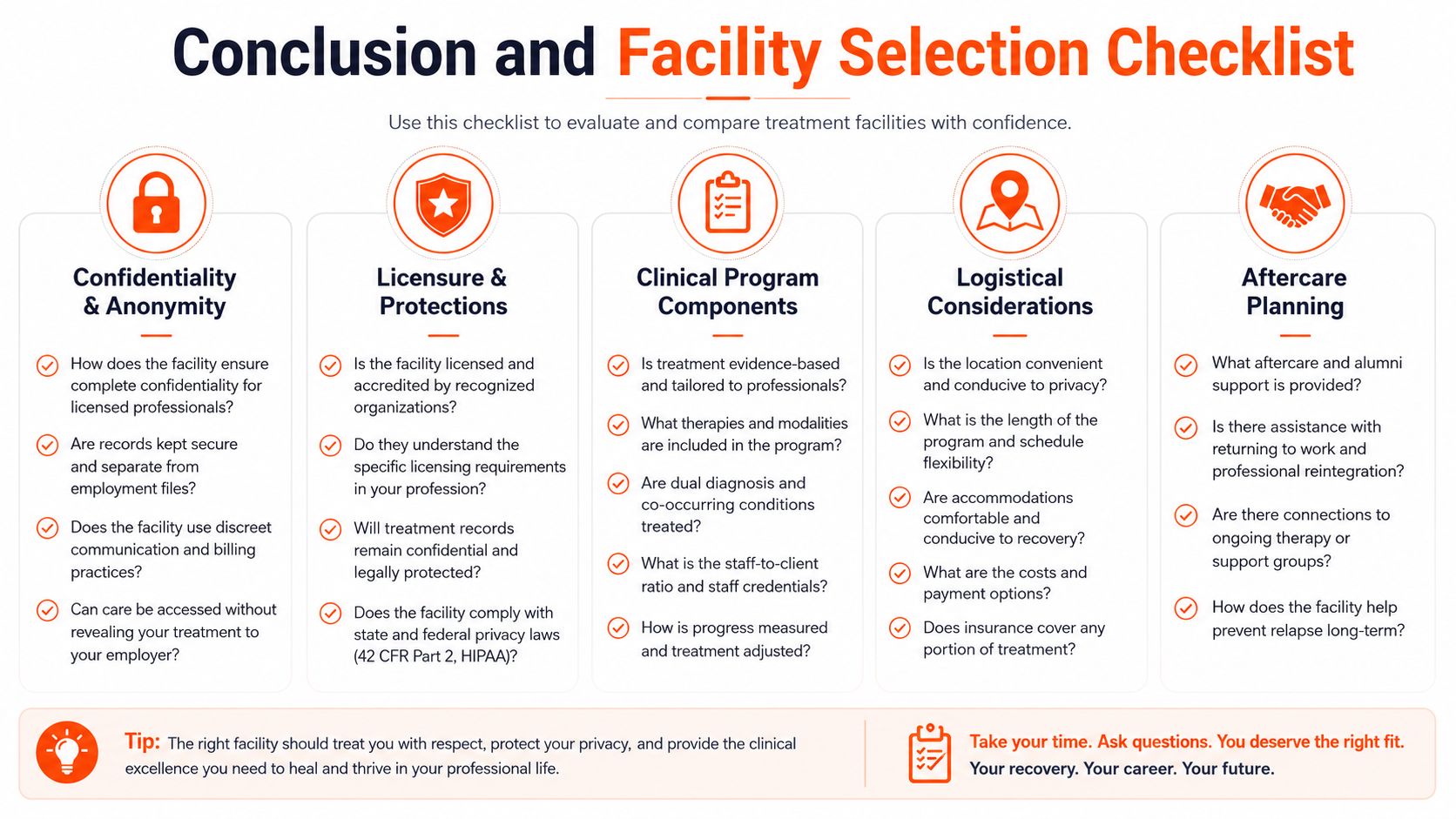
Questions to ask before you choose
- Confidentiality and anonymity: How does the facility protect privacy for licensed professionals and first responders?
- Licensure and protections: What does the program say about reporting, documentation, and coordination with outside parties?
- Clinical program components: Does it offer detox, dual-diagnosis care, trauma-focused therapy, and psychiatric oversight?
- Logistical considerations: Are rooming, schedule support, and communication policies realistic for someone with job obligations?
- Aftercare planning: What happens after discharge, and how does the program support peer recovery and return-to-duty planning?
The clearest sign of quality is not a polished brochure. It is a team that can answer hard questions directly and without hedging. If they can explain privacy, trauma care, and post-discharge support in plain language, that's a strong indicator they understand this population.
Use your questions to filter fast. Ask what happens if withdrawal risk is present, how co-occurring PTSD is handled, and how the program helps a responder move from stabilization back into real life without losing momentum. That kind of clarity protects both recovery and career.
If you're weighing next steps, Capo Canyon Recovery offers a private, clinically grounded setting for professionals and first responders who need detox, residential care, and trauma-informed support without losing sight of work responsibilities. Their approach fits the realities covered here, from confidentiality concerns to dual-diagnosis treatment and aftercare planning.